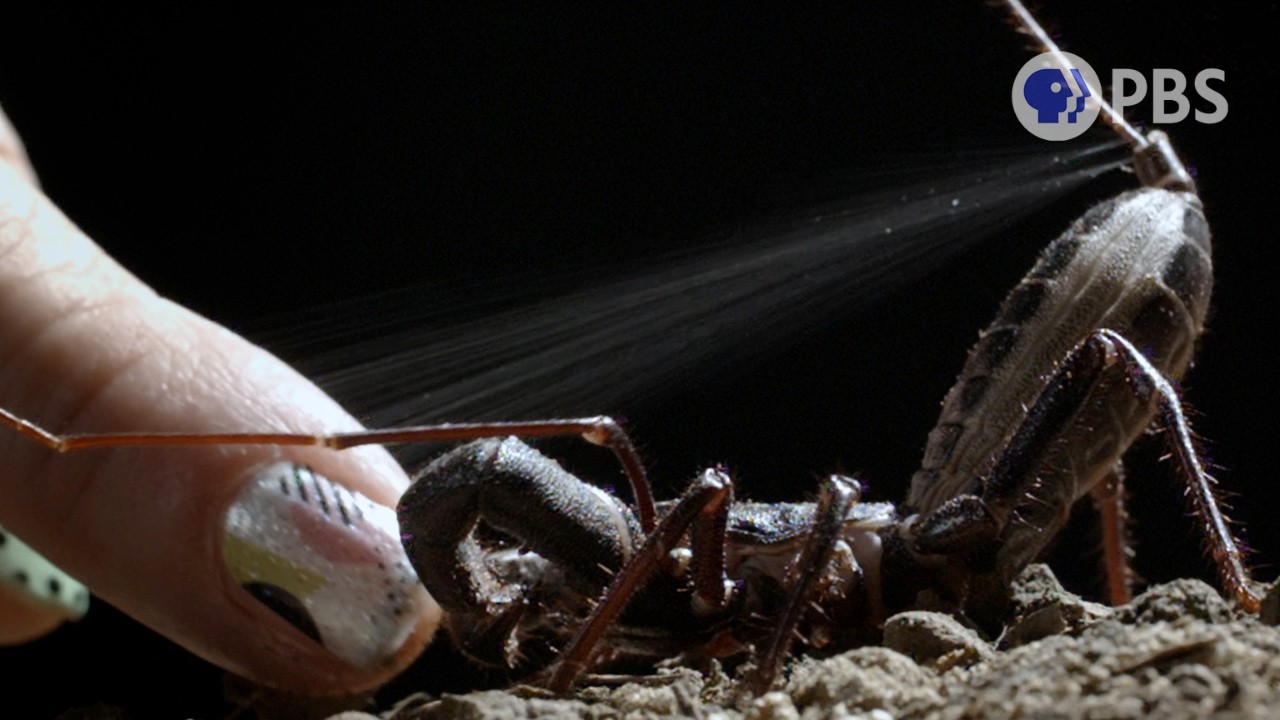
Don’t Touch These Animals. Seriously. | Deep Look
Keywords
Summary
177 words
Critical Evaluation
Value of the Information & Strength of the Argument
The video provides substantial scientific value by covering four distinct examples of chemical warfare in nature, each with detailed anatomical and biochemical explanations. It explains complex concepts like enzyme evolution and exaptation in an accessible manner. The argumentation is logically structured, moving from description to mechanism to evolutionary reasoning. For instance, it addresses the apparent paradox of the bombardier beetle’s explosive system by proposing a gradual evolution via enzyme specialization. The inclusion of interviews with scientists and slow-motion analyses strengthens the credibility. The video also ties research to potential human medical benefits, enhancing its practical relevance.
Scientific Rigor, Source Quality, Title Accuracy
The scientific rigour is high: the content is based on peer-reviewed research, and the researchers involved (e.g., from California Academy of Sciences, Michigan State University, UC Berkeley) are identified. The title is catchy but accurate, and the content matches the promise of warning about these animals. The video does not present unverified claims; it clearly distinguishes between known facts and hypotheses. The description provides a transcript and links to related content, though no specific primary sources are directly cited. Overall, the production quality and scientific grounding make it reliable.
200 words
Title / Content Match
The title accurately reflects the content, which highlights four animals with dangerous chemical defenses, urging caution. It is attention-grabbing and consistent with the video's focus.
Quality & Reliability
9/10
The content is produced by KQED, a reputable public media outlet, and features interviews with researchers from institutions like the California Academy of Sciences and UC Berkeley. The scientific details are accurate and well-researched, with explanations of evolutionary and biochemical concepts. No misleading claims or sensationalism were detected.
Key Moments
Markers derived by PSI from the transcript: the creator did not define chapters.
- Introduction to cone snails and their harpoon hunting technique.
- Detailed slow-motion explanation of how a cone snail fires its harpoon.
- Introduction to the vinegaroon and its defensive acetic acid spray.
- The Arizona bark scorpion and the southern grasshopper mouse's immunity.
- The bombardier beetle's explosive chemical defense and evolution of the system.
Cited Sources
- Deep Look KQED Transcript Page — Detailed transcript and additional information from KQED Science.
- Tiger Beetles Bite First, Ask Questions Never — Related Deep Look episode on animal defense mechanisms.
- These Lovebugs Have Attachment Issues — Another Deep Look episode about unique insect behaviors.
- Beach Day? These 5 Surprising Creatures Are Hanging Out Too — Deep Look episode featuring coastal organisms.
- KQED Donation Page — Support page for the production of Deep Look.
Contribution & Novelties
The video synthesizes recent research on animal chemical defenses, offering an accessible overview that highlights the potential biomedical applications of venom and the evolutionary arms race. It provides original footage and clear explanations that go beyond typical nature documentaries by integrating molecular biology with ecology.
Pour aller plus loin :
- Bombardier beetle — Overview of the beetle’s defense mechanism and evolutionary debates.
- Cone snail venom — Details on venom composition and pharmaceutical research.
- Southern grasshopper mouse — Explanation of its resistance to scorpion venom.
- Acetic acid — Chemical background on vinegaroon spray.
- Exaptation — Concept explaining evolutionary co-option of traits.
100 words
Radar Profile
The radar profile shows high scores in information quality, quantity, and reliability, with a slightly lower technical level, indicating content that is scientifically sound yet accessible to a general audience.
💬 positif Sur les 30 commentaires analysés, la très grande majorité sont positifs et enthousiastes, louant la qualité du contenu, la beauté des images et l'intérêt des sujets. Quelques commentaires apportent des précisions sur les espèces ou partagent des expériences personnelles, tandis que d'autres évoquent des points techniques mineurs comme le volume de la musique.