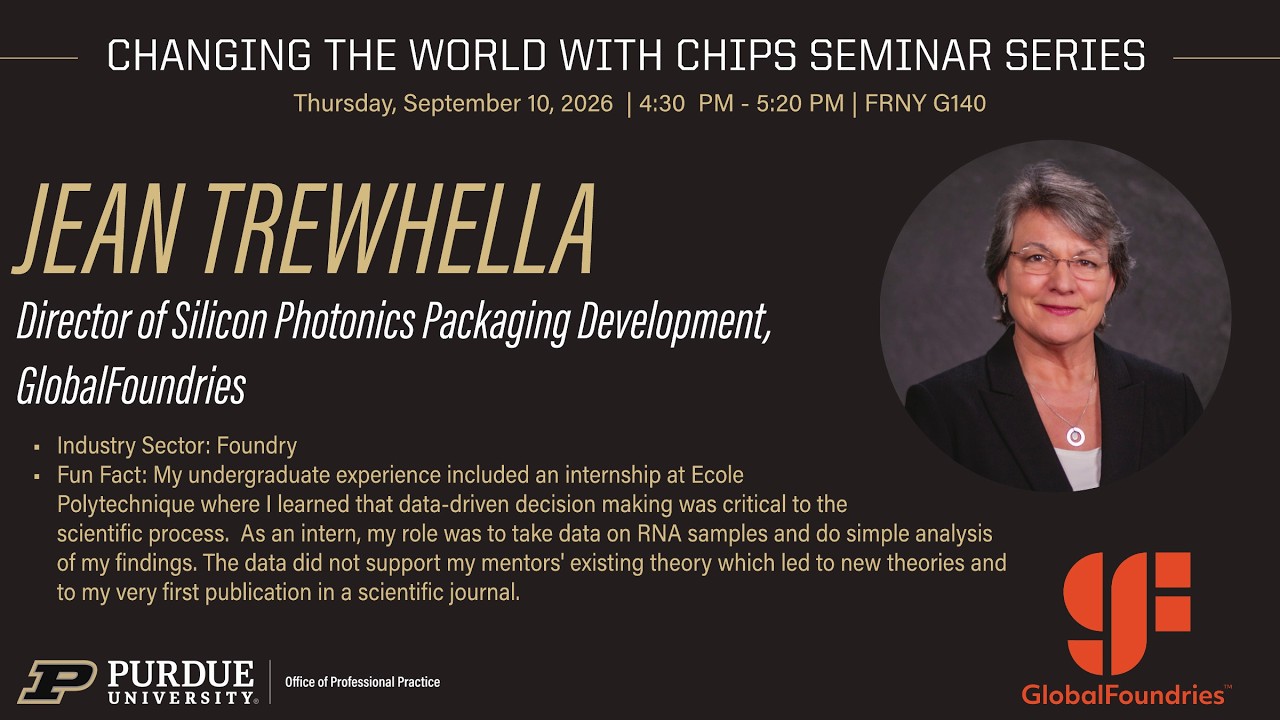
How Light Is Rewiring the Data Center (Jean Trewhella, GlobalFoundries)
Keywords
Summary
163 words
Critical Evaluation
Value of the Information & Strength of the Argument
The talk is highly informative, offering a unique industry perspective on the challenges and solutions in silicon photonics packaging. The speaker uses concrete examples, such as specific alignment tolerances and loss figures, which strengthens the technical credibility. Her argumentation is logical: starting from the limitations of copper, she explains why optics is necessary, and then walks through the engineering hurdles and current solutions, such as the IO plug and broadband couplers. She also addresses economic and strategic factors, making a compelling case for why packaging innovation is critical. The presentation is well-structured and persuasive, though some parts are technical and may require prior knowledge.
Scientific Rigor, Source Quality, Title Accuracy
The scientific rigor is high, as the speaker relies on her professional experience and known industry standards. She references well-known companies (Nvidia, Senko) and the multi-source agreement, but without providing explicit citations or external sources. The content aligns with current trends in optical interconnects. The title accurately represents the content, although it simplifies a broader topic. The talk is an expert opinion rather than a peer-reviewed study, but it is technically precise and consistent with publicly known industry developments. No contradictory claims were made. The absence of external references is mitigated by the speaker’s direct involvement in the technology.
218 words
Title / Content Match
The title accurately reflects the content: the talk explains how silicon photonics is transforming data center interconnects by replacing copper with light. Perfect match.
Quality & Reliability
8/10
Speaker is a director at GlobalFoundries with extensive industry experience (27 years including IBM). The talk provides detailed technical insights into silicon photonics and packaging, based on her direct work. No unsupported claims detected, though it reflects an industrial perspective with potential commercial bias. Overall high reliability.
Key Moments
Markers derived by PSI from the transcript: the creator did not define chapters.
- Speaker introduces herself and her career background, including early work on polymer optical waveguides at IBM.
- Explanation of silicon photonics and its advantages over copper in terms of bandwidth, reach, and energy efficiency, with specific figures.
- Discussion of Nvidia's architecture, demonstrating the limitations of copper and the need for optical interconnects.
- Introduction to co-packaged optics (CPO) and the multi-source agreement, with mention of companies involved.
- Detailed explanation of packaging challenges: spot-size converters, V-grooves, and fiber attach, including alignment tolerances.
- Overview of the IO plug for detachable connections and the importance of broadband coupling for multiple wavelengths.
- Discussion of strategic investment in US-based packaging and the foundry model's role in producing known good optical modules.
Contribution & Novelties
The talk provides a first-hand account of the engineering challenges in silicon photonics packaging, particularly the novel IO plug coupler and broadband coupling solutions. It underscores the shift from traditional electronic packaging to optical packaging and the need for precise alignment techniques. The speaker’s emphasis on co-packaged optics and the multi-source agreement highlights industry directions.
Pour aller plus loin :
- Silicon photonics — Foundational concept for the talk, explaining how light is used on silicon chips.
- Optical interconnect — Related to the use of light for data transmission in computing, central to the talk’s theme.
- Through-silicon via — Discussed as part of 3D packaging, a key technical element mentioned.
- Semiconductor fabrication plant - Foundry model — Provides context on the foundry business model that GlobalFoundries follows.
126 words
Radar Profile
The radar profile shows a balanced score across quantity and quality of information, with slightly lower technical level due to its introductory nature, and high reliability. This indicates a solid, trustworthy presentation that is rich in content yet accessible to engineering students.