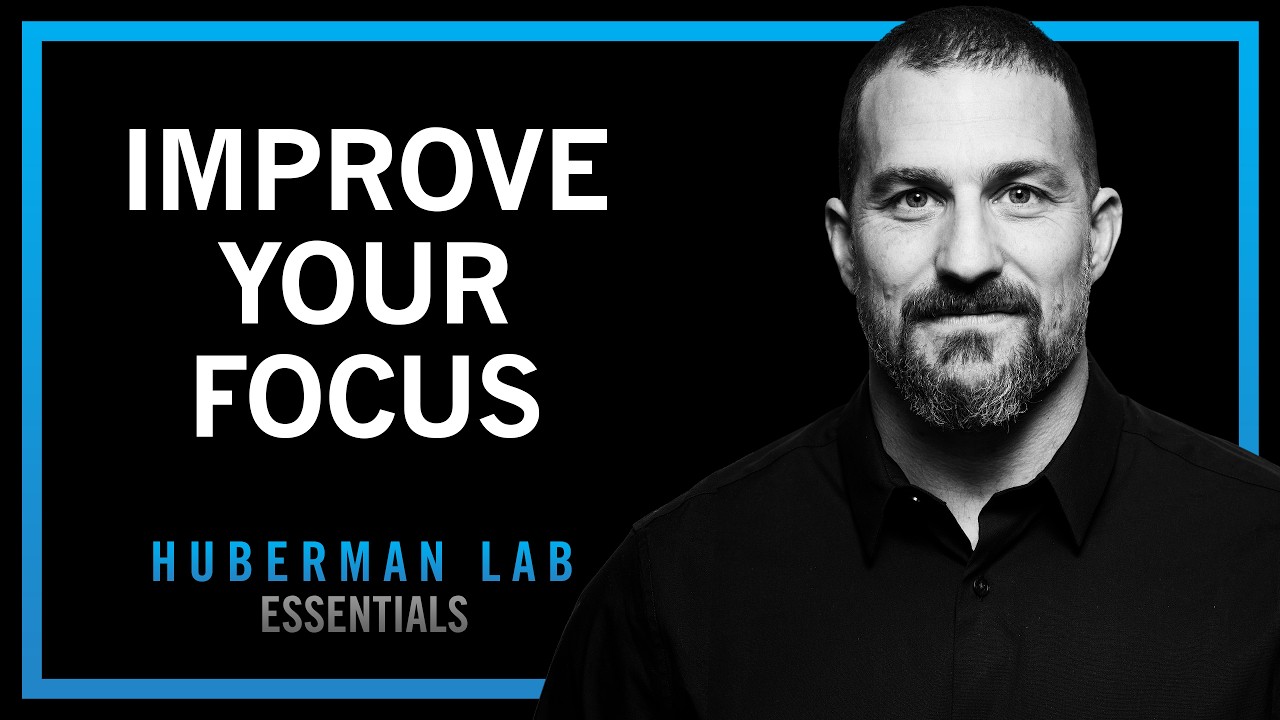
Tools to Improve Your Focus & Concentration | Huberman Lab Essentials
Keywords
Summary
183 words
Critical Evaluation
Value of the Information & Strength of the Argument
The value lies in translating complex neurobiological concepts into immediately applicable protocols, supported by references to peer-reviewed studies. The argumentation is structured logically, progressing from basic neurochemical foundations to specific tools, with clear explanations of why each tool works. Huberman emphasizes the role of neuroplasticity and reframes focus as a trainable skill, encouraging a growth mindset. He also addresses common misconceptions, such as the belief that meditation is only effective if the mind never wanders, and explains that the act of refocusing is the core practice. The discussion of supplements is balanced, highlighting both potential benefits and safety concerns, which strengthens credibility. While some claims are simplified for accessibility, the overall reasoning is coherent and grounded in scientific literature.
Scientific Rigor, Source Quality, Title Accuracy
The discussion maintains a high level of scientific rigor by citing specific studies, such as the acute stress concentration study and research on cold exposure. The speaker is transparent about the limitations of certain tools and acknowledges when evidence is preliminary. The title accurately conveys the content, which strictly adheres to providing practical tools for focus and concentration, aligning with the description. The video includes a clear disclaimer and points to public availability of show notes. The sourcing is credible, relying on recognized scientific journals and the speaker’s expertise as a neuroscientist.
226 words
Title / Content Match
The title accurately reflects the content, which focuses on actionable tools for improving focus and concentration based on neurochemistry and behavioral science.
Quality & Reliability
8/10
The video is presented by a Stanford professor and relies on peer-reviewed studies, referencing specific mechanisms and protocols. Although some simplifications are inherent in such a format, the core information aligns with established neuroscience and psychology research. The speaker clearly distinguishes between evidence-based findings and personal recommendations.
Chapters
- Focus & Concentration
- Epinephrine, Acetylcholine & Dopamine
- Sleep, White Noise & Pink Noise
- Ultradian Cycles, 90-Minute Work Sessions
- Blood Glucose, Fasting & Meal Size
- Caffeine, Focus & Sleep
- Acute Stress & Concentration
- Tool: Deliberate Cold Exposure
- Tool: 13-Minute Daily Meditation
- Tool: Visual Focus Exercises
- Omega-3 Fatty Acids & Creatine
- Alpha-GPC, Acetylcholine & Safety Considerations
- L-Tyrosine, Dopamine & Combining Tools
- ADHD, Prescription Medications & Neuroplasticity
- Deliberate Defocusing & Recovery
- Acknowledgements
Cited Sources
- Show Notes — Detailed show notes and resources mentioned in the video.
- Huberman Lab Website — Official website with episodes, protocols, and research.
- Disclaimer & Disclosures — Disclaimer about the content and potential conflicts of interest.
External References
Contribution & Novelties
This episode provides a condensed yet comprehensive summary of evidence-based tools for focus, integrating neuroscience with actionable protocols. It adds value by distilling numerous studies into a single accessible resource, making it valuable for individuals seeking practical advice without extensive research. The emphasis on the refocusing process in meditation and the role of the visual system are particularly insightful, offering new angles to commonly known practices.
Pour aller plus loin :
- Ultradian rhythm — Relevant to the 90-minute work cycles discussed.
- Acetylcholine — Key neurotransmitter in attentional focus.
- Caffeine — Effects on cognition and sleep architecture.
- Deliberate cold exposure — Mechanism of increasing catecholamines.
104 words
Radar Profile
The profile shows a high quantity of information, good quality, moderate technical level, and reliable sources, suggesting a well-rounded and trustworthy resource. The strength lies in the balance between depth and accessibility.
💬 Orientations: positif. Sur les 30 commentaires analysés, la majorité exprime des remerciements et partage des expériences personnelles positives avec les outils proposés, tandis que quelques-uns posent des questions techniques ou demandent des invités spécifiques.