Moving Test Data Faster
Keywords
Summary
202 words
Critical Evaluation
Value of the Information & Strength of the Argument
The information is highly valuable for semiconductor engineers and DFT specialists because it provides a clear, expert explanation of how test data movement is handled in advanced multi-chiplet packages. The argumentation is logical and well-structured: Vidya systematically explains the limitations of serial access (PTAP/STAP), introduces the FPP/SSN as a high-bandwidth solution, and details how IJTAG extends support to memory and debug. She also addresses practical considerations such as loopback testing, die-to-die interconnects, and in-field testing, always grounding her claims in established IEEE standards and real engineering practice. The discussion is not overly promotional; it focuses on the technical merits and trade-offs of each approach, making it a solid source of information for understanding current test methodologies.
Scientific Rigor, Source Quality, Title Accuracy
The scientific rigor of the video is high: it cites several IEEE standards (1838, 1687, 1149.1, 1500) and covers established DFT concepts like scan ATPG, BIST, and loopback testing. The quality of sources is good, though the video does not reference specific papers or external URLs; it relies on the speaker’s expertise and the mention of standards. The title ‘Moving Test Data Faster’ accurately captures the core theme, and there is a one-to-one correspondence between the title and the content discussed. Adequation between title and content is excellent; the video stays focused on test data movement and does not drift beyond this scope.
234 words
Title / Content Match
The title accurately reflects the content, which focuses on methods to accelerate test data movement in multi-chiplet designs.
Quality & Reliability
8/10
The video presents a detailed technical discussion by a domain expert, covering established IEEE standards and practical engineering approaches. No contradictions or questionable claims detected.
Key Moments
Markers derived by PSI from the transcript: the creator did not define chapters.
- Introduction: Ed Sperling and Vidya Neerkundar introduce the topic of moving test data faster in multi-chiplet designs.
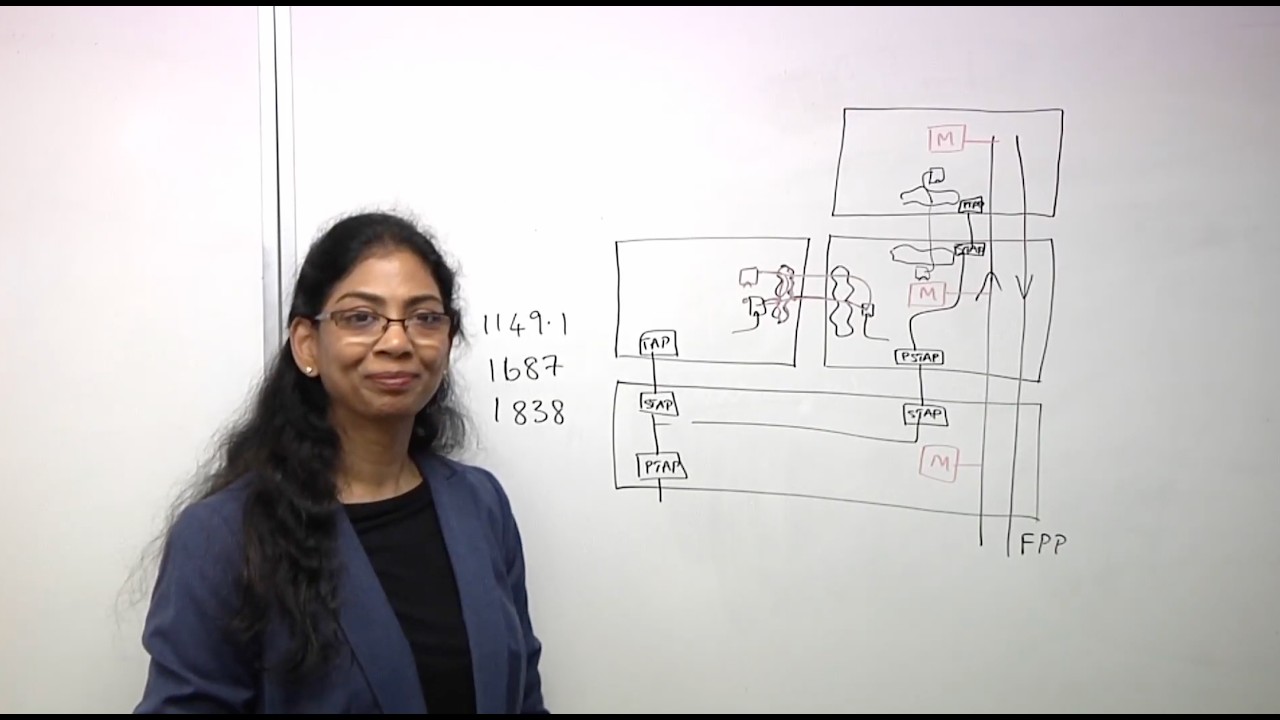
- Overview of IEEE 1838 architecture: PTAP and STAP serial protocols, and the need for faster parallel data transfer via FPP.
- Explanation of Tessent Streaming Scan Network (SSN) as an FPP implementation, capable of sending data up and down the chiplet stack.
- Introduction of high-bandwidth IJTAG (IEEE 1687) reusing the SSN bus for memory testing and debug data collection.
- Discussion on design planning for test data flow, and the importance of hooks for memory BIST controllers.
- Die-to-die interconnect testing: using ATPG, stuck-at, transition, and physical-aware patterns for dense interconnects.
- Loopback testing (short and foreign) to test die boundaries before packaging, addressing defects on wires and combinatorial logic.
- In-field testing approaches: storing patterns on-chip or using logic/memory BIST, and the role of in-system test controllers.
- Adapting IEEE 1149.1 for multi-die systems by extracting boundary scan definitions at the package level.
Contribution & Novelties
The video provides an expert overview of advanced test data movement techniques in multi-chiplet semiconductor designs, specifically focusing on the implementation of IEEE 1838 and the use of streaming scan networks to overcome serial bottlenecks. It clarifies the trade-offs between serial and parallel access, introduces loopback techniques for die-edge testing, and outlines how in-field testing leverages existing infrastructure. The original contribution lies in framing these methods within a coherent engineering workflow, bridging academic standards and practical DFT deployment.
Pour aller plus loin :
- IEEE 1149.1 (JTAG) on Wikipedia — Background on the foundational board-level test standard discussed in the video.
- IEEE 1687 (IJTAG) on Wikipedia — Details on the internal JTAG standard used for accessing instrumentation.
- Built-in self-test on Wikipedia — Overview of BIST methods relevant to logic and memory tests mentioned in the context of in-field test.
138 words
Radar Profile
The radar profile shows a video with strong technical depth (niveau_technique 9) and high information quality (quantite_information 8, qualite_information 8), but slightly lower scores in overall reliability (fiabilite_globale 8). This indicates a well-argued, expert-level discussion that could benefit from additional external references to further consolidate its authority.