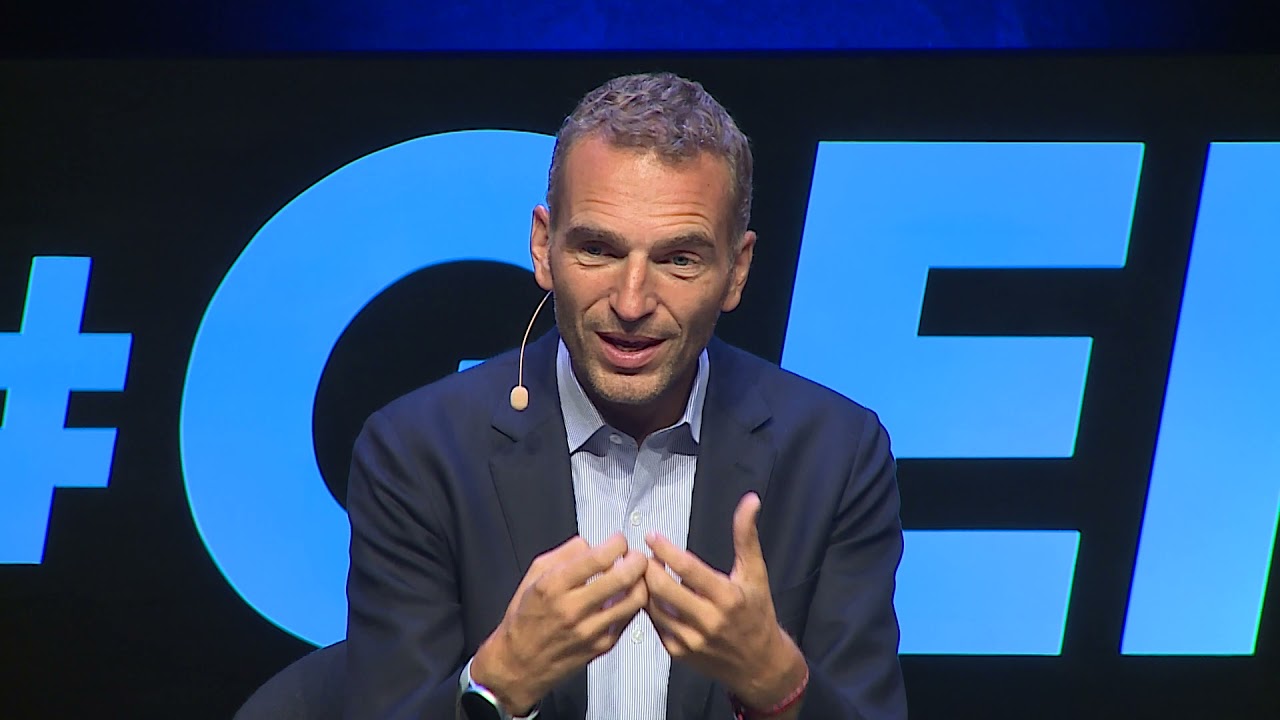
Conférence • Alexandre Mars • Quête de sens, missions : comment l'entrepreneuriat rebat les cartes ?
Conference • Alexandre Mars • Quest for meaning, missions: how is entrepreneurship reshuffling the cards?
Keywords
Summary
185 words
Critical Evaluation
Value of the Information & Strength of the Argument
The value of the information provided lies in the concrete and first-hand experience of Alexandre Mars, founder of a major impact fund and a philanthropic foundation. His argumentation is coherent and grounded in practical examples (Too Good To Go, C’est qui le Patron?), which strengthens the credibility of his claims about the rise of ‘citizen capitalism’. He makes a clear distinction between a pure philanthropic structure without economic models (Epic) and a commercial impact fund (Blisce), which is a valuable conceptual distinction for understanding the ecosystem. However, the arguments are predominantly anecdotal and lack statistical or comparative rigor. For instance, while he cites his 12 investment criteria, he does not delve into their relative weight or actual backtesting data. His claims about generational shifts in consumer behavior are presented as universal truths without supporting survey data, leaving the argumentative strength reliant on the personality and success of the speaker rather than on empirical evidence.
Scientific Rigor, Source Quality, Title Accuracy
The scientific rigor of the presentation is moderate. Alexandre Mars confidently describes the mechanics of the impact investment market, but does not formally cite any external academic sources or legal statistics. He refers to figures like Darwin and Pierre Rabhi in a metaphorical rather than analytical manner. The sources mentioned are partially verifiable through the organizations themselves (B Corp, Epic Foundation, Blisce), and the example of ‘Cest qui le Patron?’ has been publicly documented. The title perfectly matches the content, which indeed focuses on the quest for meaning and how entrepreneurship redefines the cards of social impact. It does not pretend to be a formal academic treatise but rather an expert opinion and sharing of experience, a claim it holds consistently throughout.
291 words
Title / Content Match
The title accurately reflects the content, a conference debate on social entrepreneurship, philanthropy, and the role of business in society.
Quality & Reliability
7/10
The speaker is an experienced entrepreneur and investor whose statements are based on his direct professional experience. The information is accurate regarding the functioning of impact funds and ESG criteria, but it relies heavily on anecdotal evidence and personal opinions rather than verifiable statistical data or academic research.
Key Moments
Markers derived by PSI from the transcript: the creator did not define chapters.
- Introduction of Alexandre Mars and the debate around the definition of philanthropy.
- Mars defines philanthropy as a citizen's duty and explains his initial motivation to fight inequalities.
- Presentation of successful impact brands such as Too Good To Go and 'C'est qui le Patron?'.
- Use of the hummingbird metaphor by Pierre Rabhi to illustrate collective citizen responsibility.
- Explanation of the difference between Epic (philanthropic) and Blisce (investment) and their complementary roles.
- Discussion of ESG criteria, diversity requirements and B Corp certification in investment decisions.
- Mars encourages a comprehensive view of entrepreneurship, moving away from the obsession with startups and unicorns.
Cited Sources
- Too Good To Go — Mentioned as a successful example of an impact company fighting food waste.
- C'est qui le Patron ?! — Cited as a solidarity brand that has become the leading milk brand in France by redistributing profits to farmers.
- B Corporation — Introduced as an audit standard to assess a company's social and environmental performance.
- Blisce — The investment fund founded by the speaker, which supports impact-driven companies.
- Epic Foundation — The philanthropic structure created by the speaker, directing 100% of donations to selected NGOs.
Concurring Sources
- B Corporation: Movement Overview — Supports the idea that the B Corp movement is a growing standard for companies aligning profit with purpose.
Dissenting Sources
- ESG investing: criticisms and debates — Points to common criticisms of ESG criteria, including the lack of standardized definitions and the risk of 'greenwashing', which nuances the systematic positivity of the speaker's presentation.
Contribution & Novelties
The added value of this contribution lies primarily in the bridging of two worlds: a rigorous investment perspective (Blisce) with a pure philanthropic approach (Epic), both orchestrated by the same actor. Mars introduces a pragmatic view of how to align business performance with an ESG agenda, offering clear examples of practical implementation, which is more instructive than a purely theoretical lecture.
Pour aller plus loin :
- Impact investing — Provides an overview of the concept of investing for social and environmental impact.
- B Corporation — Details the certification standard mentioned by the speaker for evaluating company impact.
- Environmental, social, and governance (ESG) — Explains the criteria used to evaluate ethical impact in investment decisions.
- Pierre Rabhi — Contextualizes the concept of ’la part du colibri’ used in the talk to encourage individual action.
133 words
Radar Profile
The profile shows a strong score in 'qualite_information' and 'fiabilite_globale', reflecting the speaker's professional competence. However, it is slightly weaker in 'niveau_technique', as the talk is aimed at a general business audience and avoids complex mathematical or financial models. The data is reliable but subjective in nature. The overall profile is well balanced, corresponding to an expert opinion delivered in a clear and structured manner.