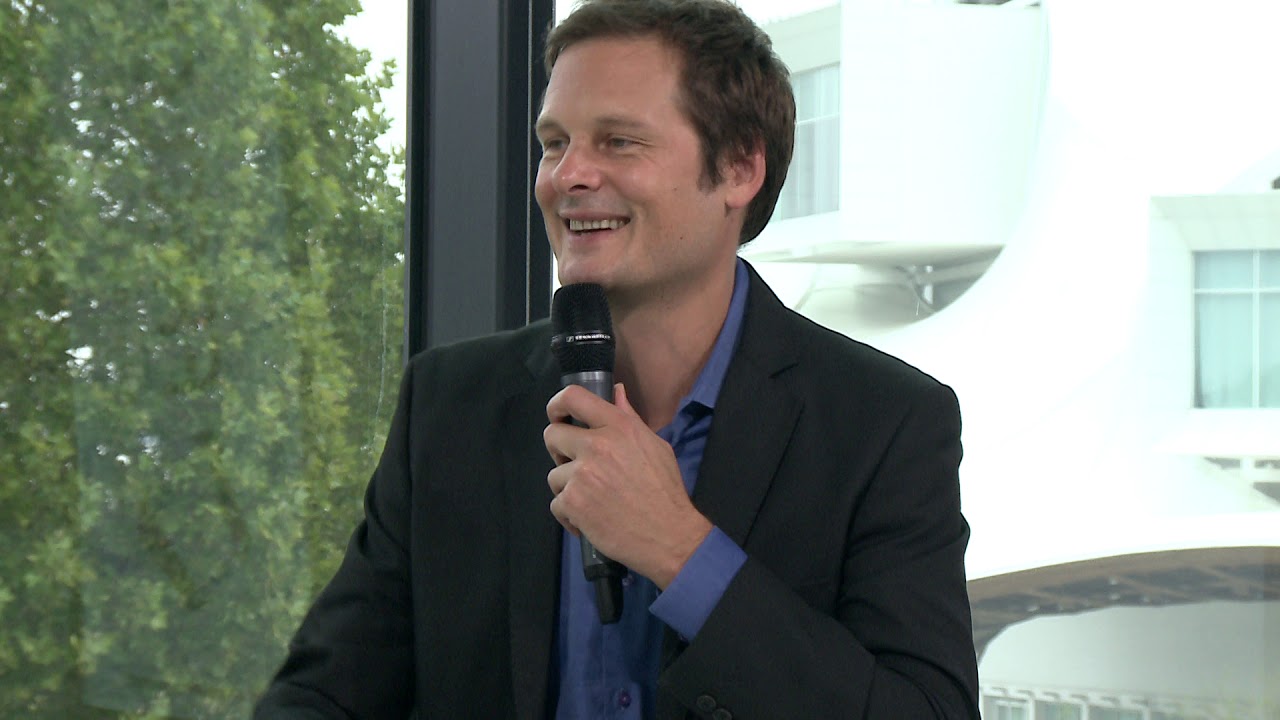
Podcast ViàMirabelle • Christophe Galfard
Keywords
Summary
172 words
Critical Evaluation
Value of the Information & Strength of the Argument
The interview provides valuable insights into quantum communication, explaining complex phenomena in an accessible way without oversimplifying. Galfard’s argumentation is solid, grounding his claims in established physics and citing concrete examples like the Micius satellite. He carefully distinguishes between theoretical possibilities and current technological limits, avoiding sensationalism. The discussion of security implications is particularly valuable, as it connects quantum principles to real-world concerns like data protection and financial transactions. Galfard’s approach is educational and nuanced, acknowledging uncertainties in timelines and the ongoing race between encryption and decryption.
Scientific Rigor, Source Quality, Title Accuracy
The scientific rigor is high due to the speaker’s credentials and his careful explanation of quantum concepts. He accurately describes entanglement, the no-cloning theorem, and the limitations of quantum key distribution. However, the interview format limits depth, and no formal sources are cited beyond his own expertise. The title is adequate but generic, not indicating the specific subject matter. There are no public comments provided to assess audience reception.
171 words
Title / Content Match
The title accurately describes a podcast interview with physicist Christophe Galfard, though it lacks specific mention of the topic discussed.
Quality & Reliability
8/10
Christophe Galfard, a theoretical physicist and former student of Stephen Hawking, provides credible and accurate explanations of quantum communication concepts in an accessible manner. The discussion stays at an introductory level without deep technical verification, but the information is reliable and well-argued.
Key Moments
Markers derived by PSI from the transcript: the creator did not define chapters.
- Galfard defines quantum transmission and explains its purpose in secure communication.
- Discussion of the Chinese satellite experiment sending entangled photons over 1200 km.
- Explanation of how quantum communication can create un-hackable internet and its relation to GDPR.
- The threat of quantum computers to RSA encryption and the need for quantum-resistant alternatives.
- Clarification on quantum teleportation, noting the no-cloning theorem and destruction of the original.
- Galfard offers a personal view on future timelines and the inevitable adoption of quantum technologies.
Contribution & Novelties
The interview offers a concise, expert-led introduction to quantum communication, demystifying concepts like entanglement and quantum key distribution for a general audience. Its originality lies in connecting these ideas to practical concerns such as data security and the future of encryption, while providing historical context through the Chinese satellite experiment and RSA encryption.
Pour aller plus loin :
- Quantum Communication — Overview of quantum communication protocols and applications.
- Quantum Entanglement — Detailed explanation of the phenomenon underlying quantum key distribution.
- Quantum Key Distribution — Technical description of secure key exchange methods and their implementations.
94 words
Radar Profile
The profile shows high scores in information quality and reliability, with moderate scores in quantity and technical depth. This indicates a concise but credible expert overview that is accessible to a broad audience, though not exhaustive or highly technical.