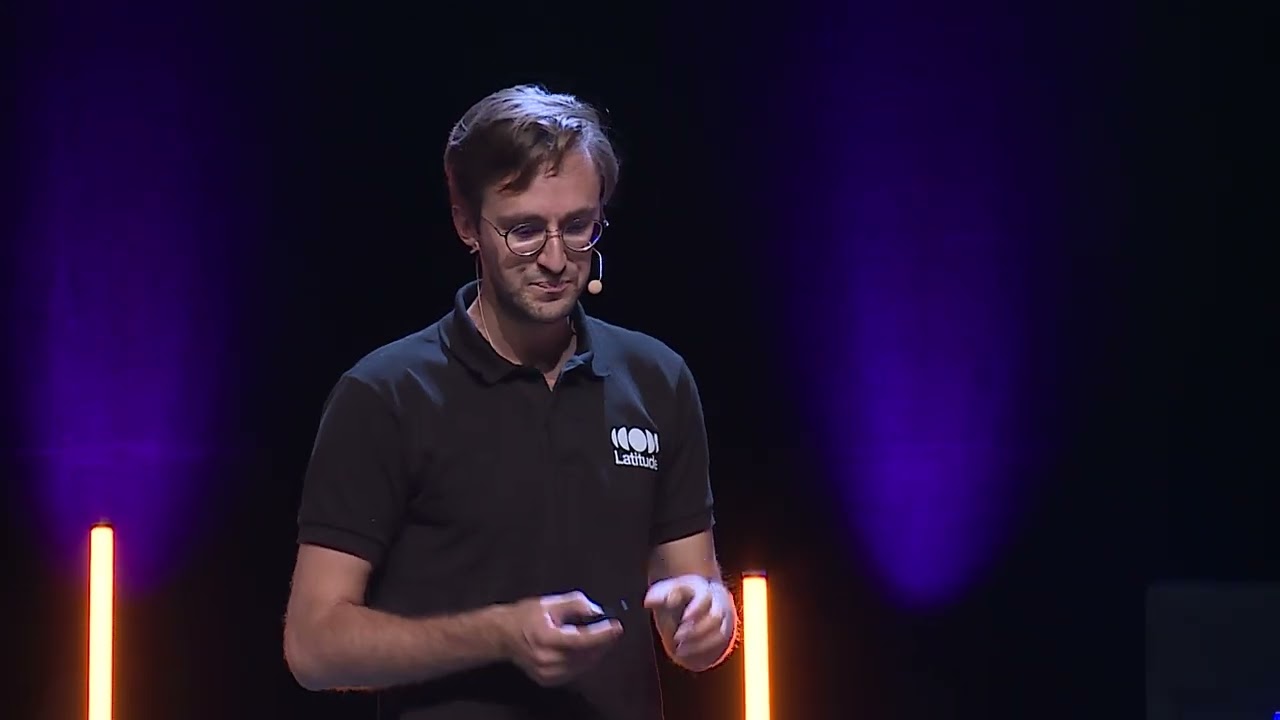
Stanislas Maximin • Comment l'industrie Digitale peut accélérer la révolution industrielle spatiale
Stanislas Maximin • How the Digital industry can accelerate the spatial industrial revolution
Keywords
Summary
185 words
Critical Evaluation
Value of the Information & Strength of the Argument
The talk offers valuable insights into the emerging NewSpace economy, emphasizing the democratization of space access and the vast business opportunities for digital professionals. The speaker leverages his personal experience as an entrepreneur in the sector, which strengthens the credibility of his claims. However, the argumentation is largely anecdotal and promotional, lacking quantitative data or rigorous scientific evidence. The examples are compelling but presented in a general manner without in-depth descriptions of the underlying technologies. The speaker’s enthusiasm is convincing, yet the lack of critical analysis of challenges (e.g., space debris, regulatory issues) leaves the argument incomplete.
Scientific Rigor, Source Quality, Title Accuracy
The speaker cites several real companies (Planet Labs, My Easy Farm, Vitibot, Angle, etc.) and tools (Zoom Earth, Starlink) which add a practical grounding. However, no formal sources or verifiable data are provided, and the talk relies on personal experience and selected examples. The title accurately reflects the content, as the speaker consistently connects digital industry capabilities to space applications. The overall rigor is moderate: the information is plausible and aligned with known trends, but the lack of citations and technical detail limits its scientific weight. The public comments (none provided) would be essential to gauge audience reception, but in their absence, no conclusions can be drawn.
219 words
Title / Content Match
The title accurately reflects the content: the speaker discusses how digital technologies can accelerate the space industry revolution through examples and future applications.
Quality & Reliability
7/10
The talk provides a broad and accessible overview of the NewSpace revolution, backed by real-world examples and personal experience, but lacks deep technical detail and rigorous citations of specific data or studies.
Key Moments
Markers derived by PSI from the transcript: the creator did not define chapters.
- Pakistan flood satellite images showing crisis and the value of frequent revisit via small satellites.
- Introduction of the speaker's companies (Latitude, Asteros) and role in French NewSpace.
- Shift from large expensive satellites to small cheap ones due to miniaturization and software improvements.
- Example of ADS-B tracking via small satellites, showing new entrepreneurial opportunities.
- Applications in agriculture: satellite data for crop monitoring and autonomous vineyard robots (Vitibot).
- Future uses: cybersecurity via laser links, blockchain decentralization, defense support in Ukraine, finance (GDP forecasting).
- Role of digital industry in building space infrastructure and the potential of the Grand Est region.
- Conclusion: call for evangelizing digital players and mention of upcoming rocket launches from Scotland and French Guiana.
Cited Sources
- Planet Labs — Mentioned as a pioneering company in small satellite Earth observation.
- My Easy Farm — Cited as a French company using satellite data for agriculture.
- Angle satellite — French IoT constellation satellite mentioned as an example of small satellites.
- Starlink/SpaceX — Referenced for large constellations and communication applications.
- Zoom Earth — Shown as a tool for live satellite imagery used to follow the Pakistan floods.
Contribution & Novelties
The talk provides a forward-looking perspective on the synergy between digital and space sectors, highlighting specific business use cases that are often overlooked by the general public. It bridges the gap between space technology and digital entrepreneurs, arguing that the future of space lies not only in infrastructure but also in data-driven applications. The speaker’s personal experience as a rocket manufacturer adds a unique credibility to the vision.
Pour aller plus loin :
- NewSpace — Concept of commercial space industry driven by startups, directly relevant to the talk’s theme.
- Small satellite — Technical basis for the revolution described, with details on sizes and costs.
- Earth observation satellite — The applications in agriculture, disaster monitoring, and environmental tracking are built on this technology.
- Digital industry — The role of software and data processing in accelerating space applications, as emphasized throughout the talk.
141 words
Radar Profile
The radar profile shows a relatively balanced distribution, with high scores in quantity of information and overall quality, reflecting the talk's breadth of examples. The technical level is moderate, indicating accessibility to a general audience. The reliability is good but limited by the lack of published sources, making the fiabilite score slightly lower.