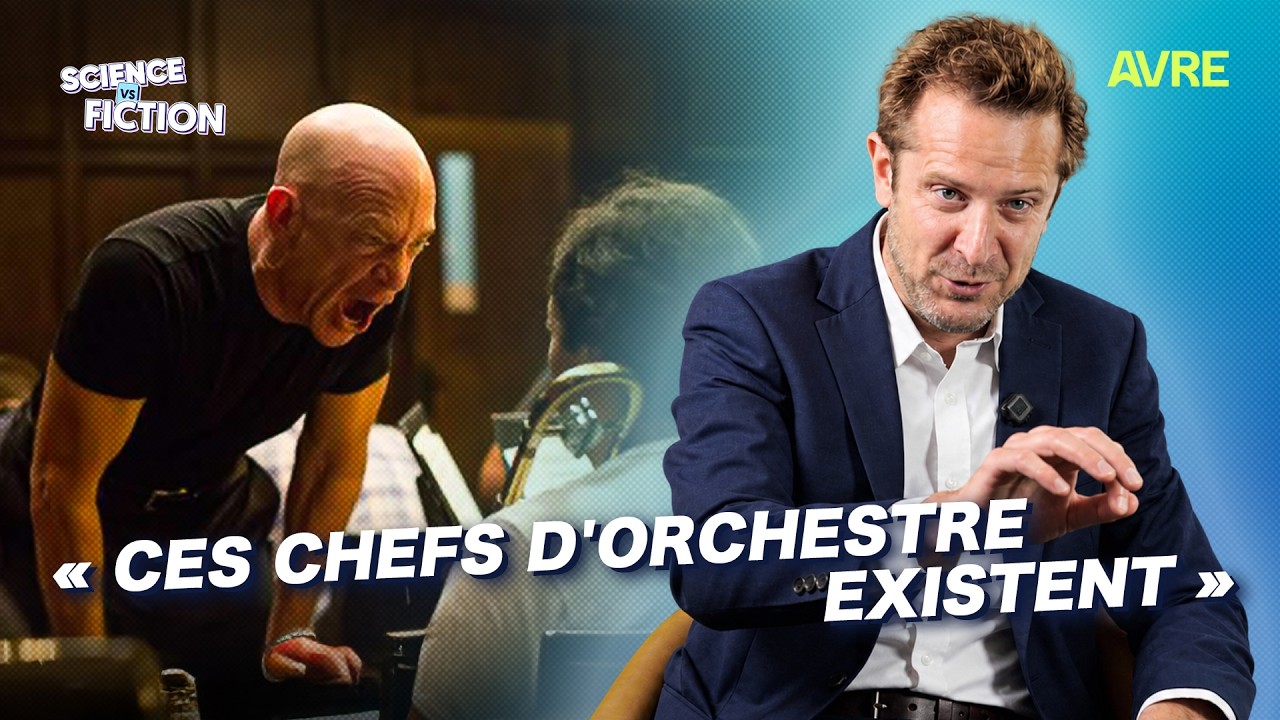
Un chef d'orchestre analyse des films | Science vs Fiction
A conductor analyzes films | Science vs Fiction
Keywords
Summary
153 words
Critical Evaluation
Value of the Information & Strength of the Argument
The video provides substantial value by offering an expert practitioner’s viewpoint on the accuracy of orchestral scenes in popular films. Laurent Couson draws on his extensive career to highlight specific technical details, such as the difference between the right and left hands in conducting, the use of a baton, and the importance of eye contact and beat patterns. His arguments are well-structured and persuasive, supported by concrete examples from each film. He also addresses common clichés, such as the ’tyrannical conductor’ image, and explains how orchestras function democratically, with auditions held behind screens. The discussion is balanced, acknowledging both realistic portrayals and pure fiction, and he often gives percentage estimates of realism, which adds a quantified dimension. The argumentation is coherent and grounded in professional experience, making it convincing for the audience.
Scientific Rigor, Source Quality, Title Accuracy
The scientific rigor is moderate; the analysis is based on personal expertise rather than published studies, but it is consistent with general knowledge in the field. The sources cited are limited to the expert’s own experience and the films themselves, which are used as primary examples. The title accurately describes the content, as the video systematically compares cinematic portrayals with real-world practice. However, the lack of academic references or external citations reduces its scientific weight. The ad segment is clearly separated and does not detract from the content’s credibility. The video does not claim to present novel research but rather expert commentary, which is appropriately positioned.
253 words
Title / Content Match
The title accurately reflects the content: an expert conductor evaluates the realism of orchestral scenes in films, distinguishing factual depiction from dramatic license.
Quality & Reliability
8/10
The analysis is provided by a professional conductor and composer with over 30 years of experience, lending credible insight into the professional practices depicted in films. However, the assessments are subjective and based on personal experience rather than empirical data.
Chapters
Cited Sources
- Laurent Couson - Instagram — Official Instagram account of the featured conductor and composer, Laurent Couson.
- AVRE - Instagram — Official Instagram page of the YouTube channel AVRE, which publishes the video.
- AVRE - TikTok — Official TikTok page of the YouTube channel AVRE.
External References
Contribution & Novelties
The video offers a unique perspective by having a working conductor analyze popular film scenes, providing audiences with an insider’s look at the profession. This approach demystifies the role of the conductor and educates viewers on the technicalities of orchestral direction. It also addresses historical inaccuracies, such as the Salieri-Mozart relationship, correcting common misconceptions. The segment on conducting masterclasses, exemplified by Leonard Bernstein, highlights real pedagogical methods that are rarely shown accurately in media.
Pour aller plus loin :
- Conducting - Wikipedia — Provides an overview of conducting techniques and history, useful for verifying the technical points discussed.
- Amadeus (film) - Wikipedia — Background on the film’s historical basis and its departure from reality, complementing the video’s critique.
- Whiplash (2014 film) - Wikipedia — Details on the film’s portrayal of a tyrannical music teacher, which the expert evaluates as highly realistic in certain aspects.
144 words
Radar Profile
The radar profile shows high scores in information quantity and quality, with slightly lower technical level and reliability. This indicates a content-rich video with expert input, but with a moderate emphasis on deep technicality and reliance on subjective judgment rather than externally verified sources.