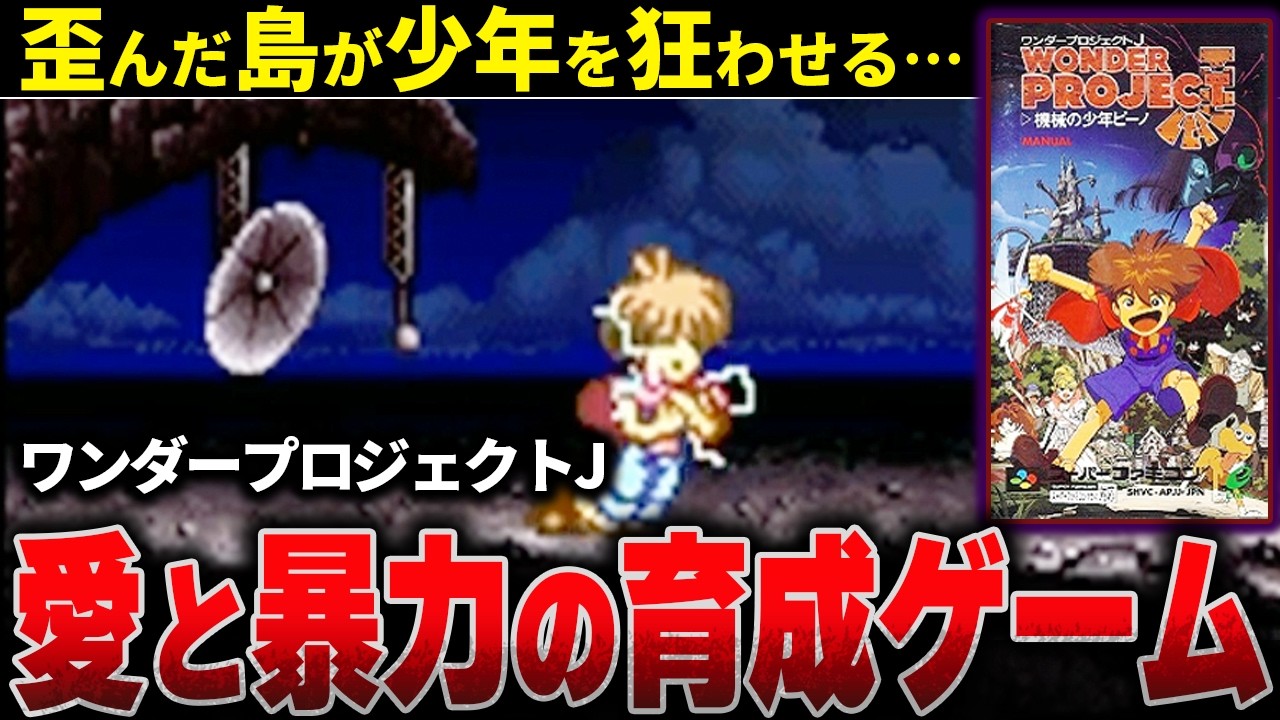
キッズに"心"のトラウマを植え付けた名作がエグすぎる…【ホラゲー】【ワンダープロジェクトJ】
The masterpiece that implanted "mental" trauma in kids is too intense...【Horror game】【Wonder Project J】
Keywords
Summary
154 words
Critical Evaluation
Value of the Information & Strength of the Argument
The value of the information lies in its thorough recounting of the entire game plot, character development, and thematic elements. The narrator argues that the game’s exploration of AI consciousness and emotional growth is remarkably forward-thinking for its time, and draws parallels with modern AI. The argumentation is solid, as it supports claims with specific in-game examples, such as the heart circuit system, the discrimination against androids, and the protagonist’s choices in different endings. The video also situates the game within the broader context of its era, noting its technical achievements and the cultural impact. However, some arguments are subjective, such as the emphasis on the ’trauma’ aspect, which may not be universally shared by players.
Scientific Rigor, Source Quality, Title Accuracy
The video demonstrates rigor by providing accurate details about the game’s development, release dates, and plot specifics. It does not cite external sources for its claims, but the information appears derived from direct gameplay or official materials. The only links provided in the description are to background music and sound effect sites, which are not scholarly sources. The title, while attention-grabbing, may slightly exaggerate the horror aspect, as the game is more of a psychological and emotional drama rather than a conventional horror title. The content matches the title in tone but not entirely in focus, as the video is a comprehensive overview rather than solely focusing on trauma. Overall, the video is well-researched for a fan commentary, though the lack of external references limits its verifiability.
258 words
Title / Content Match
The title emphasizes horror and trauma, which aligns with the game's darker themes, but the video is more of a detailed review and analysis rather than focusing solely on horror elements.
Quality & Reliability
8/10
The video provides a thorough walkthrough and analysis of the game's story, characters, and themes, based on direct gameplay experience. It cites specific details and references the game's development and sequel. No external sources are cited beyond background music credits, but the content is internally consistent.
Key Moments
Markers derived by PSI from the transcript: the creator did not define chapters.
- Overview of the video and introduction to the game Wonder Project J
- Start of the main story walkthrough, including character introductions
- Explanation of gameplay mechanics and the heart circuit system
- Discussion of the multiple endings, including the Blue Ending
- Recap and final thoughts on the game's legacy and relevance
Cited Sources
- DOVA-SYNDROME — Background music used in the video, credited in the description.
- Sound Effect Lab — Sound effects used in the video, credited in the description.
Contribution & Novelties
The video provides a comprehensive retrospective of a cult classic, highlighting its philosophical themes about AI and humanity, which are particularly relevant in the current AI era. It offers a detailed analysis of the game’s narrative structure and emotional impact, which is not commonly available in English-language sources. The discussion of the Blue Ending and its connection to the sequel adds depth for fans and newcomers alike.
Pour aller plus loin :
- Wonder Project J on Wikipedia — Overview of the game, its development, and reception.
- Wonder Project J2 on Wikipedia — Information about the sequel and its connection to the first game.
- AI ethics on Wikipedia — Relevant to the game’s themes of AI rights and consciousness.
- Robot rights on Wikipedia — Extends the discussion of AI and human interaction from the game’s narrative.
135 words
Radar Profile
The profile shows high scores in information quantity and global reliability, with moderate technical depth. This indicates the video is detailed and trustworthy for fans, but not highly technical in terms of game mechanics or programming. The emphasis on narrative and themes rather than technical analysis is reflected in the lower technical score.