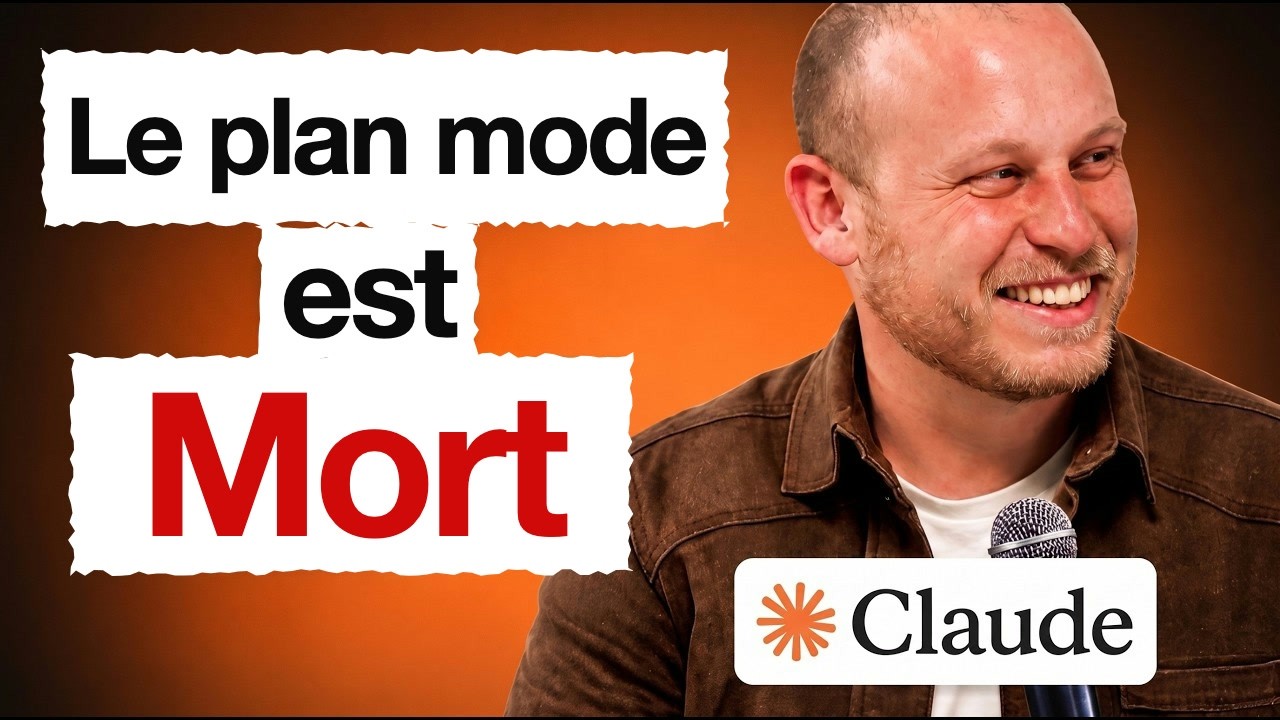
Comment le top 1 % utilise Claude Code différemment
How the Top 1% Use Claude Code Differently
Title history
- Comment le top 1 % utilise Claude Code différemment — observed on 20261031-2303 UTC (YouTube)
Keywords
Summary
159 words
Critical Evaluation
Value of the Information & Strength of the Argument
The video provides actionable advice that is likely valuable for developers already using Claude Code, particularly those seeking to optimize their workflow. The argumentation is built on the creator’s personal experience and references to unspecified internal studies, which adds credibility but lacks external reproducibility. The tips are presented in a logical sequence and often include concrete examples, such as using prompt audit commands or setting up a CLI-based Notion integration. The reasoning for each tip is explained, though some claims (e.g., that Opus low is faster and cheaper than Sonnet medium) would benefit from comparator tables or data. The critical point on reducing CLAUDE.md size and removing skills aligns with known issues of token context limits, but the evidence provided is anecdotal. Overall, the argumentation is coherent and practical, but not scientifically rigorous.
Scientific Rigor, Source Quality, Title Accuracy
The video has a low scientific rigor: it references ‘several studies’ and a ‘study’ on skills without naming them or providing URLs, making verification impossible. The creator mentions his own resources (mlv.sh/fc, mlv.sh/fx) as repositories for skills and personal software, but these are self-promotional rather than external scientific sources. The title accurately matches the content, which focuses on practical usage rather than theoretical claims. The presence of a sponsorship segment (DataImpulse) is disclosed at the start, and while it does not detract from the technical content, it is an external insertion. No comments were provided for analysis, so public reception cannot be assessed.
251 words
Title / Content Match
The title accurately reflects the content: the video presents a set of eight tips for advanced Claude Code usage, framed as practices of the 'top 1%'. The connection between the title and the actual advice is clear and direct.
Quality & Reliability
6/10
Practical advice based on personal experience and anecdotal references to internal studies, without external verification. The claims about model costs and performance are plausible but not rigorously sourced; the video is opinion-driven rather than evidence-based.
Chapters
- Le plan mode est mort (le créateur de Claude Code le dit)
- Conseil 1 : un brief clair, plus besoin de plan mode
- Conseil 2 : ne change pas de modèle (Opus vs Sonnet)
- Sponsor : DataImpulse (proxys résidentiels)
- Opus vs Sonnet : le comparatif coût / intelligence
- Conseil 3 : laisse l'agent vérifier son travail (Dev Browser)
- Conseil 4 : un CLAUDE.md le plus petit possible
- Conseil 5 : supprime tes skills
- Conseil 6 : bloque les actions au lieu d'ajouter des règles
- Conseil 7 : évite les connecteurs MCP, passe par les CLI
- UI, API ou CLI : pourquoi le CLI gagne
- Conseil 8 : une équipe d'agents qui tourne sans toi
- Personal software : mon dashboard Hermes
Cited Sources
- Melvynx skills repository for Claude Code — Mentioned as the source for the creator's skills and the 'personal software' stack.
- Claude Code configuration and agents (Claude Codex) — Referenced as the place to get the default workflow with Dev Browser and rules manager skills.
- Melvynx blog — Linked in the description as a general resource; not explicitly cited in the video content.
- Melvynx GitHub — Linked in the description; not explicitly cited in the video content.
External References
Contribution & Novelties
The video contributes a practical, experience-based set of updated practices for Claude Code users, notably the shift away from plan mode and the emphasis on minimal CLAUDE.md files and fewer skills. It also introduces the concept of using CLI tools instead of MCP connectors for external integrations, which is a forward-looking approach given the evolving AI tooling landscape. The suggestion to block actions via pre-to-use rules rather than adding prohibitive text is a concrete innovation for safety.
Pour aller plus loin :
- Model Context Protocol — MCP is a standard for connecting AI models to external tools; this video argues against overusing it.
- Command-line interface — The video advocates for CLI as the most efficient interface for AI agents to interact with services.
- Software agent — Background agents running autonomously, as promoted in the last tip, are a key trend in AI-driven development.
143 words
Radar Profile
The radar profile shows high scores in information quantity (8), technical level (8), and medium scores in quality (7) and reliability (6). This indicates a content-rich video with substantial technical depth, but with credibility limitations due to the lack of verifiable sources and reliance on personal opinion.