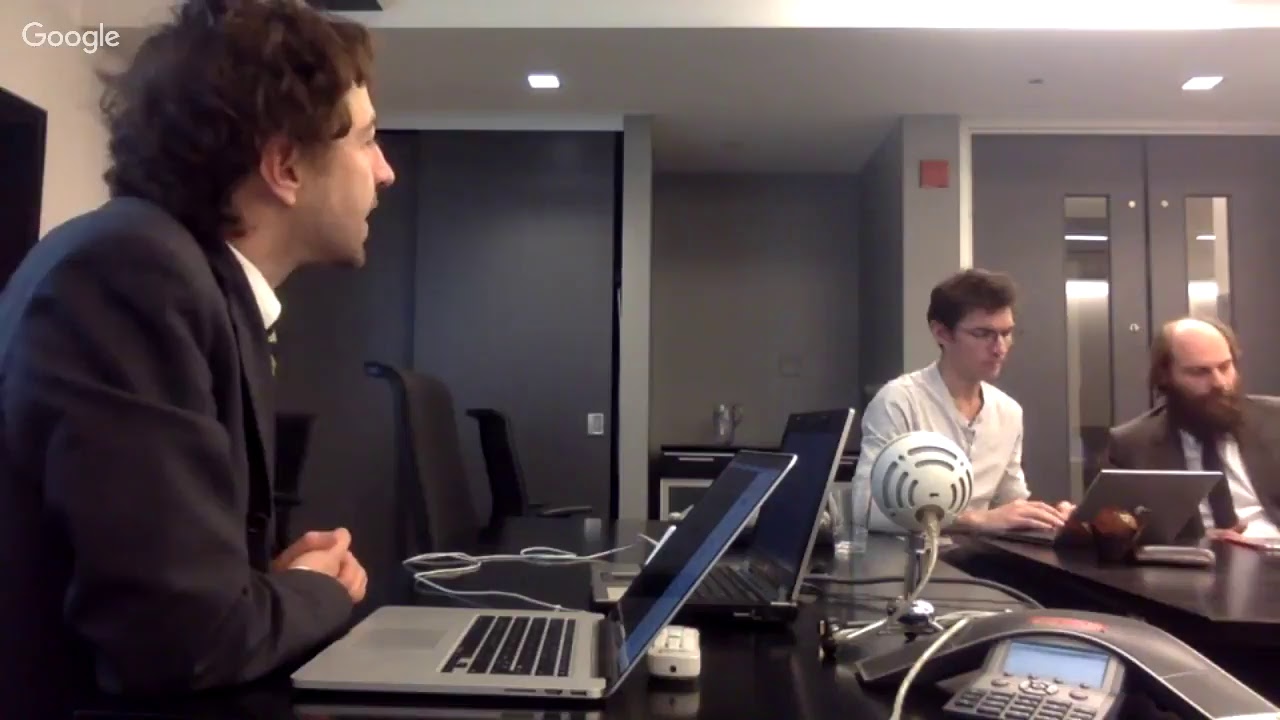
Séminaire Édito2019 : séance d'ouverture
Séminaire Édito2019: opening session
Keywords
Summary
161 words
Critical Evaluation
Value of the Information & Strength of the Argument
The value of the information lies in its synthesis of classical architectural theory and its thoughtful application to digital spaces. The speaker demonstrates a deep familiarity with historical sources and presents a coherent argument for the relevance of architectural concepts such as scale, type, and distribution to the digital realm. The argumentation is solid, building from definitions by Vitruvius, Alberti, and Viollet-le-Duc, and progressively linking them to contemporary digital architecture. However, the presentation remains more exploratory than conclusive, recognizing the complexity of transferring architectural frameworks to digital contexts. The speaker’s cautious approach strengthens credibility, as he acknowledges the limitations and open questions surrounding this interdisciplinary dialogue.
Scientific Rigor, Source Quality, Title Accuracy
The talk exhibits strong scientific rigor by grounding its claims in a rich tradition of architectural theory, referencing primary texts and historical developments. The sources mentioned are authoritative within the field, including Vitruvius, Alberti, Durand, and modern theorists like Zevi and Giedion. The presentation is well-structured, tracing the evolution of architectural thought and its implications for digital spaces. The title adequately indicates the seminar’s opening, and the content matches this expectation by introducing central themes and setting the stage for future sessions. No external sources were provided in the description, so the analysis relies solely on the speaker’s citations. Overall, the rigor of the content is high, though the reliance on a single speaker’s perspective limits it to an expert opinion rather than a comprehensive survey.
247 words
Title / Content Match
The title accurately reflects the content as the opening of a seminar, introducing themes of architecture and digital spaces.
Quality & Reliability
7/10
The presentation originates from a university research chair and draws on established architectural theory (Vitruvius, Alberti, Durand, etc.). While it is an expert opinion rather than peer-reviewed research, the theoretical framework is solid and well-structured.
Key Moments
Markers derived by PSI from the transcript: the creator did not define chapters.
- Introduction by Emmanuel Château-Dutier, presenting the seminar's theme on architecture and digital spaces.
- Speaker begins; thanks organizers and introduces the topic of architectural theory and digital architecture.
- Discussion of classical definitions of architecture, including Vitruvius and Alberti's principles.
- Exploration of the concept of scale in architecture, with references to Boudon and Valéry.
- Analysis of architectural types and Durand's systematic approach to design.
- Concluding remarks on the potential connections between architectural theory and web architecture.
Contribution & Novelties
The talk contributes an original cross-disciplinary perspective by applying classical architectural theory to the analysis of digital spaces, an area often dominated by computational or technical viewpoints. It emphasizes the relevance of human-centered concepts such as scale and typology in understanding the structure of digital environments. The speaker’s integration of philosophical and historical sources offers a fresh lens for digital humanities scholarship.
Pour aller plus loin :
- Architectural theory - Provides a broad overview of the theoretical frameworks discussed.
- Scale (architecture) - Explores the architectural concept of scale and its multiple dimensions.
- Digital humanities - Contextualizes the intersection of computational methods and humanistic inquiry.
- Jean-Nicolas-Louis Durand - Offers background on the architect whose systematic methods are central to the talk.
120 words
Radar Profile
The scores indicate a well-balanced profile, with high information quantity and quality, a moderate technical level, and solid reliability. This suggests a comprehensive and rigorous presentation suitable for an academic audience interested in the theoretical foundations of digital architecture.