Littérature et culture numérique, colloque étudiant Part4
Literature and digital culture, student symposium Part4
Keywords
Summary
143 words
Critical Evaluation
Value of the Information & Strength of the Argument
The value of the video lies in its original analysis of a living digital literary practice, linking theoretical frameworks (autofiction, editorialization) to concrete examples from a Facebook artist. The argumentation is coherent, though exploratory, raising questions rather than providing definitive conclusions. The speaker is transparent about technical limitations and ethical considerations regarding trans identity. The discussion with the audience adds depth, addressing issues of context reconstruction and platform affordances.
Scientific Rigor, Source Quality, Title Accuracy
The presentation is academically rigorous, with explicit references to literary theory (Doubrovsky) and contemporary research (Marc Monjour), though the sources are not systematically cited with full details. The title accurately represents the content, as it is the fourth part of a student colloquium on literature and digital culture. The discussion highlights the difficulty of preserving digital context, a critical point for scholarly analysis of such content. The overall quality is solid, though the informal format limits the verification of claims.
164 words
Title / Content Match
The title accurately reflects the content, which is the fourth part of a student colloquium on literature and digital culture.
Quality & Reliability
7/10
The video presents original academic research from a student colloquium, with clear methodology and references to literary theory, but the claims are not peer-reviewed and some technical aspects of the analysis rely on the speaker's personal interpretation.
Key Moments
Markers derived by PSI from the transcript: the creator did not define chapters.
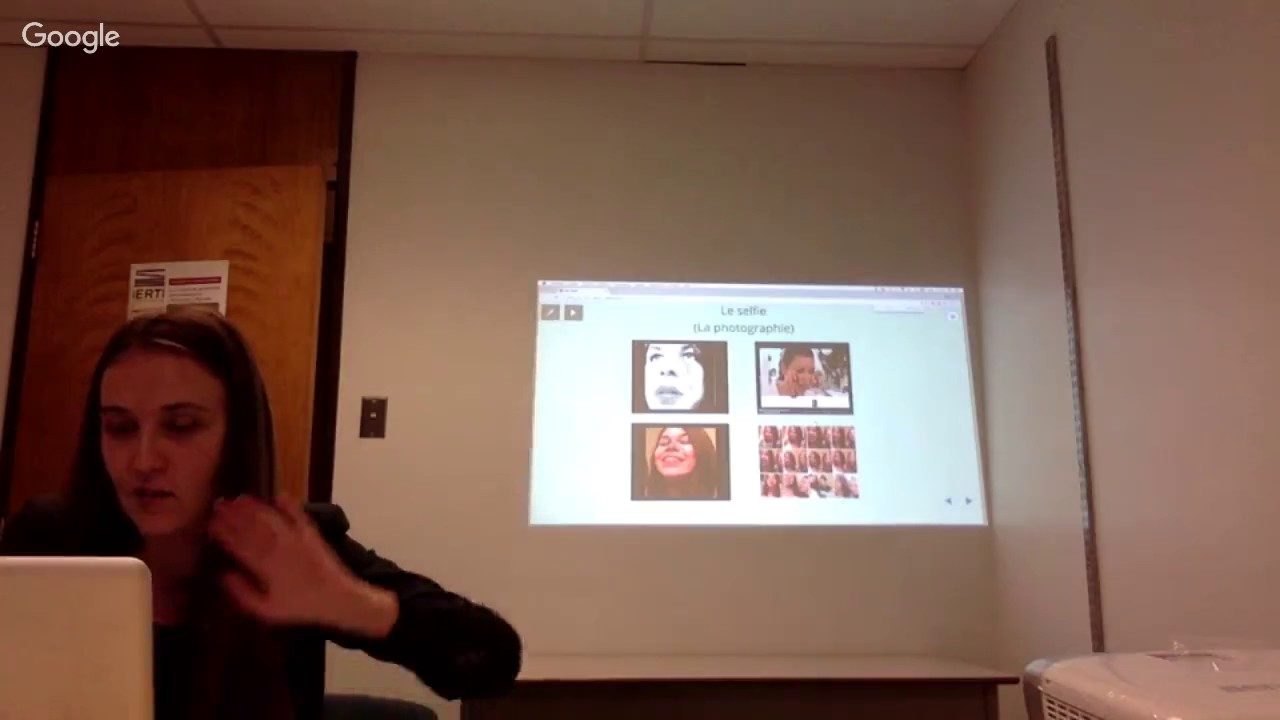
- Introduction of the first presentation by Maude Veilleux on autofiction and Facebook profile of Pascal Gorry Bérubé.
- Discussion of Facebook's history and affordances, from 2004 to 2011, and their influence on the poet's self-staging.
- Analysis of self-editorialization through selfies, statuses, and interactions, showing how Bérubé creates her digital identity.
- Exploration of identity crisis and the question of gender transition, linked to Bérubé's practice.
- Conclusion on autofiction and the blurred line between the real and the virtual, with reference to Joseph Kosuth's work.
- Discussion on the difficulty of reconstructing the original context of Facebook posts and the separation of content from its support.
Cited Sources
- Wikipédia - affordance — Definition of 'affordance' as the capacity of an object to structure its use, cited at the beginning of the presentation.
- Le Livre brisé (Doubrovsky) — Quotation about being 'fictitious' and 'orphan of oneself' to illustrate autofiction.
- Marc Monjour - 'Deux poètes 2.0' — Mentioned in the presentation as an article discussing parallels between two digital poets, including Victoria Welby and anarchet.
- Joseph Kosuth - One and Three Chairs — Artwork referenced to illustrate the distinction between real, image, and word in relation to identity.
Contribution & Novelties
The video offers a rare close reading of a living poet’s Facebook profile as an autofictional work, integrating the platform’s evolving affordances in the analysis. It connects literary theory (Doubrovsky’s autofiction) with digital studies (editorialization, identity construction) and raises pertinent questions about trans identity in online self-representation. The discussion highlights the epistemological challenges of studying social media archives, a significant methodological contribution.
Pour aller plus loin :
- Autofiction - Wikipedia — Provides a comprehensive overview of the concept, useful for contextualizing the speaker’s use of the term.
- Pacte autobiographique - Wikipedia — Explains Lejeune’s theory, relevant to the tension between fact and fiction.
- Identity (social science) - Wikipedia — Discusses identity formation in social contexts, including online spaces.
- Digital identity - Wikipedia — Offers background on the concept of digital identity and its theoretical debates.
135 words
Radar Profile
The radar profile shows a balanced video with high scores in information quality and quantity, moderate technical level and reliability. This reflects an engaging academic presentation with in-depth analysis but limited external verification.