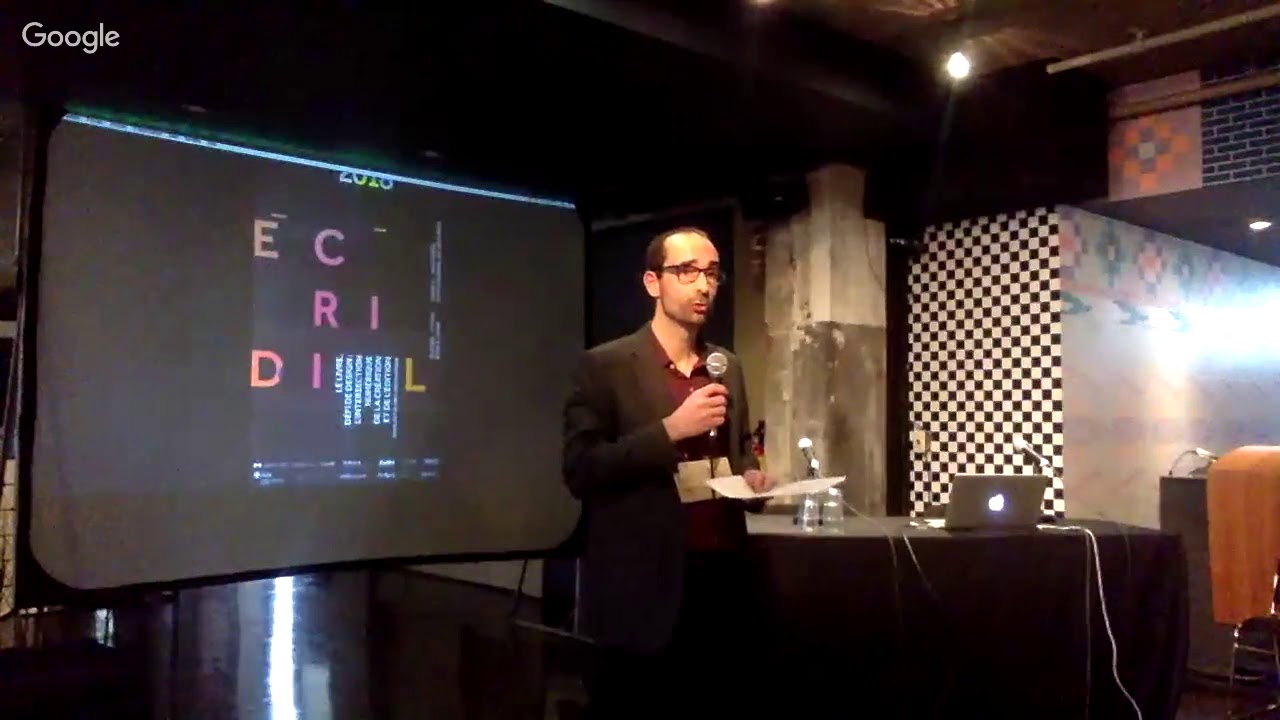
Séance {A} « Matérialités du design du livre numérique »
Session {A} “Materialities of the digital book design”
Keywords
Summary
195 words
Critical Evaluation
Value of the Information & Strength of the Argument
The value of the information is significant for scholars interested in digital publishing and materiality. The presentations provide original insights based on qualitative research, such as interviews and document analysis, demonstrating a rigorous methodological approach. The argumentation is well-structured, connecting theoretical frames like editorial enunciation to concrete case studies. However, the auto-generated transcript makes it difficult to fully capture nuances, and some parts appear garbled, which could obscure the precision of claims. Overall, the content offers a valuable contribution to understanding the evolving nature of digital books.
Scientific Rigor, Source Quality, Title Accuracy
The scientific rigor benefits from the academic context and the use of established concepts like ‘énonciation éditoriale’, but explicit source citations are scarce in the transcript. The researchers are named, but no references to publications are given. The title accurately matches the content, as it directly addresses the material aspects of digital book design. The description provided additional context on the speakers and their topics, which helps situate the presentations. However, the lack of clear references and poor transcription quality prevent the video from achieving the highest reliability.
190 words
Title / Content Match
The title accurately reflects the content, which focuses on the materialities of digital book design, as discussed in the presentations.
Quality & Reliability
7/10
The video presents academic research on digital book materiality. The transcript is auto-generated and contains numerous transcription errors, which lowers clarity. However, the content is based on real research projects and academic concepts, lending some credibility. The sources are not explicitly cited in the transcript beyond the names of researchers, but the theoretical framework is evident.
Key Moments
Markers derived by PSI from the transcript: the creator did not define chapters.
Contribution & Novelties
The video contributes to the emerging field of digital materiality in book studies by providing empirical case study insights. It offers a nuanced view of how editorial roles are negotiated in digital publishing, extending Souchier’s concept of ‘énonciation éditoriale’ to contemporary hybrid works.
Pour aller plus loin :
- Énonciation éditoriale — Concept introduced by Emmanuël Souchier, central to understanding how editorial instances shape digital texts.
- Materiality of digital text — Explores the physical and interface-based aspects of digital reading, linked to the conference theme.
- Hypertextuality — The non-linear structure of hypertext, relevant to the discussion on multi-linear narratives.
- Digital humanities — The field combining computing and humanities, which frames the research methodologies presented.
113 words
Radar Profile
The radar profile shows a high level of technical rigor (8) but moderate information quantity and quality (both 7) and lower reliability (6) due to the imperfect transcription. Overall, the video is technically dense but hampered by production quality issues.