Theoretical and historical perspectives / Perspectives théoriques et historiques #2
Keywords
Summary
155 words
Critical Evaluation
Value of the Information & Strength of the Argument
The presentation offers a sophisticated and original theoretical framework, connecting historical media theories to contemporary digital practices. Fan’s argument is well-structured, moving from general concepts to a concrete literary example, and she convincingly demonstrates how intermedial references rely on difference rather than fusion. The discussion adds depth, especially on materiality as including infrastructure and global economics. The argumentation is coherent, though some claims could benefit from more empirical backing. The other speakers are not developed in this transcript, so the value is concentrated on the first talk.
Scientific Rigor, Source Quality, Title Accuracy
The talk cites key scholars such as Benjamin, Kittler, Bolter and Grusin, Higgins, and Rajewsky, showing a solid academic grounding. The source link provided (isis2017.digitaltextualities.ca) is the conference website, which contextualizes the event. The title accurately represents the content, as the session focuses on theoretical and historical perspectives. No external verification is possible due to limited citations, but the internal logic and references are credible.
167 words
Title / Content Match
The title accurately reflects the panel's focus on theoretical and historical perspectives on intermediality.
Quality & Reliability
7/10
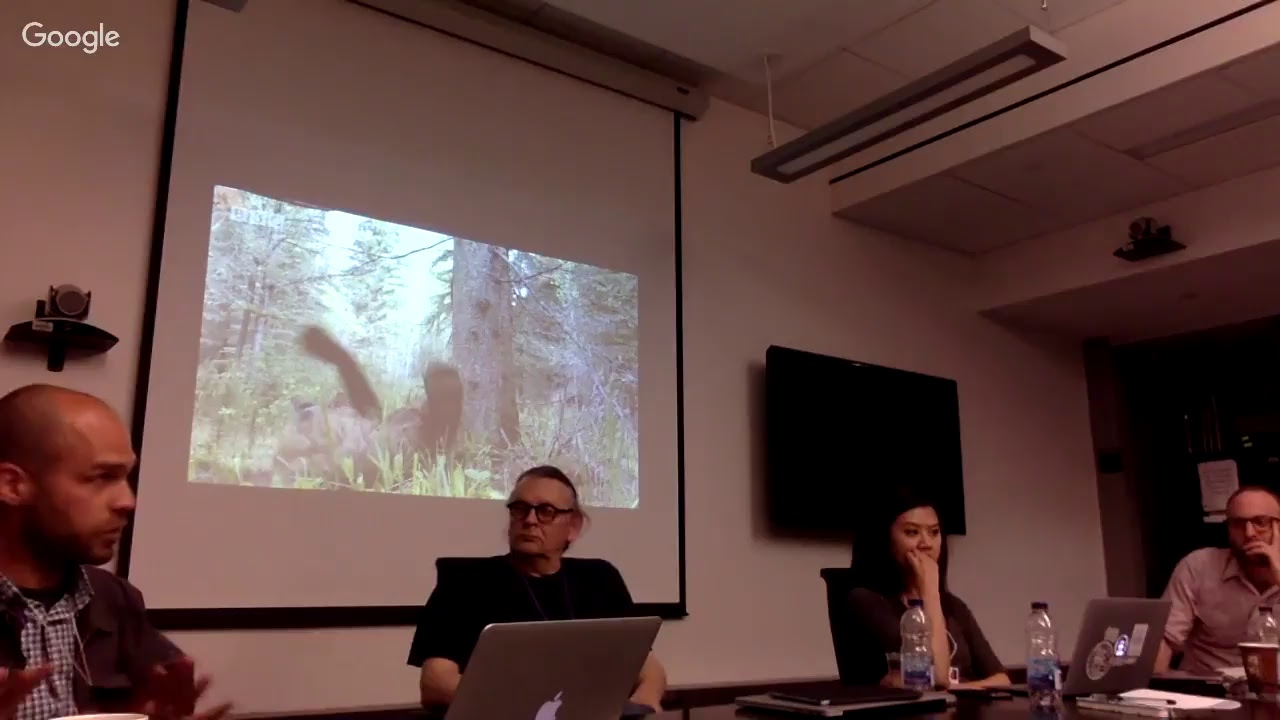
The video presents rigorous academic presentations from a colloquium, with clear theoretical arguments and references to established scholars (Benjamin, Bolter and Grusin, Kittler, etc.). The content is specialized and coherent, but the recording quality and lack of visual aids limit full verification.
Key Moments
Markers derived by PSI from the transcript: the creator did not define chapters.
Cited Sources
- International Society for Intermedial Studies - 3rd International Colloquium — Official website of the colloquium where the presentation took place.
Contribution & Novelties
The presentation contributes a nuanced reinterpretation of intermediality as encounter rather than fusion, emphasizing the role of material awareness and dissonance. It bridges literary studies and media theory, offering a method for analyzing intermedial references that preserves medial difference. The concept of ‘spaces of erasure’ is a novel step.
Pour aller plus loin :
- Intermediality (Wikipedia) — Provides background on the concept.
- Remediation (Bolter and Grusin) — Key theoretical foundation.
- Walter Benjamin’s ‘The Work of Art in the Age of Mechanical Reproduction’ — Important historical context for dematerialization.
88 words
Radar Profile
The radar profile shows high scores in quantitative information and technical level, with moderate reliability. This indicates a dense, expert-level lecture that is intellectually stimulating but not easily accessible to a general audience. The balance between quality and quantity is strong, but the single-talk focus limits breadth.