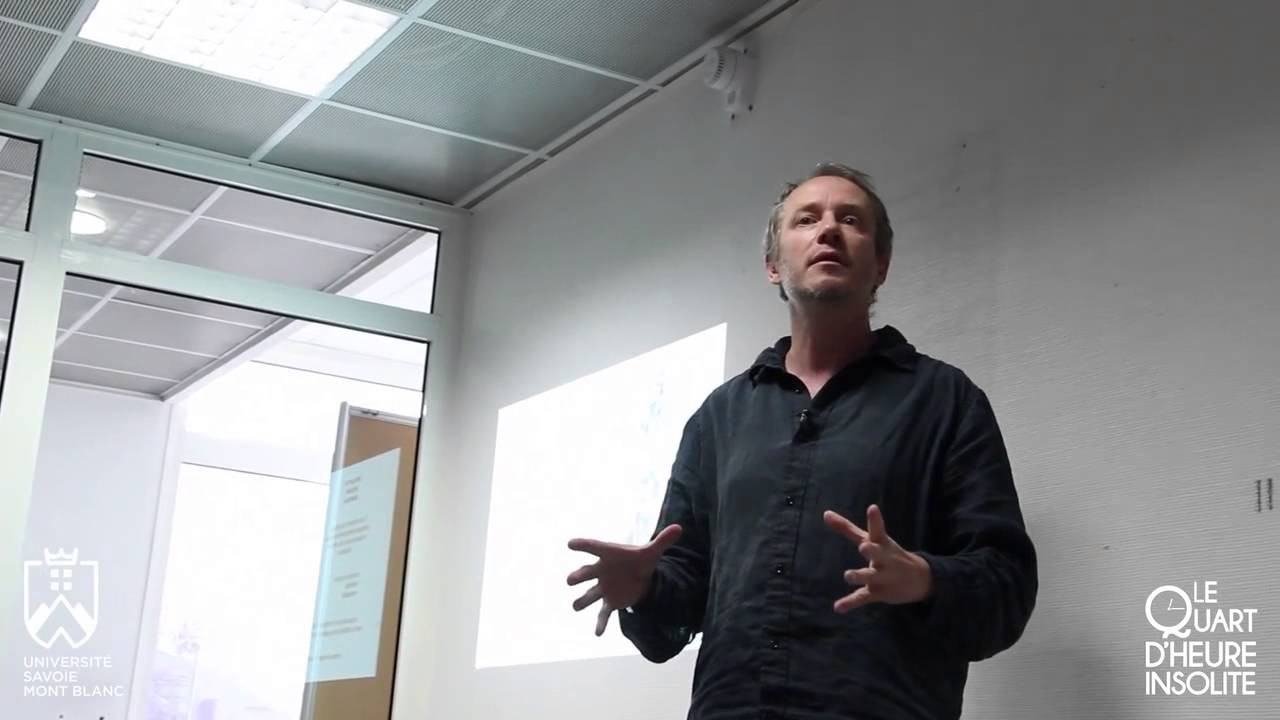
Quart d'Heure Insolite #08 : Physique et embouteillages
Unusual Quarter Hour #08: Physics and Traffic Jams
Keywords
Summary
215 words
Critical Evaluation
Value of the Information & Strength of the Argument
The talk offers a genuine intellectual value by connecting multiple branches of physics (mechanics, fluid dynamics, statistical mechanics) to a common real-world problem. The argumentation is sound: each analogy is explained clearly and supported by physical reasoning, from the scaling argument to the spring model and the fluid analogy. The Braess paradox is particularly well-presented, with a concrete numerical example that makes the counterintuitive result accessible. The speaker also grounds his presentation in the scientific literature, citing a comprehensive review article. The reasoning is coherent and demonstrates the power of analogical thinking in physics, though some simplifications are inevitable given the short format.
Scientific Rigor, Source Quality, Title Accuracy
The scientific rigor is high. Taillet, a physicist, accurately presents established concepts from traffic theory and statistical physics. He explicitly references a specific publication (the Physics Reports review) and also points to arxiv paper 0907.1925 in the description, which aligns with the content. The talk is not merely anecdotal but based on actual research. The title ‘Physics and Traffic Jams’ is perfectly adequate, precisely describing the subject. The content stays on topic throughout, and the experimental demonstration at the end reinforces the theoretical points. No obvious errors or misleading statements were detected.
210 words
Title / Content Match
The title accurately describes the content — a short talk on the physics of traffic jams.
Quality & Reliability
8/10
The speaker is a physicist and professor, presenting established physics concepts and referencing a peer-reviewed article. The talk is well-structured and the analogies are sound, though some simplifications are made for the public.
Key Moments
Markers derived by PSI from the transcript: the creator did not define chapters.
- Scaling argument: why bigger cities inevitably have traffic jams (population grows as R², roads as R)
- Spring model analogy: cars connected by springs, wave propagation in traffic
- Fluid dynamics analogy: laminar vs turbulent regimes and its application to speed limits
- Statistical physics analogy: cars as atoms, metastable states like supercooled water applied to traffic
- Braess paradox: adding a road increases travel time, with a numerical example
- Mechanical demonstration of Braess paradox using strings and springs, showing the system rises when a string is cut
Cited Sources
- arXiv:0907.1925 - The paradox of the road network — Mentioned in the video description as the article referenced during the talk.
Concurring Sources
- arXiv:0907.1925 - The paradox of the road network — The referenced article provides the mathematical basis for the Braess paradox described in the talk.
Contribution & Novelties
The talk provides an engaging and accessible introduction to the physics of traffic jams, successfully using multiple analogies to explain complex phenomena. Its originality lies in the clear link between statistical physics concepts (like metastability) and everyday traffic behavior, and in the live mechanical experiment that demonstrates Braess paradox. It also highlights a real-world profession (traffic engineers) that applies these physics-based approaches.
Pour aller plus loin :
- Braess’s paradox - Wikipedia — The paradox presented in the video, explaining how adding capacity can worsen congestion.
- Traffic flow - Wikipedia — Overview of the mathematical modeling of traffic, relevant to the fluid analogy discussed.
- Statistical mechanics - Wikipedia — The physical theory underlying the analogy of cars as atoms, including metastable states.
121 words
Radar Profile
The radar profile shows high scores in quality of information and reliability, reflecting the speaker's expertise and the use of established physics. The quantity of information is moderate, typical for a 20-minute talk, and the technical level is balanced, making it accessible while retaining scientific depth. The overall shape indicates a well-rounded, trustworthy scientific communication.