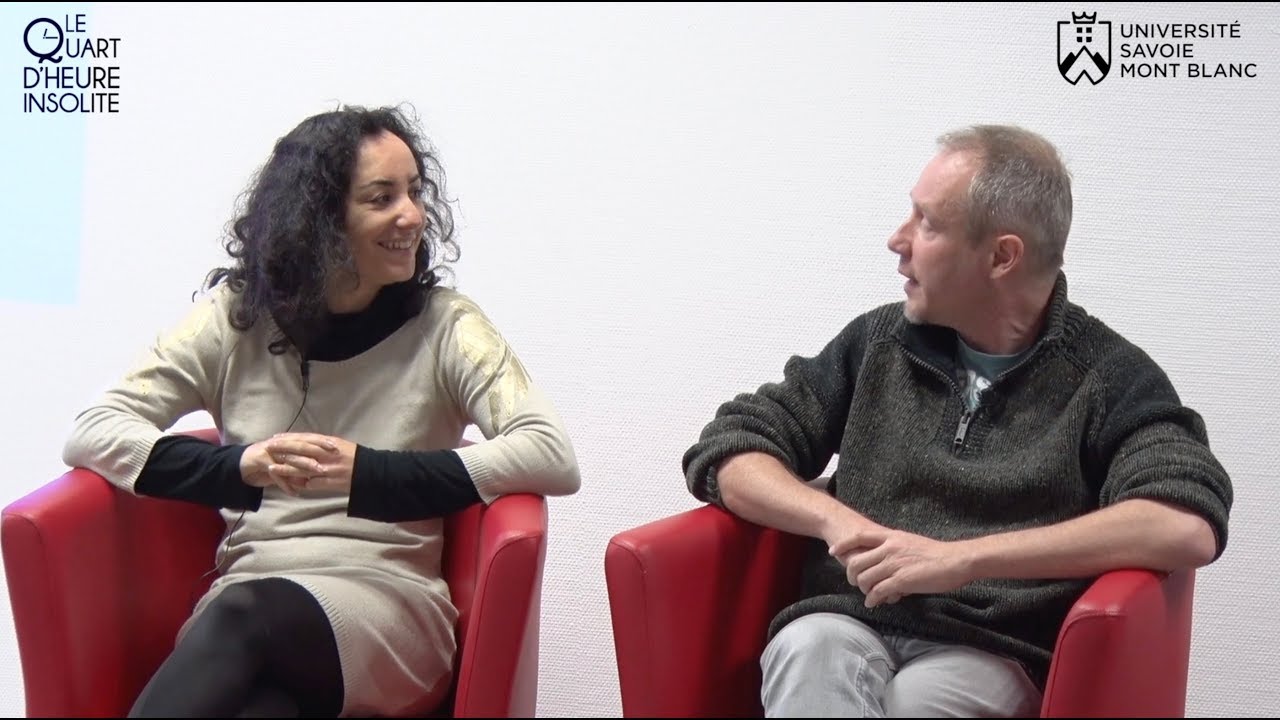
Quart d'Heure Insolite #18 : « La tête dans les étoiles, » avec Florence Porcel
Unusual Quarter Hour #18: "Head in the Stars," with Florence Porcel
Keywords
Summary
178 words
Critical Evaluation
Value of the Information & Strength of the Argument
The video offers valuable insights into the daily reality of an astrophysicist, correcting stereotypes and clarifying that the profession involves specialized work rather than encyclopedic knowledge. Taillet argues convincingly that the intrinsic pleasure of research comes from personal understanding rather than universal answers. Porcel’s account of her methodology adds significant value: she explains how she validates content with experts, cites sources transparently, and corrects errors publicly. The argumentation is coherent and grounded in personal experience, with both participants acknowledging the limitations and challenges of science communication. The discussion on online harassment provides a sobering perspective on the social hurdles faced by women in this field, albeit handled with restraint.
Scientific Rigor, Source Quality, Title Accuracy
The scientific rigor is high: Taillet, a practicing astrophysicist, provides a professional viewpoint, while Porcel demonstrates a systematic approach to verification and sourcing. She mentions that she consistently works with experts and shares bibliographies and lab affiliations. The interview format ensures that claims are questioned and clarified. The title is adequately descriptive, though not catchy, and it accurately represents the content as a conversational exchange about science and communication. No specific external sources are listed in the video description, but the internal references to personalities like André Brahic and Alexandre Astier suggest a broader scientific culture. The discussion about Wikipedia as a source of sources indicates a critical approach to information.
235 words
Title / Content Match
The title accurately reflects the content: a conversation about astronomy and the work of science communicators.
Quality & Reliability
8/10
The discussion is conducted between a physicist and a science communicator, with emphasis on fact-checking, source citation, and transparent correction of errors.
Key Moments
Markers derived by PSI from the transcript: the creator did not define chapters.
- Taillet thanks the library, students, and introduces the format.
- Debunks misconceptions about astrophysicists (e.g., not knowing stars, not passionate about astronomy).
- Introduces Florence Porcel and her work as a science communicator.
- Discussion on Porcel's methods: expert validation, source citation, and error correction.
- Handling online harassment and closing remarks.
Cited Sources
- André Brahic (astrophysicist and popularizer) — Mentioned as an exceptional example of a scientist who also excelled in science communication.
- Alexandre Astier (actor and director, not a scientist) — Cited as a non-scientist who is an exceptional science communicator.
Contribution & Novelties
The video provides a nuanced insider view of the astrophysicist profession and the science communication process, highlighting the importance of source validation and transparency. It also addresses gender-based online harassment, a crucial but often overlooked issue in science communication.
Pour aller plus loin :
- Science communication — Overview of the field, methods, and challenges.
- Astrophysics — Introduction to the discipline and its subfields.
- Fact-checking — Process of verifying information, relevant to Porcel’s approach.
- Online harassment — Broader context for the harassment discussion.
82 words
Radar Profile
The profile shows balanced scores across information quantity, quality, and technical level, with slightly higher reliability, reflecting the trustworthy nature of the discussion.