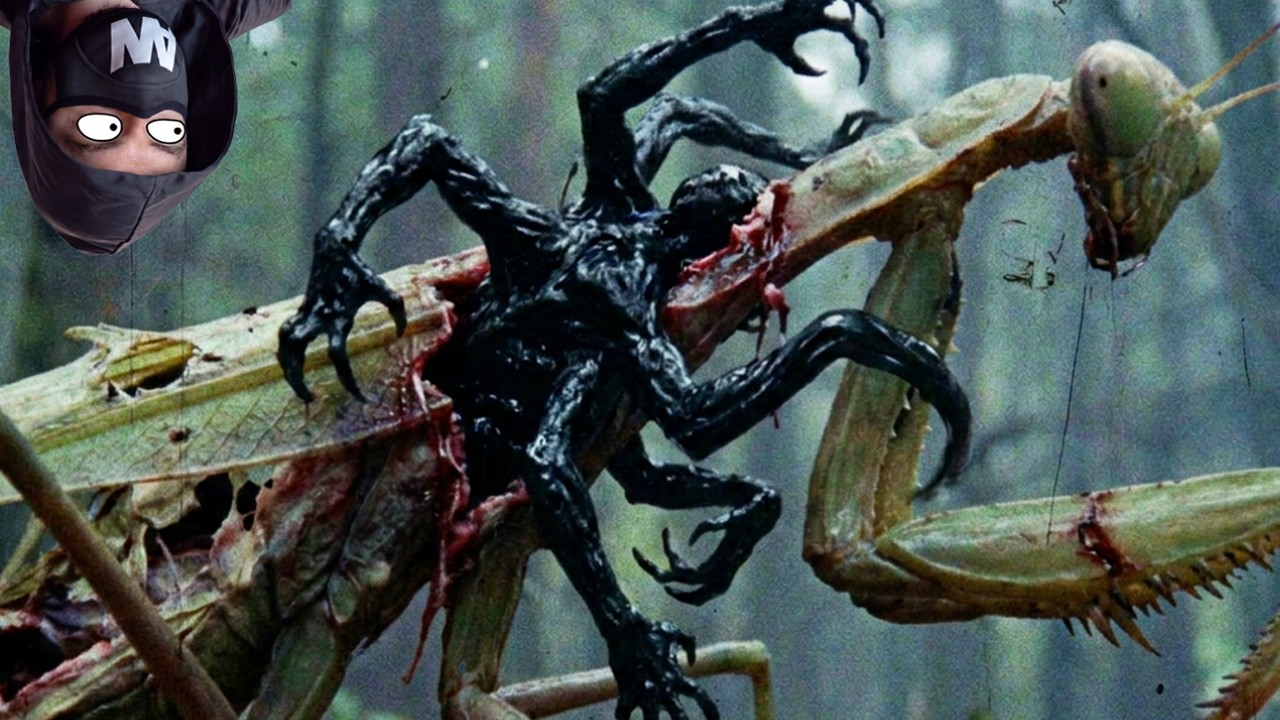
Ça Commence À Tuer Toutes Les Mantes Aux États-Unis
It's Starting to Kill All the Mantises in the United States
Title history
- Ça Commence À Tuer Toutes Les Mantes Aux États-Unis — observed on 20261101-0101 UTC (YouTube)
Keywords
Summary
177 words
Critical Evaluation
Value of the Information & Strength of the Argument
The video provides substantial value by explaining a complex ecological story with clear cause-and-effect relationships, integrating multiple examples (parasitic flies, nematomorphs, invasive competitors). The argumentation is generally logical, building from a specific case study to broader principles of biological control risks. It effectively uses concrete data (e.g., 64 collected mantises, 57 deaths) and visual descriptions to support its points. However, the argumentation relies heavily on narrative storytelling, and some causal claims are presented as facts without addressing alternative hypotheses. The video also speculates on hypotheses (e.g., why Chinese mantises are less affected) without strong evidence, but it acknowledges these uncertainties.
Scientific Rigor, Source Quality, Title Accuracy
Scientific rigor is moderate: the video references a study in Mississippi and historical introductions (e.g., Compsilura concinnata in 1906) but provides no citations or links to original research. The quality of sources is inferred from known literature, but without explicit references, it is hard for the viewer to verify. The title adequately matches the content, though ‘kill all’ overstates the scope; the video focuses on multiple factors rather than a single cause. The content is up-to-date and aligns with current ecological understanding of invasive species and parasite-host interactions. No comments were provided, so public reception cannot be assessed.
213 words
Title / Content Match
The title accurately reflects the core theme—the decline of native mantises in the U.S. due to parasites and invasive competitors—though it slightly sensationalizes with 'kill all' while the content is more nuanced.
Quality & Reliability
8/10
The video presents a coherent narrative about invasive species, parasitism, and biological control, referencing specific studies (e.g., the collection of mantises in Washington County, Mississippi). However, it lacks explicit citations or references to peer-reviewed papers, and some claims are presented without direct evidence. The information appears scientifically plausible and within mainstream understanding, but the lack of verifiable sources reduces the score.
Key Moments
Markers derived by PSI from the transcript: the creator did not define chapters.
- Introduction of the native mantis and its sudden death
- Description of the parasitic fly larva emerging from a mantis
- Explanation of the Chinese mantis introduction and its competitive advantage
- Discussion of the nematomorph worm that drives mantises to water
- Sale of oothecae and the indiscriminate predation of mantises
- Sterile insect technique and the Panama example
- Spread of giant Asian mantises in Europe
- Research on mantis 3D vision and its implications for robotics
Cited Sources
- Study on mantis mortality in Washington County, Mississippi — Reported in the video: 64 mantises collected, 57 died due to parasitic fly larvae.
- Introduction of Chinese mantis (Tenodera sinensis) to North America — Historical event mentioned in the video (1896).
- Compsilura concinnata release in 1906 — Parasitic fly introduced for pest control, described in the video.
Dissenting Sources
- Potential counterpoint: Some studies suggest native mantis declines may be primarily due to habitat loss, not solely invasive species. — The video attributes declines mainly to invasive species and parasites, but some ecologists argue habitat destruction is a major factor. This alternative hypothesis is not discussed.
Contribution & Novelties
The video provides an original synthesis of multiple parasitic and invasive interactions affecting mantises, connecting local observations to global patterns. It highlights the overlooked role of parasite manipulation and the unintended consequences of biological control. The narrative skillfully interweaves historical examples with current studies.
Pour aller plus loin :
- Tenodera sinensis - Chinese mantis — Relevant for understanding the invasive species background.
- Compsilura concinnata - Tachinid fly — Detailed information on the parasitic fly introduced in North America.
- Nematomorpha - Horsehair worms — Covers the worms that manipulate mantis behavior.
- Sterile insect technique — Explains the alternative control method mentioned in the video.
- Ootheca — Relevant for understanding mantis egg cases and their commercial sale.
115 words
Radar Profile
The radar profile shows high scores in information quantity and technical depth, with moderate scores in quality and reliability. This indicates a content-rich video with substantial scientific detail, but with some gaps in source transparency and rigorous evidence presentation.