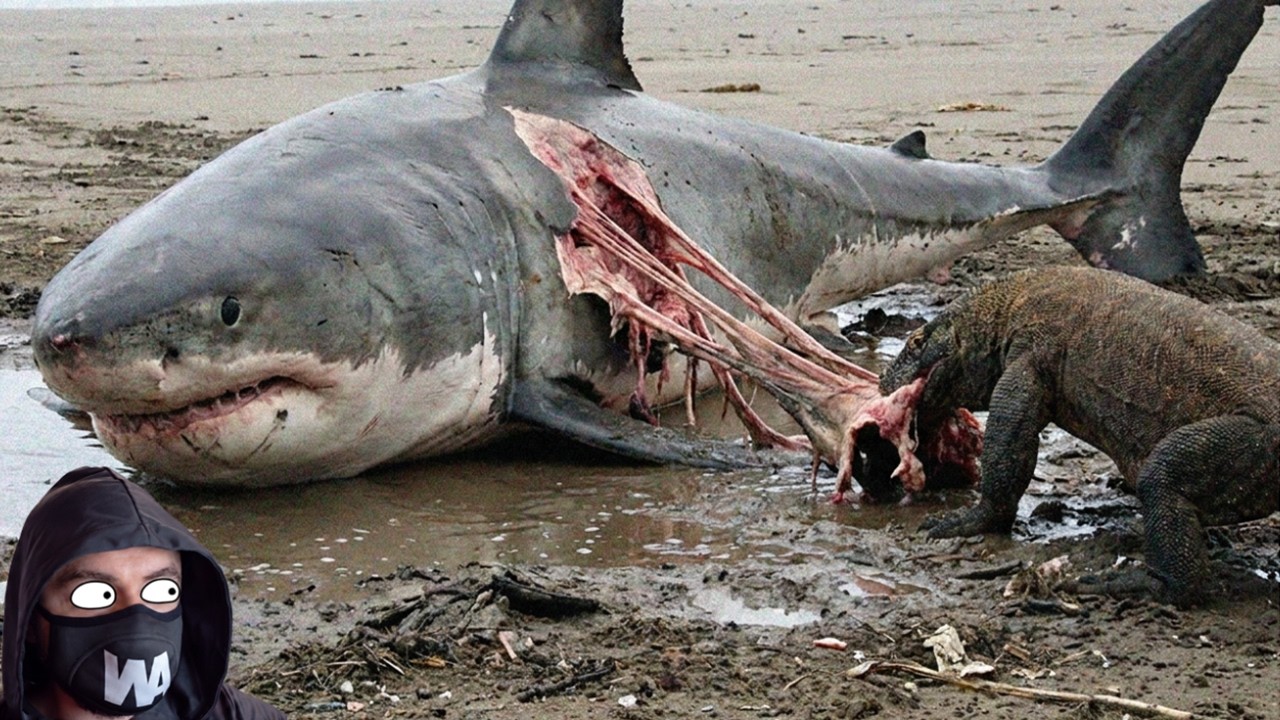
Comment Le Dragon De Komodo S’Attaque À Un Grand Requin Blanc Sur La Terre Ferme
How a Komodo Dragon Attacks a Great White Shark on Dry Land
Title history
- Comment Le Dragon De Komodo S’Attaque À Un Grand Requin Blanc Sur La Terre Ferme — observed on 20261101-0054 UTC (YouTube)
Keywords
Summary
168 words
Critical Evaluation
Value of the Information & Strength of the Argument
The value of the video lies in its engaging narrative that makes ecological concepts accessible to a general audience. It effectively demonstrates how a single event can trigger a cascade of unintended consequences, touching on themes like species interactions, contamination, and human-wildlife conflict. However, the argumentation is primarily narrative and speculative, lacking empirical evidence or references to real studies. The video does not present a rigorous scientific analysis; instead, it uses a ‘what-if’ scenario to explore ecological principles. The storyline is coherent and internally logical, but the plausibility is not grounded in documented events. As such, the information is useful for educational purposes rather than for establishing scientific facts.
Scientific Rigor, Source Quality, Title Accuracy
The video does not cite any scientific sources, and the description contains no references. The content is purely speculative, which undermines its scientific rigor. The title is partially misleading: it focuses on a single shark attack, but the video covers a much broader ecological disaster spanning years and involving multiple species. While the title captures the initial hook, it does not represent the full scope of the content. No comments were provided for analysis, so public reception cannot be assessed. Overall, the rigor is low due to lack of sourcing and evident fictionalization, and the title-content alignment is only moderate.
224 words
Title / Content Match
The title focuses on a specific shark attack, but the video expands into a broader ecological disaster scenario, making the title somewhat misleading.
Quality & Reliability
4/10
The video presents a speculative narrative about ecological cascades without citing scientific sources or empirical data. While it illustrates ecological concepts effectively, it is not a factual account and lacks verification.
Key Moments
Markers derived by PSI from the transcript: the creator did not define chapters.
- A great white shark is stranded on the shore, and a Komodo dragon approaches it as potential prey.
- The dragon attempts to bite the shark but encounters its tough, armor-like skin, highlighting the challenge.
- Dragons learn to exploit tidal patterns and patrol the shore at low tide to find stranded prey.
- Multiple sharks become trapped in a shrinking lagoon, and the dragons wait for conditions to weaken them.
- Dragons deliberately leave bait to lure sharks closer to shore, using currents and tides to their advantage.
- Contaminated carcasses attract rats, and diseases spread to villages, leading to human health crises.
- Authorities close the lagoon after many bird deaths, but the cleanup causes food shortages for dragons.
- Fishermen conflict with dragons over catches, leading to illegal netting and infections from bites.
- Coastal dragons are blocked by sharks at sea, isolating populations and causing overgrazing on land.
- Deforestation and erosion lead to landslides, destroying villages and fisheries, culminating in a total ecosystem collapse.
Contribution & Novelties
The video offers an original, albeit speculative, exploration of how a single predation event can trigger a complex, multi-species ecological cascade. It creatively combines concepts of predator-prey dynamics, human-wildlife conflict, and environmental contamination into a coherent narrative. While the scenario is fictional, it serves as a thought experiment highlighting the interconnectedness of ecosystems and the far-reaching consequences of human interventions.
Pour aller plus loin :
- Trophic cascade — This concept directly relates to the cascading effects of predator removals or additions on ecosystem structure.
- Komodo dragon — Provides real-world background on Komodo dragon behavior and ecology, though the video’s coastal hunting behavior is speculative.
- Dead zone (ecology) — The lagoon’s oxygen depletion and contamination issues mirror real-world dead zone phenomena in aquatic environments.
123 words
Radar Profile
The radar profile shows a moderate quantity of information (7) but lower quality (4) and reliability (3), indicating a content-rich but scientifically weak presentation. The technical level is intermediate (5). This suggests a video that is engaging but lacks empirical grounding.