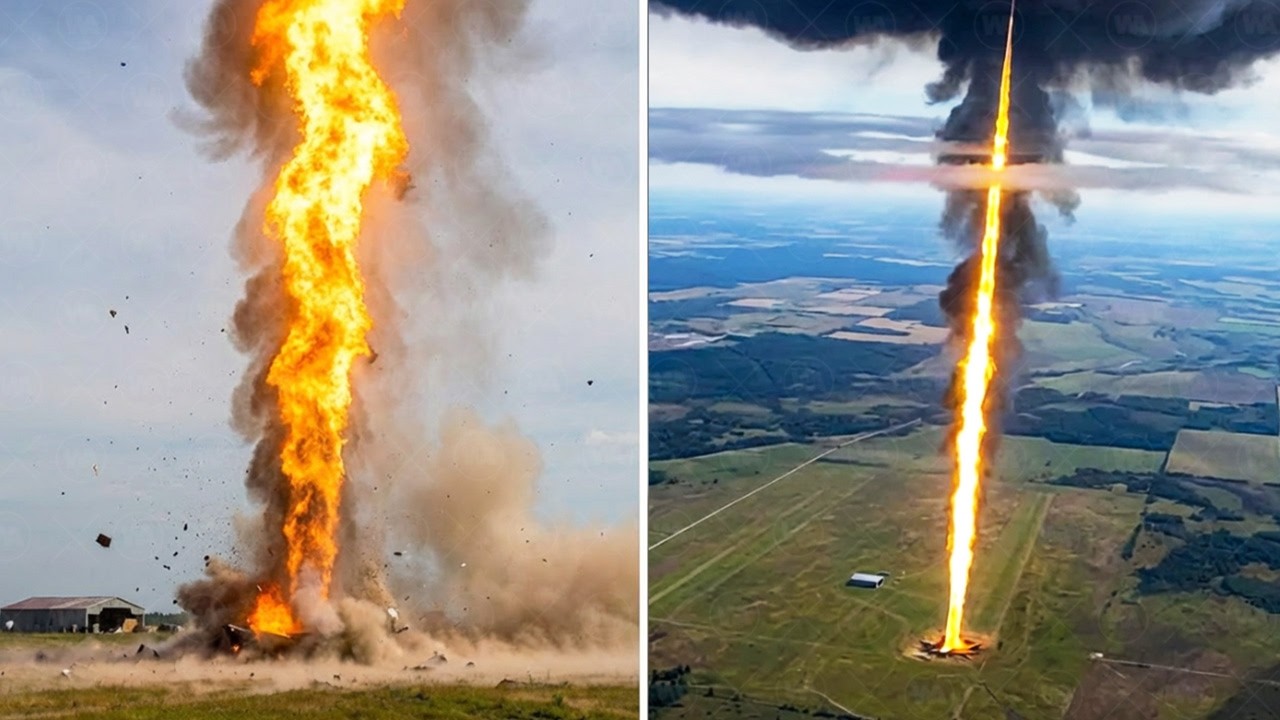
Le Japon A Foré Un Trou Dans Le Sol Près D'Un Volcan Et Ça Commence À Déclencher Quelque Chose
Japan drilled a hole in the ground near a volcano and it's starting to trigger something.
Title history
- Le Japon A Foré Un Trou Dans Le Sol Près D'Un Volcan Et Ça Commence À Déclencher Quelque Chose — observed on 20261101-0126 UTC (YouTube)
Keywords
Summary
154 words
Critical Evaluation
Value of the Information & Strength of the Argument
The video provides a valuable overview of Japan’s energy challenges and the trade-offs of geothermal power. It presents a logical progression from the nuclear shutdown to the need for alternatives, and then to the risks of geothermal exploitation. The argumentation is clear and accessible, using concrete examples (Pohang, Basel) to support claims about induced seismicity. However, it occasionally exaggerates dangers (e.g., the possibility of triggering volcanic eruptions) and lacks a balanced perspective on mitigation measures. The value lies in raising awareness about the complexities of renewable energy transitions, even if some statements are oversimplified.
Scientific Rigor, Source Quality, Title Accuracy
The video does not cite specific academic or institutional sources; it relies on general knowledge and named incidents (Pohang, Basel, Cerro Pabellón). The absence of source links in the description weakens its scientific rigor. The title is sensationalist and only loosely matches the content, which is a cautious discussion rather than an urgent alert. The presentation is more entertainment-oriented than strictly educational, and the viewer is not guided to further reading. No comments were provided for analysis.
186 words
Title / Content Match
The title suggests an imminent dramatic event, but the video is a broader overview of geothermal development and its associated risks; somewhat exaggerated clickbait.
Quality & Reliability
5/10
The video covers real events (Fukushima disaster, Pohang and Basel earthquakes) and plausible geothermal energy concepts, but lacks explicit citations and includes some speculative and dramatized statements, reducing overall reliability.
Key Moments
Markers derived by PSI from the transcript: the creator did not define chapters.
- Introduction to the energy crisis after Fukushima and the shutdown of nuclear plants.
- Explanation of Japan's reliance on imported fossil fuels and rising costs.
- Introduction to geothermal energy and how Japan plans to use its volcanic heat.
- Description of the drilling process and the mechanism of geothermal power generation.
- Discussion of induced seismicity risks, mentioning the Pohang earthquake (2017).
- Basil earthquake (2006) and other European examples of seismic events linked to geothermal projects.
- Ground subsidence at Cerro Pabellón (Chile) and potential contamination from heavy metals.
Concurring Sources
- Induced seismicity — Supports the video's claim that geothermal projects can trigger earthquakes.
- Geothermal energy — Provides background on the technology and its global applications.
- 2017 Pohang earthquake — Confirms the association between the Pohang geothermal plant and the magnitude 5.4 earthquake.
Contribution & Novelties
51 words
Radar Profile
The radar profile shows moderate scores across all dimensions. Information quantity is notable but quality and technical depth are average, reflecting the video's educational yet somewhat sensational approach. Fiabilité is limited by lack of citations.