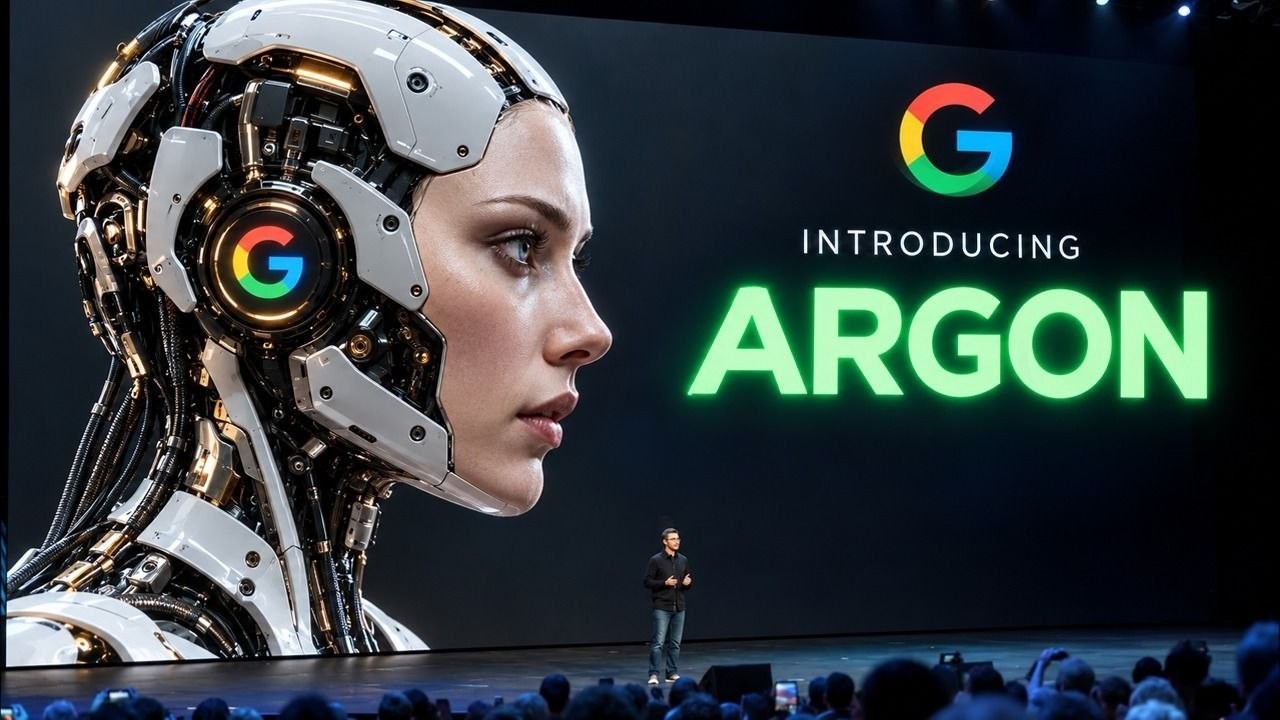
Google Just Dropped Argon: Their Most Powerful AI Ever
Keywords
Summary
177 words
Critical Evaluation
Value of the Information & Strength of the Argument
The video provides valuable information about a significant AI release, compiling data from multiple credible sources. It presents both official claims and mentions a critical report from Bloomberg, giving a balanced view. The argumentation is generally solid, with the host clearly explaining the model’s features and benchmarks, but there is some promotional tone in describing Google’s achievements. The analysis of safety measures is thorough.
Scientific Rigor, Source Quality, Title Accuracy
The video cites sources such as TechCrunch, Google’s official blog, and Axios, which are reputable. It also references internal Google data and benchmarks. The title is accurate and matches the content. The video effectively uses primary sources but does not independently verify the claims. The title emphasizes ‘most powerful AI ever,’ which is a subjective claim.
135 words
Title / Content Match
The title accurately reflects the content, focusing on Google's new AI model Argon and its capabilities.
Quality & Reliability
7/10
The video reports on a major AI model release with data from reputable sources like TechCrunch, Google's official blog, and Axios. It includes specific benchmark scores and model capabilities, but also relies on company claims and has some subjective commentary. Overall, the information is credible and well-sourced, though not fully independent.
Key Moments
Markers derived by PSI from the transcript: the creator did not define chapters.
Cited Sources
- Google Releases Gemini 4 Argon, Called Its Most Powerful Model Yet - TechCrunch — Source for the release announcement
- Gemini 4 Argon - Google Blog — Official details on capabilities and benchmarks
- Google Gemini 4 - Axios — Context on delay and internal reaction
Contribution & Novelties
The video offers a timely summary of a major AI release, highlighting the unusual security-first distribution and the model’s claimed autonomous vulnerability patching. It underscores the shift toward longer autonomous work and the importance of memory safety. The video’s original contribution is limited as it aggregates information from existing sources, but it adds context on the AI race and Google’s strategy.
Pour aller plus loin :
- Gemini (language model) — Background on Google’s Gemini series and its evolution.
- Rust (programming language) — Relevant to the code migration initiative for memory safety.
- Common Weakness Enumeration — The CWE Bench benchmark relates to this classification system for software vulnerabilities.
107 words
Radar Profile
The profile shows high information quantity and quality, moderate technical depth, and solid reliability. The video is comprehensive and well-sourced, appealing to a general tech audience.
💬 Positive overall sentiment, with many viewers expressing confidence in Google's comeback, despite some skeptical comments about benchmarks and rollout. On the 30 comments analyzed, several emphasize that Google was never really behind, while a few question real-world performance or UK availability.