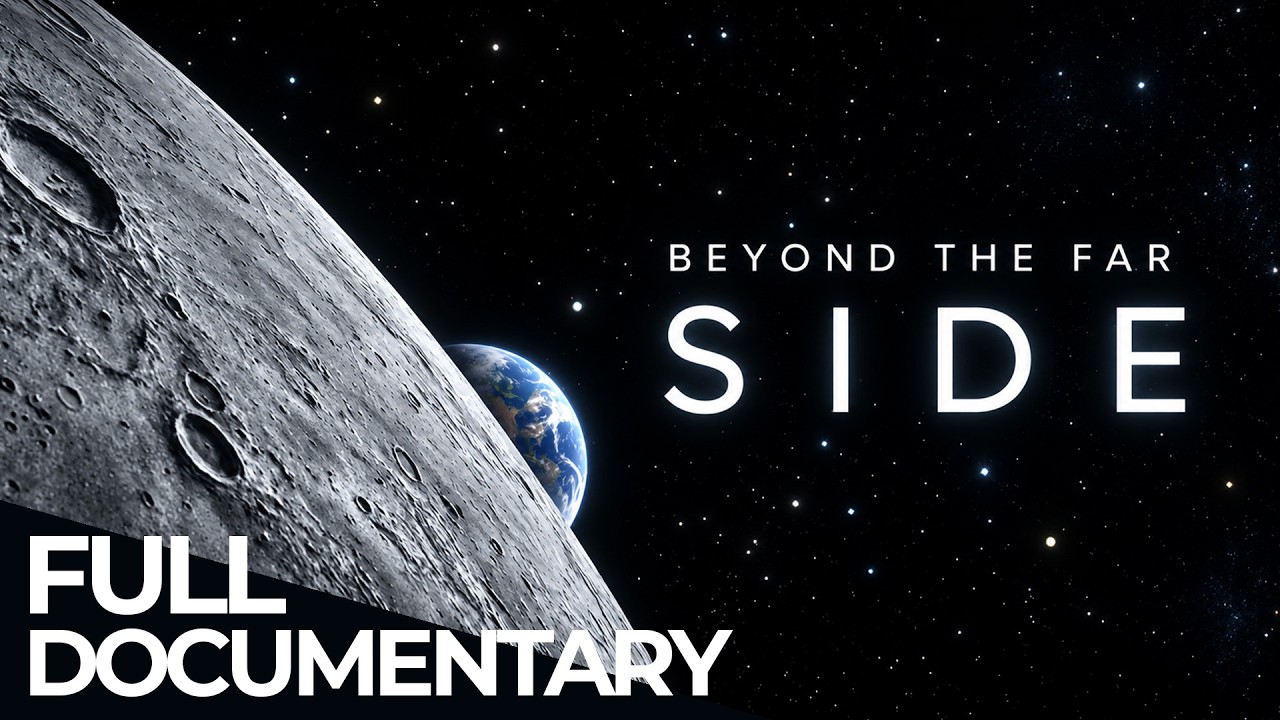
Beyond the Far Side: Return to the Moon | Free Documentary Space
Keywords
Summary
157 words
Critical Evaluation
Value of the Information & Strength of the Argument
The documentary offers a broad overview of current lunar exploration, presenting a wealth of information about missions, scientific findings, and technological developments. Its value lies in making complex space topics accessible to a general audience, supported by direct testimony from credible experts. The argumentation is generally solid, with a logical progression from historical context to ongoing programs and future challenges. However, it occasionally leans toward sensationalism and does not critically examine certain commercial or political motivations. The inclusion of diverse international perspectives strengthens its objectivity, though the narrative sometimes glosses over technical or budgetary controversies. Overall, the information is well-organized and contributes to a comprehensive understanding of humanity’s return to the Moon.
Scientific Rigor, Source Quality, Title Accuracy
The documentary’s scientific rigor is moderate. It relies on interviews with recognized researchers from institutions such as CNRS, ESA, and NASA, lending credibility to the information presented. However, no explicit academic references or datasets are cited, and the film does not provide opportunities for viewers to verify claims independently. The production quality is high, and the title accurately matches the content, which focuses on the Moon’s far side and broader return-to-the-Moon initiatives. The absence of critical analysis of some claims or the lack of discussion of alternative viewpoints slightly undermines its authority. Nevertheless, the content aligns with established knowledge in space science and does not contain obvious factual errors.
236 words
Title / Content Match
The title accurately reflects the content, focusing on the renewed return to the Moon, including the far side and major exploration programs.
Quality & Reliability
8/10
The documentary relies on interviews with recognized scientists and covers well-documented space missions, but some simplifications and the absence of explicit citations reduce its scientific precision.
Key Moments
Markers derived by PSI from the transcript: the creator did not define chapters.
- Introduction of the Chinese Chang'e 4 mission and its historic far-side landing in January 2019, featuring interviews with CNSA engineers.
- Discussion of lunar seismology with Mark Wieczorek, explaining that the Moon is still seismically active and experiences moonquakes.
- Presentation of the Chang'e 5 sample return mission, including the return capsule landing and the discovery of extended lunar volcanism.
- Coverage of the Artemis 1 launch and NASA's SLS rocket, along with the Orion capsule and plans for crewed missions.
- Detailed look at the Gateway station modules under construction in Italy, highlighting radiation protection and crew safety.
- Exploration of lunar poles and the search for water ice, with emphasis on Chang'e 7 and international interest in polar resources.
- Visit to a lava tube on Hawaii as a simulation site for lunar habitats, featuring the HI-SEAS base and insights on underground shelters.
- Comparison of Mars missions, including Perseverance and Zhurong, and the quest for traces of past life.
- Discussion of SpaceX's Starship and the ethical implications of resource extraction and potential environmental impact on the Moon.
Contribution & Novelties
The documentary synthesizes recent developments in lunar exploration, offering a comprehensive narrative that connects scientific discoveries, engineering challenges, and policy implications. Its original contribution lies in presenting a global perspective, featuring both Chinese and Western experts, and framing the Moon as a crucial intermediary for Mars colonization. The film effectively illustrates the shift from single-nation space efforts to a collaborative and commercialized space environment.
Pour aller plus loin :
- Chang’e 4 — Key mission detailed in the film, providing context on the far-side landing and its scientific significance.
- Artemis program — Official NASA initiative to return humans to the Moon, central to the documentary’s focus.
- Lunar water — The presence of water ice at the poles is a major theme; this resource is pivotal for future bases and Mars missions.
- Lunar Gateway — Proposed orbital station discussed in the video, highlighting international cooperation in lunar infrastructure.
- Lava tube — Geological formations featured in the film as potential habitats for lunar or Martian colonies, with terrestrial analogs on Earth.
168 words
Radar Profile
The radar profile shows very high scores in information quantity and quality, indicating a dense and substantial documentary. The technical level is moderately high, reflecting the complexity of space science, while the reliability score is strong but not perfect, owing to the lack of explicit citations. This profile suggests a well-produced educational piece that conveys expert knowledge with minor limitations in verifiability.