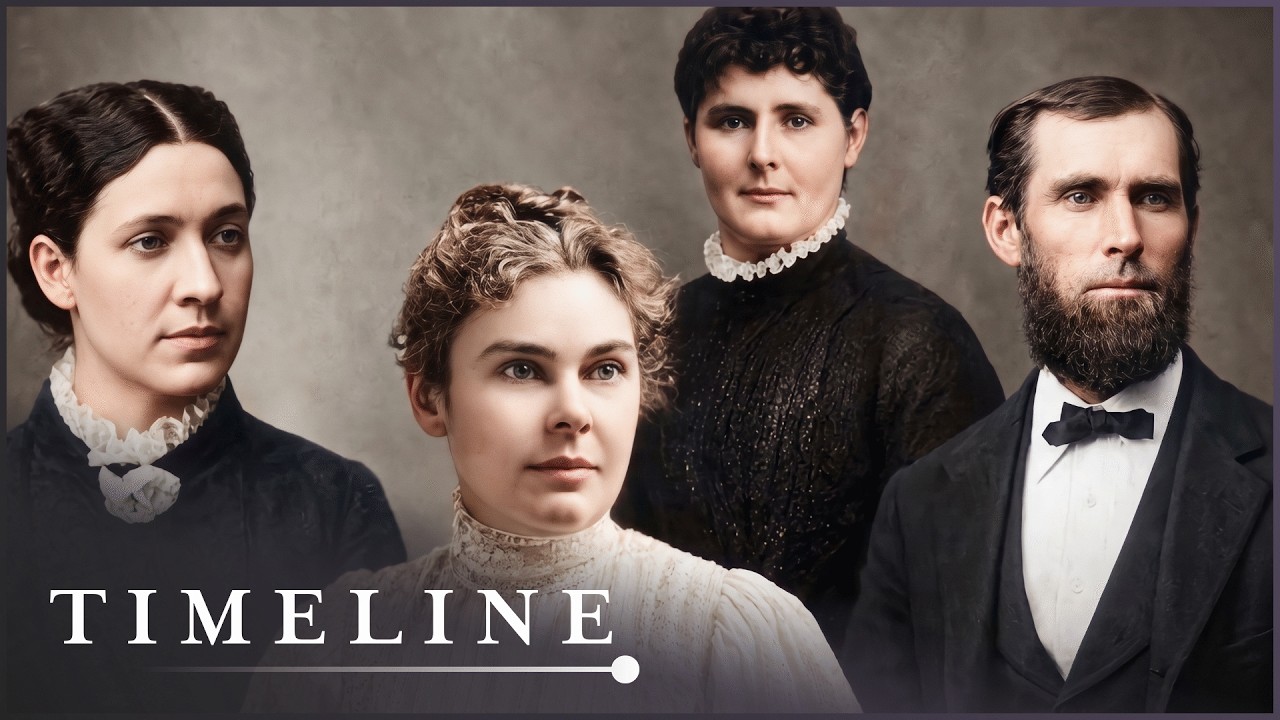
Lizzie Borden: Inside America’s Most Notorious Murder Case
Keywords
Summary
139 words
Critical Evaluation
Value of the Information & Strength of the Argument
The documentary adds value by systematically re-examining the evidence from a modern cold case perspective, challenging the traditional focus on Lizzie alone. It argues coherently that the evidence is contradictory and that the case may involve multiple perpetrators, a theory that explains anomalies like the timeline and lack of forensic traces. The argumentation is logical and steers clear of sensationalism, instead relying on historical facts, court testimony, and logical inference. However, the ‘shared conspiracy’ idea is speculative and not supported by concrete evidence, and the documentary sometimes extrapolates from gaps in the record.
Scientific Rigor, Source Quality, Title Accuracy
The documentary uses historically documented facts, including trial transcripts, witness accounts, and medical examiner reports, but it does not cite specific primary sources or provide references in the description. The title matches the content faithfully. The production quality is high, with accurate period context, but the lack of explicit source citations limits verifiability. The documentary’s rigor is moderate; it presents interpretations clearly as such but does not always distinguish between established fact and conjecture.
182 words
Title / Content Match
The title accurately reflects the content, which is an in-depth examination of the murder case and its investigation.
Quality & Reliability
7/10
The documentary presents a well-structured overview of the case, citing historical testimony and evidence, but lacks direct primary source links and includes speculative interpretations, particularly the 'shared conspiracy' theory.
Key Moments
Markers derived by PSI from the transcript: the creator did not define chapters.
- Introduction to the case and the central question of whether Lizzie Borden was guilty.
- Background on Fall River and the Borden family's social standing.
- Household tensions and financial disputes over property.
- The morning of the murders: timeline of movements inside the house.
- Discovery of the bodies and initial police investigation.
- Analysis of forensic evidence and the hatchet found in the basement.
- Scrutiny of Lizzie's changing testimony and the burning of the dress.
- The trial: prosecution's case and defense's strategy.
- Acquittal and the hypothesis that the real question was about conspiracy.
- Conclusion: the case remains unsolved and the possibility of multiple killers.
Contribution & Novelties
The documentary’s original contribution lies in reframing the investigation away from a single-suspect approach and suggesting the possibility of a coordinated plot. It synthesizes known evidence and presents it from a modern cold-case methodology. The notion that Abby was the primary target and that the killer(s) adapted when Andrew returned early is a fresh angle.
Pour aller plus loin :
- Lizzie Borden - Wikipedia — Background on the case and historical context.
- Borden Murders - FBI Records — FBI files on the case, though limited, provide archival context.
- Forensic science history — Understanding the limitations of 19th-century forensics central to the documentary’s analysis.
103 words
Radar Profile
The radar profile shows a balanced documentary with high information quantity, moderate technical depth, and decent reliability. The lower technical score reflects the lack of direct source links, while the strong narrative and context keep overall quality high.