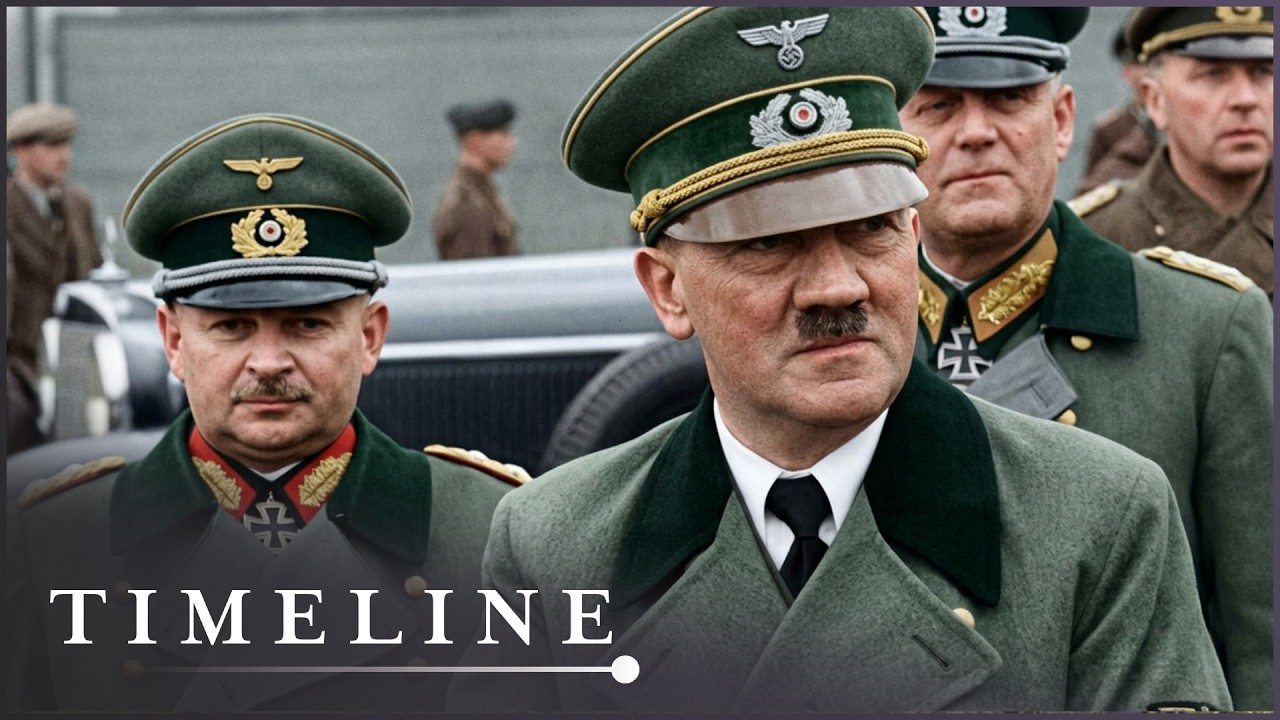
1942: The Complete Story Of The Battle Of Stalingrad
Keywords
Summary
151 words
Critical Evaluation
Value of the Information & Strength of the Argument
The information presented is of high value for a general audience interested in World War II history. The documentary consolidates a vast amount of historical detail into a coherent narrative, explaining both the strategic context and the tactical realities of the battle. The argumentation is well-structured, leading from the initial German campaign to the catastrophic encirclement, with clear causal links: Hitler’s overconfidence, the overextension of German supply lines, and the underestimation of Soviet reserves. Expert quotes add authority, though the documentary does not engage with conflicting historical interpretations deeply. The strength of the argumentation lies in its chronological clarity and the vivid depiction of conditions on the ground, which supports the thesis that Stalingrad was a decisive turning point. However, the lack of explicit references weakens the scholarly rigor of the argumentation.
Scientific Rigor, Source Quality, Title Accuracy
The documentary is produced by Timeline - World History Documentaries, a reputable channel known for history content, and likely part of the History Hit network. Expert historians contribute analysis, which enhances credibility. However, no formal citations or bibliography are provided in the description or transcript; the only link is a promotional membership offer. This limits the verifiability of specific claims. The title ‘1942: The Complete Story Of The Battle Of Stalingrad’ is accurate—the video covers the entire battle from its planning to its conclusion. There are no significant discrepancies between the title and content. In terms of rigor, the documentary relies on established historical narratives, but without source references, it is difficult to assess the originality or specific documentary basis.
267 words
Title / Content Match
The title accurately reflects the content: a comprehensive account of the Battle of Stalingrad in 1942.
Quality & Reliability
8/10
The documentary features expert historians, uses archival footage, and presents a detailed narrative of the battle. However, no explicit citations or reference lists are provided, and some claims are presented without direct sources.
Key Moments
Markers derived by PSI from the transcript: the creator did not define chapters.
- Hitler launches Operation Blue, shifting the strategic focus to the southern USSR.
- Devastating Luftwaffe bombing of Stalingrad, turning the city into rubble.
- Intense street-to-street fighting in the ruins, known as 'the mincer'.
- Sniper duels, including the story of Vasily Zaitsev and the German sniper school leader.
- Soviet counteroffensive, Operation Uranus, begins against weak Romanian flanks.
- The Sixth Army is encircled; Hitler orders a stand-fast instead of a breakout.
- Failed Luftwaffe airlift supplies only a fraction of the needed daily tonnage.
- Manstein's relief attempt stalls, leaving the Sixth Army doomed.
Contribution & Novelties
The documentary synthesizes well-known historical facts into a comprehensive and engaging narrative, but it does not present new research or original analysis. Its value lies in its accessibility and the vivid presentation of key events, making it a useful educational resource. For a deeper exploration of the topic, the following resources are recommended:
Pour aller plus loin :
- Battle of Stalingrad — Comprehensive overview of the battle, including background, casualties, and aftermath.
- Operation Blue — Details the German summer offensive of 1942 that preceded the battle.
- Vasily Zaitsev — Biographical article on the famous Soviet sniper featured in the documentary.
100 words
Radar Profile
The scores indicate a strong documentary with high information quantity, good quality, and moderate technical depth. The reliability is solid given the use of expert commentary, but lower on direct source citation. The overall impression is a well-balanced, informative history documentary.