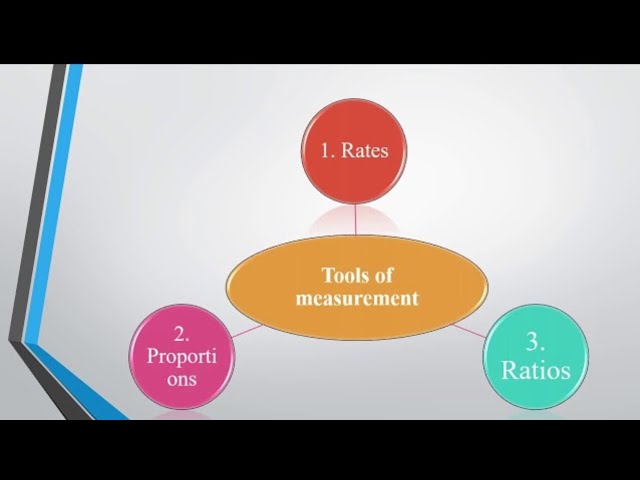
Basic Measurements in Epidemiology Chapter:5 part:2 BSN Six semester in pashto #epidemia #nursing
Title history
- Basic Measurements in Epidemiology Chapter:5 part:2 BSN Six semester in pashto #epidemia #nursing — observed on 20261101-0217 UTC (YouTube)
Keywords
Summary
206 words
Critical Evaluation
Value of the Information & Strength of the Argument
The video provides clear, pedagogical explanations of core epidemiological concepts, using concrete numerical examples that make the material accessible to nursing students. The instructor walks through formulas step-by-step, and his interpretation of relative risk values (greater than 1, equal to 1, less than 1) is accurate and well-illustrated. The argumentation is consistent: each concept is defined, its calculation demonstrated, and its implications for public health discussed. However, the explanatory style is sometimes repetitive, and some transitions between topics are abrupt, which could confuse viewers. The lack of references to external literature means that the content relies solely on the instructor’s expertise, but the included examples align with standard epidemiological teaching.
Scientific Rigor, Source Quality, Title Accuracy
The scientific rigour is adequate for an introductory-level tutorial: definitions and formulas follow conventional epidemiological standards. No external sources or citations are provided, so the content’s authority rests on the instructor’s presentation. The title accurately reflects the content—a basic epidemiology chapter for sixth-semester BSN students, delivered in Pashto. The video’s structure (part 2 of chapter 5) suggests a series, but without context from previous or subsequent parts, the standalone information is self-contained enough for its purpose. No comments were provided to analyze public reception.
209 words
Title / Content Match
The title accurately describes the content: a basic epidemiology lecture in Pashto for nursing students, focusing on measurement concepts.
Quality & Reliability
6/10
Content is a straightforward educational explanation of core epidemiological measures (prevalence, incidence density, relative risk). The explanations are conceptually correct but lack references, and the audio/transcript shows some repetition and informal language.
Key Moments
Markers derived by PSI from the transcript: the creator did not define chapters.
- Introduction to prevalence: definition and basic concepts
- Explanation of point prevalence vs period prevalence with examples
- Factors that increase or decrease prevalence (duration, incidence, migration)
- Introduction to incidence density and person-time calculation
- Calculation and interpretation of relative risk with smoking and heart disease example
Contribution & Novelties
This video offers a pedagogical walkthrough of fundamental epidemiological measures, specifically tailored for nursing students in a Pashto-speaking context. Its original contribution lies in the language accessibility and the use of simple numeric examples to illustrate abstract concepts. While the content is not novel scientifically, it serves as an effective teaching resource for a non-specialist audience.
Pour aller plus loin :
- Prevalence (epidemiology) - Wikipedia — Relates directly to the definition and types of prevalence discussed.
- Incidence (epidemiology) - Wikipedia — Extends the discussion on incidence density and its calculation.
- Relative risk - Wikipedia — Provides deeper context on the interpretation of relative risk values, including examples of its use in cohort studies.
113 words
Radar Profile
The radar profile shows balanced scores across all dimensions, with slightly higher ratings on information quality and lower on technical depth, reflecting the introductory nature of the content. The video is strong in clarity of explanation but lacks advanced techniques or source citations, which is typical for a basic tutorial.