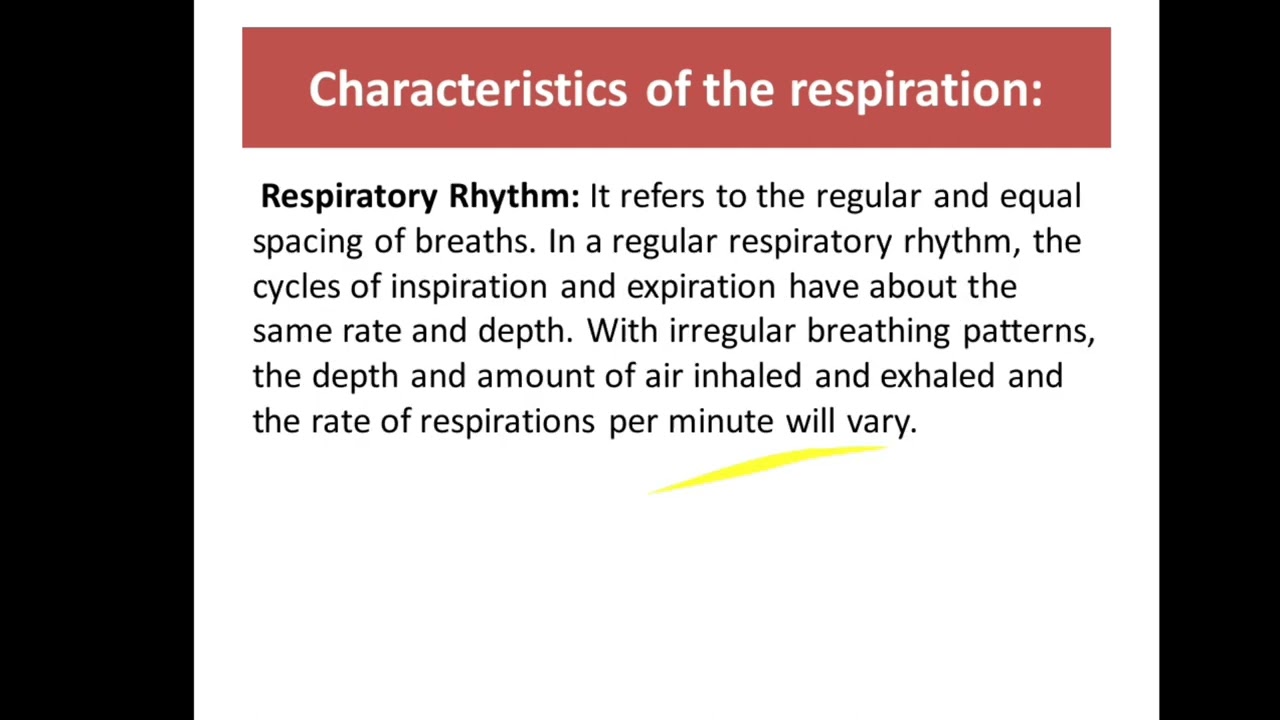
vital sign fon chapter : 5 part:2 BSN Ist semester kmu slides in pashto #kmupdates #nursingstudent
Keywords
Summary
129 words
Critical Evaluation
Value of the Information & Strength of the Argument
The video provides a basic overview of key vital sign concepts, useful for beginners. The explanations are superficial and sometimes confusing due to language barriers and incomplete sentences. The argumentation is mostly descriptive, without critical analysis or evidence-based justification. The presenter does not engage with deeper physiological mechanisms or clinical implications. The value is limited to a simple memorization aid, but the delivery undermines its effectiveness.
Scientific Rigor, Source Quality, Title Accuracy
The video does not cite any sources, references, or external materials. It relies on the presenter’s knowledge, which appears to align with standard nursing textbooks but includes several errors (e.g., incorrect normal ranges, unclear descriptions). The title is accurate regarding content and context, but the subtitle ‘in Pashto’ is misleading as the primary language is English with intermittent Pashto terms. The slide content is likely from KMU (Khyber Medical University) but no official references are provided. Overall, the scientific rigor is low due to lack of citations and potential inaccuracies.
171 words
Title / Content Match
The title accurately describes the content: a BSN-level nursing lecture on vital signs, part 2, using slides. The mention of 'KMU slides' is consistent with the material shown. However, the title includes hashtags and 'in Pashto' though the spoken language is predominantly English with occasional Pashto words.
Quality & Reliability
4/10
The video is a lecture-style tutorial covering basic vital signs concepts (respiration, blood pressure). It contains factual inaccuracies, unclear explanations, and a heavily accented presentation with many transcription errors. No references or sources are cited. The content is elementary and aimed at nursing students, but the delivery and reliability are low.
Key Moments
Markers derived by PSI from the transcript: the creator did not define chapters.
- Introduction and opening prayer in Pashto, then start of respiration topic.
- Definition of respiration and gas exchange mechanism.
- Normal respiratory rate (12-20 per minute) and control by CO2 levels.
- Mechanics of inspiration and expiration, including diaphragm movement.
- Types of breathing (costal vs abdominal) and factors affecting respiration.
- Abnormal breath sounds (stridor, wheezes) and conditions like Cheyne-Stokes.
- Diffusion, perfusion, and pulse oximetry for oxygen saturation.
- Introduction to blood pressure: definition, systolic and diastolic.
- Measurement methods: palpatory and auscultatory, Korotkoff sounds.
- Hypertension and hypotension definitions, and blood pressure regulation by kidneys.
Contribution & Novelties
The video offers a basic educational walkthrough of vital signs for nursing students, but its originality is minimal. It is essentially a slide reading with spoken explanations. The content is standard and available in any nursing textbook. The only unique aspect is the bilingual (English/Pashto) delivery, which may help local students in Pakistan. However, it lacks depth and critical insight.
Pour aller plus loin :
- Vital signs - Wikipedia — Reference for standard definitions and normal ranges.
- Respiration (physiology) — Deeper explanation of gas exchange and ventilation control.
- Blood pressure - Wikipedia — Comprehensive overview of measurement and clinical significance.
- Korotkoff sounds - Wikipedia — Detailed description of the sounds used in auscultatory blood pressure measurement.
116 words
Radar Profile
The radar profile shows low scores across all dimensions, with the highest being quantity of information (4/10) and technical level (3/10), reflecting a basic tutorial. Reliability and quality are particularly low (2 and 3 respectively), indicating that the content is not scientifically robust. This video would be better replaced by a reputable textbook or online course.