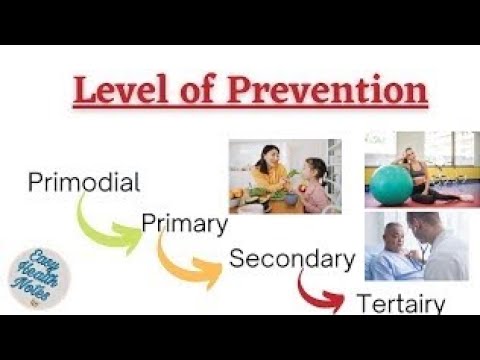
Level of Prevention chapter:4 Epidemiology BSN Six semester in pashto #epidemiology #prevention
Title history
- Level of Prevention chapter:4 Epidemiology BSN Six semester in pashto #epidemiology #prevention — observed on 20261026-1551 UTC (YouTube)
Keywords
Summary
151 words
Critical Evaluation
Value of the Information & Strength of the Argument
The educational value lies in clearly outlining the three levels of prevention and linking them to the natural history of disease. The argumentation is straightforward, restating definitions and giving numerous examples (e.g., vaccination for primary, mammography for secondary, rehabilitation for tertiary). The lecture builds a logical flow from definition to application, and it effectively explains the rationale behind each level, such as cost-benefit in screening. However, the presentation relies heavily on repetition to reinforce concepts, and the reasoning is not critically examined; for instance, the limitations of preventive approaches are barely discussed. The content is factual but does not go beyond textbook-level depth, offering no novel insights or evidence-based arguments.
Scientific Rigor, Source Quality, Title Accuracy
The scientific rigor is moderate: the information matches established public health literature, but no sources are cited or referenced within the video. The speaker does not name any studies, guidelines, or authors, which diminishes credibility from a research standpoint. The title is appropriate, indicating the topic and target audience. The lack of citations and the informal lecture style suggest that this is a teaching aid rather than a peer-reviewed resource. There are no comments provided, so public reception cannot be assessed.
206 words
Title / Content Match
The title accurately reflects the content: a lecture on levels of prevention in epidemiology aimed at BSN students, delivered in Pashto.
Quality & Reliability
6/10
The content is accurate and follows standard epidemiology frameworks, but it is presented in a very basic and repetitive lecture style without citations or references. The speaker is a nursing educator, and the material aligns with established public health concepts, yet lacks depth and critical analysis.
Key Moments
Markers derived by PSI from the transcript: the creator did not define chapters.
- Introduction to prevention and its importance in public health.
- Definition and explanation of primary prevention with examples.
- Secondary prevention and screening methods, including criteria by Wilson and Jungner.
- Tertiary prevention, rehabilitation, and chronic disease management.
- Linking the natural history of disease to prevention levels and summary.
Contribution & Novelties
This video provides a basic educational overview of the levels of prevention, which is standard in epidemiology curricula. It does not introduce new research or original ideas but serves as a didactic tool for nursing students. The value lies in its clear, step-by-step breakdown of concepts, reinforced with practical examples. For further exploration, one can consult foundational literature on prevention and screening.
Pour aller plus loin :
- Disease Prevention and Health Promotion — WHO page on health promotion and prevention.
- Screening programmes: a short guide — Practical guide from WHO on screening criteria.
- Wilson and Jungner criteria — Standard criteria for evaluating screening programs.
- Levels of Prevention in Epidemiology — Overview of primary, secondary, and tertiary prevention.
117 words
Radar Profile
The radar profile is unbalanced with low to moderate scores across all dimensions. The strongest scores are in information quantity and quality, reflecting the coverage of standards, but technical depth and reliability are lower due to the introductory nature and lack of citations. This indicates a resource suitable for beginners but not for advanced researchers.