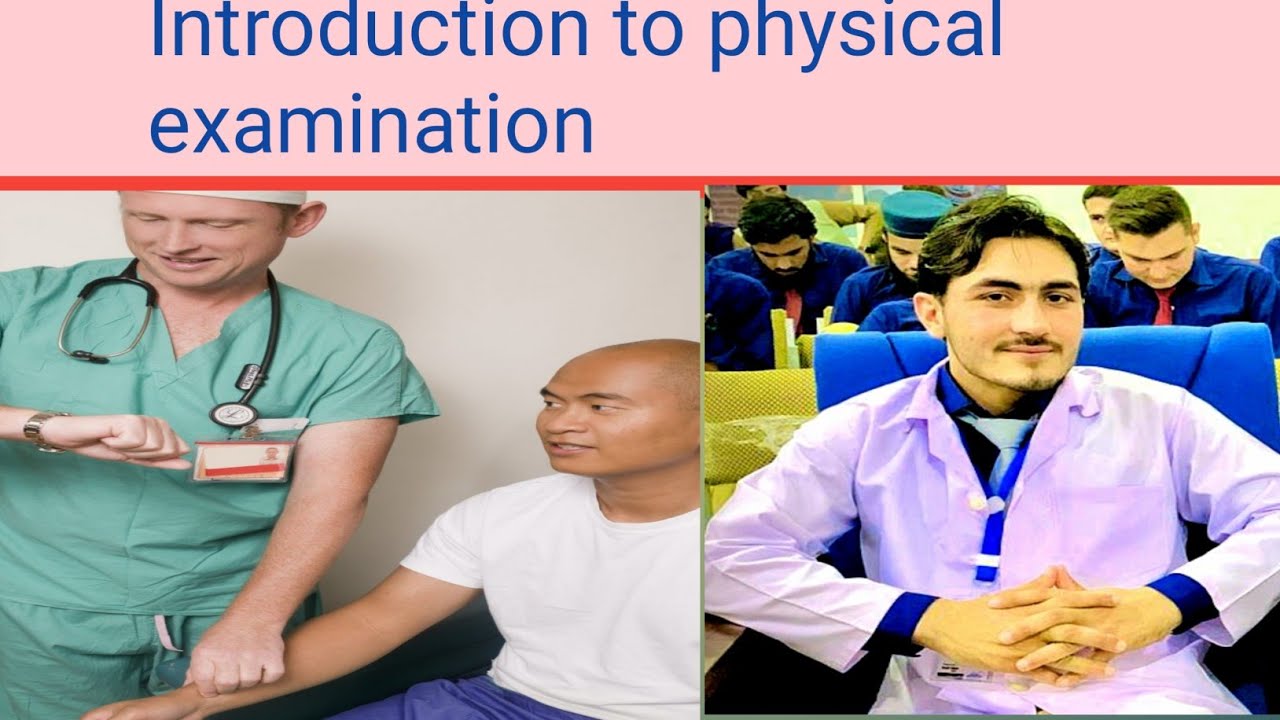
Introduction to physical examination and health assessment chapter:3 part:1 bsn 3rd seme in pashto
Keywords
Summary
134 words
Critical Evaluation
Value of the Information & Strength of the Argument
The information has moderate educational value, offering a coherent framework for performing a physical examination. The argumentation relies on established clinical conventions and common practice rather than empirical evidence. The presentation is didactic but repetitive; explanations are sometimes unclear due to language and transcription quality. The sequence from general principles to specific techniques is logical, which supports comprehension for beginners.
Scientific Rigor, Source Quality, Title Accuracy
Scientific rigor is limited to practical knowledge and does not cite external studies or authoritative references. The content aligns with standard nursing education but lacks demonstration of evidence-based sources. The title matches the content well, indicating exactly the chapter, part, and intended audience. The mention of Pashto is not verifiable from the transcript alone, but the instructional scope is accurately represented.
136 words
Title / Content Match
The title accurately reflects the content: an introductory lesson on physical examination and health assessment for BSN third-semester students, with the lecture reportedly delivered in Pashto. No mismatch observed.
Quality & Reliability
6/10
The content aligns with established nursing education, but it lacks external citations and the presentation is somewhat repetitive with an imperfect transcript.
Key Moments
Markers derived by PSI from the transcript: the creator did not define chapters.
- Introduction and opening, start of chapter.
- Learning objectives: principles, equipment, and techniques of physical examination.
- Hand hygiene and seven-step hand washing to prevent disease transmission.
- Patient positioning and comfort, exposing only the areas examined.
- Equipment needed for physical examination and safety precautions.
- Inspection technique and its application.
- Palpation technique to assess body organs and detect fluid or masses.
- Percussion technique for examining chest and abdomen.
- Auscultation technique and interpretation of respiratory and blood pressure sounds.
Contribution & Novelties
The video provides a systematic introduction to physical examination and general survey for nursing students. Its originality lies in its step-by-step pedagogical structure covering objectives, equipment, patient preparation, and the four core techniques (inspection, palpation, percussion, auscultation), suitable for a BSN curriculum. It emphasizes repeated key points and clinical reasoning, though it does not present novel findings or experiments.
Pour aller plus loin :
- Physical examination — Directly relevant, broadly covers the steps and purpose of physical examination.
- Auscultation — Explains the auditory technique mentioned in the video.
- Percussion (medicine) — Details the tapping technique used for assessing underlying structures.
- Palpation — Covers the tactile technique for organ examination.
109 words
Radar Profile
The radar shows balanced but modest scores: quantity and quality of information are moderate, technical level is lower, reflecting a basic educational video. Reliability is moderate, as no external sources are cited.