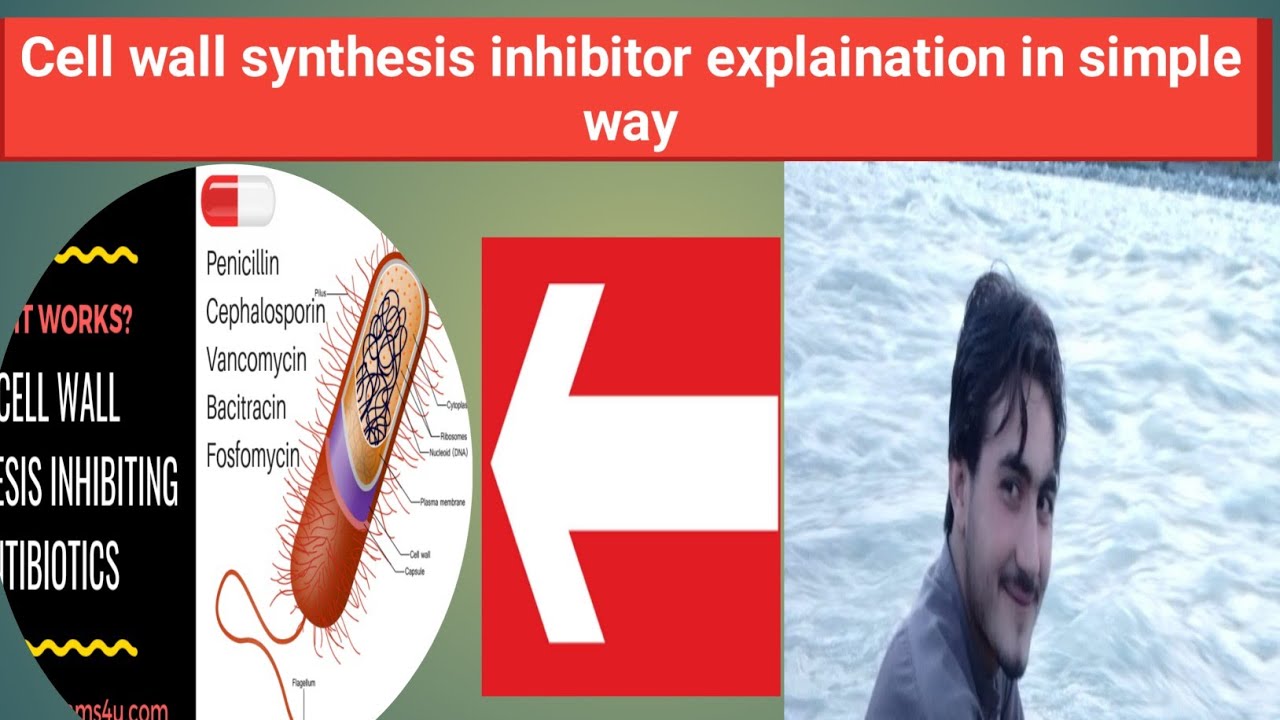
Cell wall synthesis inhibitor (antibiotics) chapter:4 part 2 BSN 3rd semester in pashto #kmupdates
Keywords
Summary
142 words
Critical Evaluation
Value of the Information & Strength of the Argument
The video provides valuable educational content for nursing students, systematically explaining the mechanism of action, classification, and clinical implications of cell wall synthesis inhibitors. The argumentation is logical, building from discovery to mechanism to generation-based classification. The lecturer connects structural features to functional properties, such as how unique structures enable binding to PBPs. The practical tips, like managing diarrhea and infusion reactions, add clinical relevance. However, the argumentation relies heavily on lecture delivery without visual aids or cited evidence, which limits its persuasive power beyond traditional teaching.
Scientific Rigor, Source Quality, Title Accuracy
Scientifically, the content aligns with established pharmacology, but the lack of citations reduces rigor. No sources are provided in the description, so claims are unverifiable. The title accurately matches the content, focusing on cell wall synthesis inhibitors. The transcript quality is poor, with numerous transcription errors and ‘foreign’ placeholders, likely due to auto-captions, but this does not directly affect the video’s factual accuracy. As a lecture, it serves as a tutorial; however, without references, its scientific robustness is limited. No comments were provided for analysis.
187 words
Title / Content Match
The title accurately reflects the content, discussing cell wall synthesis inhibitors (antibiotics) such as penicillin and cephalosporins, consistent with the chapter and part mentioned.
Quality & Reliability
6/10
The video presents a structured lecture on cell wall synthesis inhibitors, covering penicillin and cephalosporins with their mechanisms and clinical relevance. The content aligns with standard pharmacology knowledge, but no external sources are cited, relying solely on the lecturer's expertise. The transcript is poorly generated, but the underlying information appears accurate for nursing education.
Key Moments
Markers derived by PSI from the transcript: the creator did not define chapters.
- Introduction and overview of antibiotics, establishing the topic of cell wall synthesis inhibitors.
- Historical context: discovery of penicillin from fungal cultures and its effectiveness.
- Mechanism of action: inhibition of cell wall synthesis via penicillin-binding proteins.
- Classification of cephalosporins by generations, highlighting spectrum differences.
- Clinical considerations: adverse effects like diarrhea and infusion reactions, with management strategies.
Contribution & Novelties
This video offers tailored nursing education on cell wall synthesis inhibitors, presenting standard pharmacology in an accessible lecture format for BSN students. Its novelty lies in the Pashto-language delivery (per title) and the explicit focus on clinical nursing applications, including adverse effects and patient management. The content is not original research but a synthesis of textbook knowledge.
Pour aller plus loin :
- Penicillin — Historical and mechanistic background on the first beta-lactam antibiotic.
- Cephalosporin — Detailed classification and generations of cephalosporins.
- Penicillin-binding proteins — Molecular target of beta-lactams and resistance mechanisms.
- Beta-lactam antibiotics — Broader context of the antibiotic class.
100 words
Radar Profile
The radar profile shows strong quantity of information (8) and moderate technical level (7), but lower quality (6) and reliability (5) due to missing citations. This indicates a content-rich lecture that would benefit from referenced sources to enhance scientific credibility.