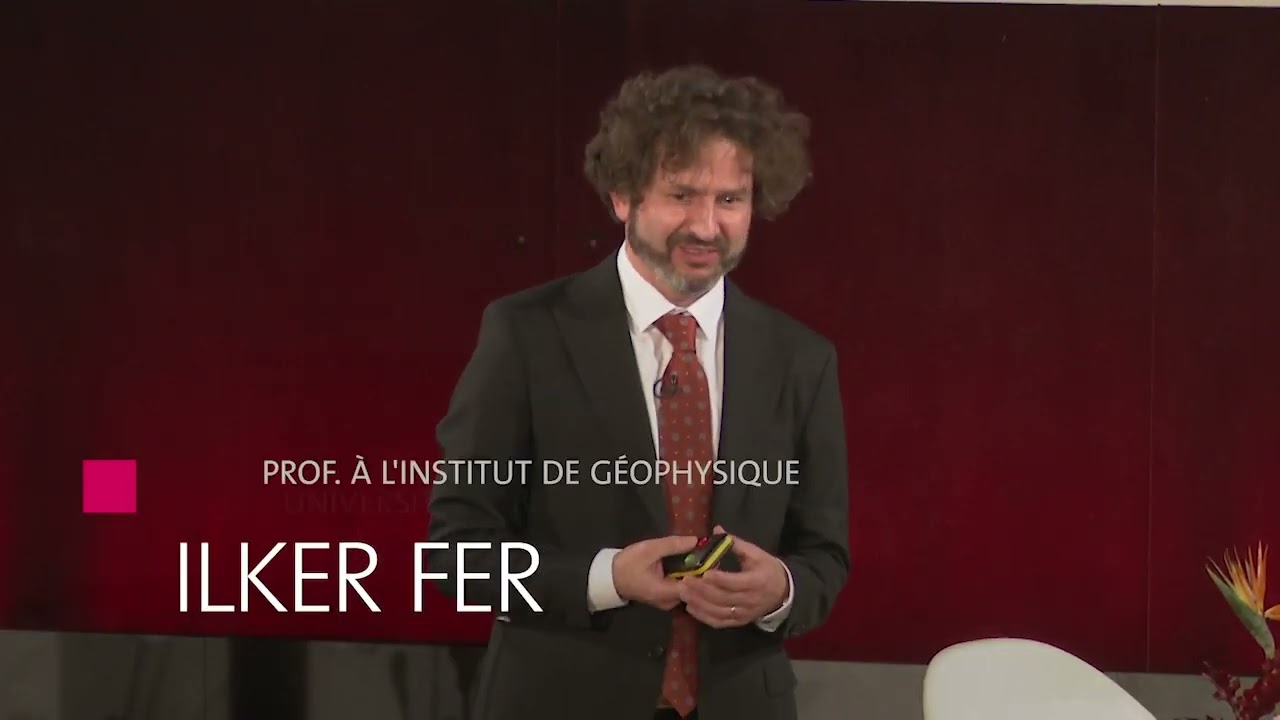
Professor Ilker Fer : The turbulent ocean: technological frontiers, new paradigms, and the...
Keywords
Summary
203 words
Critical Evaluation
Value of the Information & Strength of the Argument
The lecture offers substantial value by synthesizing decades of oceanographic research and presenting original data from recent field campaigns. The argumentation is logically structured: from global climate context to specific local processes, always linking observations to theoretical principles. The speaker demonstrates how technological advances (gliders, Argo, microstructure profilers) enable new paradigms in measuring turbulence, and he effectively uses visual aids (maps, cross‑sections, animations) to support his claims. The presence of quantitative estimates (e.g., 90% heat uptake, 1 W/m² for sea‑ice melt) strengthens the argument. He also carefully notes uncertainties and limitations, such as the challenge of representing subgrid‑scale turbulence in models. Overall, the reasoning is sound and persuasive, appealing to both scientific and informed lay audiences.
Scientific Rigor, Source Quality, Title Accuracy
The talk adheres to high scientific standards: it relies on established observational programs (Argo, satellite altimetry), peer‑reviewed research, and state‑of‑the‑art instrumentation. The speaker explicitly names key projects and institutions, and his interpretations align with mainstream climate science. No unsupported claims were detected. The title exactly mirrors the content: technological frontiers (gliders, floats, microstructure) are discussed alongside new paradigms (understanding of eddies and mixing), and the Arctic case study is prominent. The lecture is well‑organized and internally consistent. Although no citation list is provided, the rigorous presentation suggests reliance on published literature.
222 words
Title / Content Match
The title accurately captures the talk's scope: ocean turbulence, technological advances in observation, and a focus on the Arctic region.
Quality & Reliability
9/10
The lecture is delivered by a leading physical oceanographer, presenting peer‑reviewed research and established scientific frameworks. The arguments are supported by quantitative data and references to well‑known programs (e.g., Argo, gliders). The content is rigorous, up‑to‑date, and consistent with current scientific consensus.
Key Moments
Markers derived by PSI from the transcript: the creator did not define chapters.
- Introduction: role of the ocean in climate, heat and carbon uptake.
- Global warming and sea‑level rise; melting ice sheets and glaciers.
- Ocean circulation: thermohaline circulation, Gulf Stream, global overturning.
- Need for high‑resolution observations; introduction to turbulence and mixing.
- Technological advances: Argo floats, ocean gliders, research vessels.
- Study of Lofoten Basin Eddy: glider and float data, turbulent structure.
- Arctic amplification and sea‑ice loss; Atlantification.
- Oceanic processes releasing heat to sea ice; internal waves and staircase mixing.
- Conclusion: importance of turbulence for climate models and future research.
Contribution & Novelties
This lecture presents a state‑of‑the‑art overview of ocean turbulence research, integrating recent observational breakthroughs with theoretical concepts. The speaker’s contribution lies in highlighting how autonomous platforms (gliders, Argo floats) have revolutionised our ability to sample turbulent processes, and in presenting new results from the Lofoten Basin Eddy that reveal intense mixing at depth—previously underestimated. The discussion on the Arctic ‘staircase’ mixing and its role in sea‑ice decline offers a fresh perspective on climate feedbacks.
Pour aller plus loin :
- Argo (oceanography) — International array of profiling floats, essential for monitoring temperature and salinity.
- Ocean turbulence — Overview of turbulence in the ocean and its role in mixing and circulation.
- Atlantic meridional overturning circulation — Large‑scale circulation that redistributes heat and carbon.
- Lofoten Basin — Region of intense eddy activity studied by the speaker, though the wiki page is limited; concept is relevant.
142 words
Radar Profile
The radar profile shows uniformly high scores across quantity, quality, technical depth, and reliability, reflecting a dense, authoritative, and well‑balanced lecture. The only potential limitation is that the high technical level may reduce accessibility for non‑specialists, but this aligns with the lecture's academic audience.