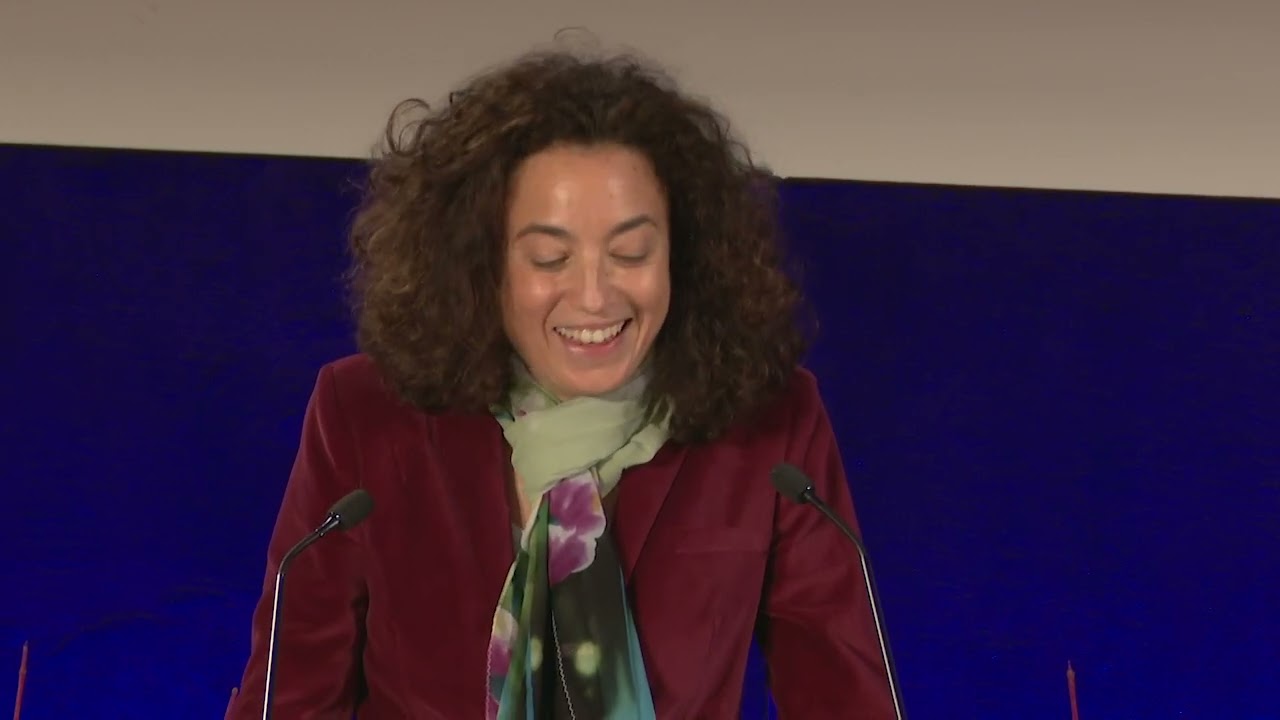
Professor Steve Sparks : Volcanoes, their eruption and risk management
Keywords
Summary
161 words
Critical Evaluation
Value of the Information & Strength of the Argument
The video provides substantial value by synthesizing decades of volcanological research into a coherent narrative. Sparks’s arguments are well-supported by empirical observations, laboratory experiments, and numerical modeling. He clearly explains the physical processes behind eruptions, using analogies like the champagne bottle and the salt-on-ice effect to elucidate melting mechanisms. The strength of his argumentation lies in his use of multiple lines of evidence, from field studies to seismic imaging, and his ability to connect scientific understanding to practical risk reduction. He also highlights the uncertainty and challenges in eruption forecasting, which adds depth to the discussion.
Scientific Rigor, Source Quality, Title Accuracy
The scientific rigor is high, given Sparks’s extensive publication record and contributions to volcanology. He presents established concepts such as plate tectonics and magma degassing, supported by real examples and data. While no explicit citations are given during the lecture, his authority as a leading expert and the consistency of his statements with current scientific knowledge underpin the reliability. The title ‘Professor Steve Sparks: Volcanoes, their eruption and risk management’ accurately reflects the content, which covers both the natural processes and the socio-economic aspects of volcanic risk. The lecture is well-structured and appropriately detailed for a general scientific audience.
210 words
Title / Content Match
Title accurately reflects the content: a comprehensive overview of volcanic eruptions and their risk management.
Quality & Reliability
8/10
Presentation by a highly cited expert with extensive field and research experience. Content aligns with established scientific knowledge, but as a lecture, it is not peer-reviewed.
Key Moments
Markers derived by PSI from the transcript: the creator did not define chapters.
- Welcome and introduction by the moderator, Costanza Bonadona introduces Professor Sparks.
- Sparks begins his lecture with spectacular images of volcanoes, including Krakatoa and Hunga Tonga.
- Explains why volcanoes exist: Earth's internal heat and plate tectonics, with diagrams of melting processes.
- Overview of global volcano distribution and the Ring of Fire, with tomographic images of subduction zones.
- Details volcanic hazards: ash clouds, pyroclastic flows, and their impacts on communities and infrastructure.
- Focus on risk management using the Montserrat eruption as a case study, including evacuation decisions.
- Discussing effects of large eruptions on climate and concluding remarks.
Contribution & Novelties
The lecture’s primary contribution is its comprehensive integration of fundamental volcanology with risk management strategies, emphasizing the need for interdisciplinary approaches. Sparks shares insights from his long career, particularly the Montserrat crisis, offering perspective on effective communication between scientists and policy-makers. The ‘Pour aller plus loin’ section provides resources for further exploration:
- Volcano — Overview of volcanic processes and types.
- Pyroclastic flow — Detailed description of one of the deadliest volcanic hazards.
- Toba catastrophe theory — About the supereruption 74,000 years ago and its potential impacts.
- 2022 Hunga Tonga–Hunga Haʻapai eruption — Recent example of a major eruption and its effects.
101 words
Radar Profile
The radar chart indicates a robust educational video with high scores in both quantity and quality of information, good reliability, and a moderate technical level, making it suitable for a general audience interested in earth science.