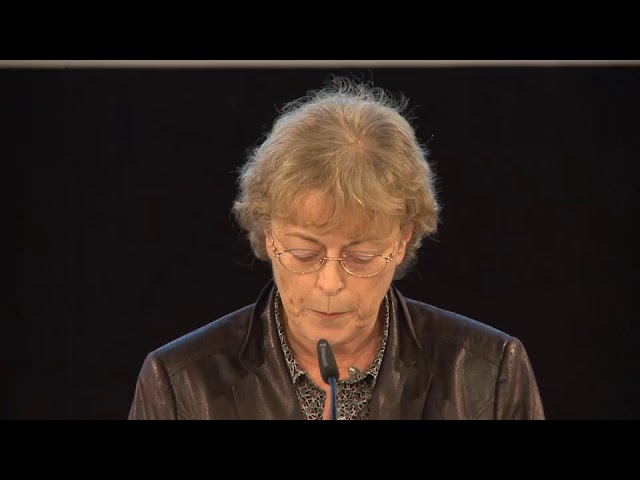
Colloque Wright 2012 - Vendredi 16 novembre 2012
Wright Symposium 2012 - Friday, November 16, 2012
Keywords
Summary
174 words
Critical Evaluation
Value of the Information & Strength of the Argument
The value of the information is high, as the speaker provides a comprehensive and historically rich account of antibiotic discovery and the molecular biology of ribosomes. His argumentation is solid, based on well-established scientific facts and his own pioneering research. He carefully explains the logic behind each step, from the first concept of a ‘magic bullet’ to the detailed mechanism of protein synthesis inhibition. The talk also offers a balanced perspective on the challenges of antibiotic resistance, making a compelling case for continued basic research. The argumentation is clear, with good use of analogies to make complex structures accessible, and the narrative is engaging throughout.
Scientific Rigor, Source Quality, Title Accuracy
The scientific rigor is excellent. Ramakrishnan, a Nobel laureate, presents content that is accurate and up-to-date as of 2012. He references historical figures and events with precision, and his own work on ribosome structure is described with appropriate detail. The sources he mentions are reliable, and he openly discusses controversies, such as the dispute between Waksman and Schatz. The title is generic and does not reflect the specific topic, which could be a limitation for finding the video, but it is consistent with the conference series format. Overall, the title is functional but not descriptive, and this is a minor drawback.
221 words
Title / Content Match
The title is generic and only indicates the colloquium and date, not the specific topic. However, this is typical for conference series recordings.
Quality & Reliability
9/10
The talk is delivered by a Nobel laureate in Chemistry with deep expertise on ribosomes. The information is scientifically accurate, clearly explained, and supported by historical examples. The presentation is aimed at a general intelligent audience but retains technical precision.
Key Moments
Markers derived by PSI from the transcript: the creator did not define chapters.
- Main talk begins: introduction to infectious diseases and the need for antibiotics.
- History of antibiotics: Paul Ehrlich and the magic bullet concept.
- Discovery of sulfonamides by Domagk and penicillin by Fleming.
- Waksman and the discovery of streptomycin, and the controversy with Schatz.
- Introduction to proteins and ribosomes: structure and function.
- Determination of the ribosome structure and its implications.
- How antibiotics target ribosomes and mechanisms of resistance.
- Future prospects and the importance of basic research.
Cited Sources
- Paul Ehrlich and the magic bullet — Mentioned as the originator of the concept of a targeted drug.
- Gerhard Domagk and prontosil — First effective antibacterial drugs, discovered by systematic screening.
- Alexander Fleming and penicillin — Accidental discovery of penicillin from mold.
- Selman Waksman and Albert Schatz — Discovery of streptomycin, with credit dispute.
Contribution & Novelties
The video provides an expert synthesis of ribosome biology and antibiotic action, emphasizing the structural approach. It offers a unique perspective from a Nobel laureate directly involved in the field, blending historical narrative with molecular detail. The explanation of how antibiotics selectively target bacterial ribosomes is particularly clear, and the discussion of resistance highlights the ongoing medical relevance. This talk is valuable for students and researchers seeking a broad understanding of the topic.
Pour aller plus loin :
- Ribosome — Overview of the ribosome’s structure and function.
- Antibiotic — General article on antibiotics, their mechanisms, and resistance.
- Protein biosynthesis — Detailed steps of protein synthesis.
- Venkatraman Ramakrishnan — Biography and scientific contributions.
112 words
Radar Profile
The radar profile shows high scores in information quantity, quality, and reliability, with a moderate technical level. This indicates an expert presentation that is both informative and accessible, balancing advanced content with clear explanations.