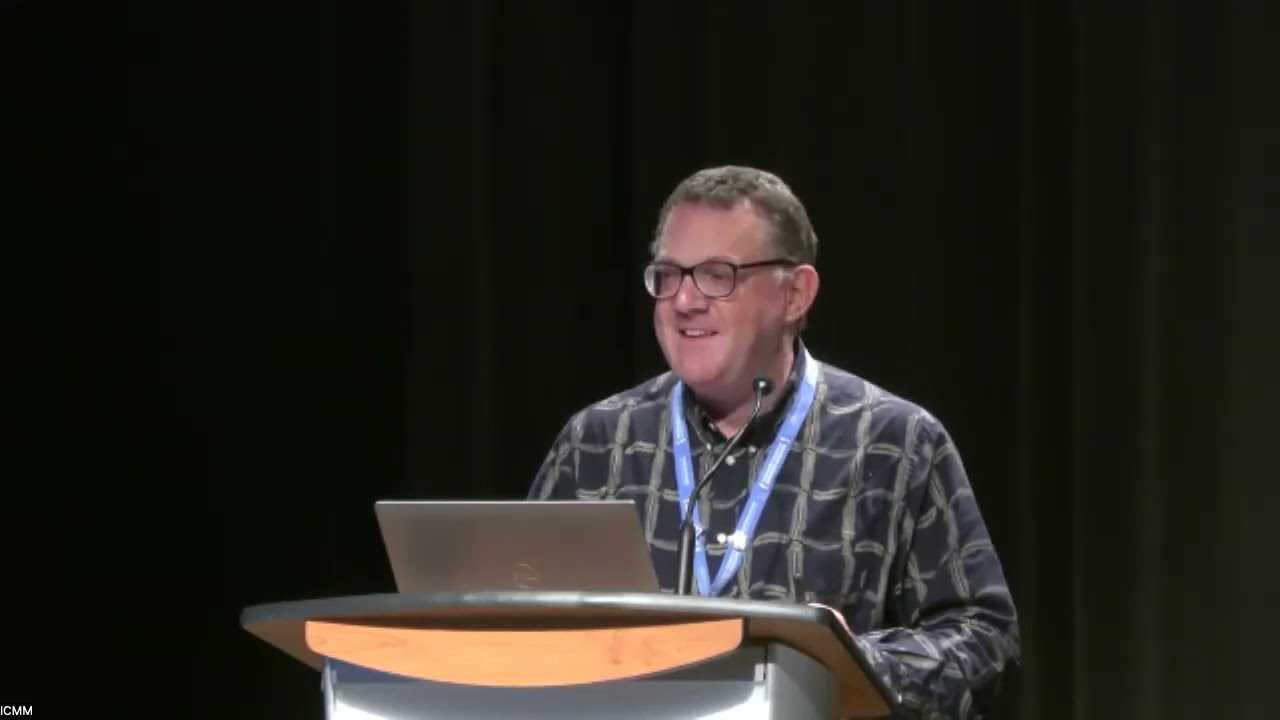
Keynote 4: Maritime Museums in c21: A Story to Tell with Ships? - Matthew Tanner, ICMM President
Keywords
Summary
174 words
Critical Evaluation
Value of the Information & Strength of the Argument
The talk’s value lies in its synthesis of historical perspectives on maritime museums and its forward-looking call to action. Tanner integrates established scholarship (Hicks, Greenhill, Burke) with practical experience from his leadership of the SS Great Britain Trust. His argumentation is coherent, moving from a diagnosis of current limitations to a strategic vision for relevance. He supports his points with concrete examples such as the Ever Given blockage and the SS Great Britain’s role in immigration. However, some claims are presented with rhetorical force rather than detailed evidence, and the call for ’everything is maritime’ may be seen as an overextension. The strength of the argumentation is in its passionate advocacy for museums to engage with pressing social issues, but it lacks a critical examination of potential counterarguments or practical challenges.
Scientific Rigor, Source Quality, Title Accuracy
The speaker demonstrates rigor by referencing specific academic works and institutional standards, notably Robert Hicks (2001), Basil Greenhill, Campbell McMurray’s preservation paper, and David Abulafia’s ‘The Great Sea’. He also mentions the UK National Historic Ships guidance ‘Conserving Historic Vessels’. These sources are relevant and lend credibility. The title accurately matches the content, which indeed explores the story-telling role of ships in maritime museums. Although no URLs or digital sources are provided in the description, the verbal citations are substantial for a keynote. The presentation would benefit from clearer references to data (e.g., the 94% statistic mentioned in Q&A) to enhance replicability. Overall, the sourcing is appropriate for an expert opinion piece.
258 words
Title / Content Match
The title accurately reflects the keynote's focus on the relevance of maritime museums and their relationship with historic ships in the 21st century.
Quality & Reliability
8/10
The speaker is an expert (ICMM President) and grounds his arguments in specific academic references and personal experience, but the content remains an opinion-based keynote with no systematic methodology, which slightly limits its objective reliability.
Key Moments
Markers derived by PSI from the transcript: the creator did not define chapters.
- Tanner questions the definition of maritime museums and cites a 1999 Greenwich guidebook.
- Robert Hicks and other scholars are referenced to argue that maritime museums should focus on people's stories.
- Discussion on historic ships as unique artifacts and the challenges of preservation.
- Tanner criticizes inconsistent preservation efforts and calls for fewer, better-preserved ships.
- Shift to contemporary relevance: maritime museums should engage with migration, climate change, and international relations.
- Proposal to rename national maritime museums as international ones and unify the ICMM network.
- Q&A session, including discussion on UN Decade of Ocean Science and public outreach.
Cited Sources
- What is a Maritime Museum? (2001) — Robert Hicks' paper cited by Tanner as a key reference questioning the definition of maritime museums.
- Conserving Historic Vessels — UK National Historic Ships guidance recommended as essential reading for ship preservation standards.
- Ship Preservation: A Rose to Hell Paved with Good Intentions — Paper by Campbell McMurray (1994) referenced to illustrate the difficulties of ship preservation.
- The Great Sea: A Human History of the Oceans — Book by David Abulafia, praised by Tanner as a synthesis of maritime history as world history.
- Basil Greenhill and Grant Jenkins contributions — Quoted on the mission of maritime museums and the need to place objects in social and cultural context.
Concurring Sources
- What is a Maritime Museum? (2001) — Aligned with Tanner's view that maritime museums should focus on human stories and cultural contexts.
- The Great Sea: A Human History of the Oceans — Supports the argument that maritime history is interconnected with world history.
- Conserving Historic Vessels — Provides practical guidance that complements Tanner's call for rigorous preservation standards.
Contribution & Novelties
The keynote’s original contribution is its articulation of maritime museums as essential institutions for addressing contemporary global challenges, rather than merely preserving the past. Tanner argues for a paradigm shift from object-centric to people-centric narratives and from national to international perspectives. This reframing is a call to action for the museum community.
Pour aller plus loin :
- Maritime museum — Overview of maritime museum types and functions.
- David Abulafia — Author of ‘The Great Sea’, offering a comprehensive maritime history.
- The Great Sea — Summary of the book’s themes, relevant to the talk’s call for global maritime narratives.
- UN Decade of Ocean Science — Context for ICMM’s planned engagement with ocean sustainability.
112 words
Radar Profile
The radar profile shows high scores in quality of information and global reliability, indicating a well-referenced and credible presentation. The technical level is moderate, reflecting a non-specialist-friendly talk. The quantity of information is substantial but not exhaustive, typical of a keynote speech. Overall, the profile suggests a credible and informative expert opinion.