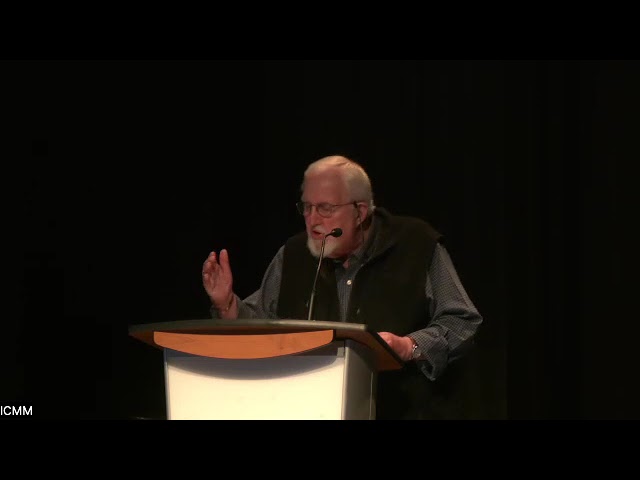
W2.0 - The Ocean Today - Peter Neill, World Ocean Observatory
Keywords
Summary
162 words
Critical Evaluation
Value of the Information & Strength of the Argument
The value lies in the speaker’s unique perspective as a long-time maritime museum leader and educator. He provides a strong argument for reorienting museum missions toward future relevance and advocacy. The reasoning is compelling and emotionally charged, supported by real-world examples such as the Harbor School and the World Ocean Observatory’s digital project. However, the argumentation is largely rhetorical and lacks systematic evidence or citation of specific scientific studies, making it more of an inspirational manifesto than a rigorously analytical talk.
Scientific Rigor, Source Quality, Title Accuracy
Scientifically, the talk is more about socio-cultural advocacy than strict science. The speaker references few concrete studies or reports, relying mostly on general knowledge and his own experience. He does mention specific organizations like the Nippon Foundation’s seafloor mapping and the UN Ocean Summit, but without detailed sources. The title-contenu alignment is strong, as the presentation clearly addresses the ocean’s current state. No specific external sources are cited in the video description, and the speech is primarily opinion-based.
174 words
Title / Content Match
The title accurately reflects the presentation's focus on the ocean's current state and the role of maritime museums in ocean advocacy.
Quality & Reliability
7/10
Peter Neill, a veteran marine affairs leader and founder of the World Ocean Observatory, delivers an impassioned, experience-based keynote. His claims are largely anecdotal and rhetorical, with little hard data or citation of specific studies, but he draws on decades of professional involvement and references concrete initiatives. The perspective is expert and credible, yet the argumentative tone and lack of empirical grounding slightly temper reliability.
Key Moments
Markers derived by PSI from the transcript: the creator did not define chapters.
- Introduction of Peter Neill by ICMM chair
- Neill begins, emphasizes ocean-freshwater continuum
- Calls for museums to become futurists not historians
- Discusses ocean floor mapping, mining, and genome
- Discusses modern slavery, invasive species, and colonization
- Outlines tools like willpower and education, mentions his schools
- Presents World Ocean Observatory's digital platform
- Concludes with challenge and Q&A on law and ocean treaty
Cited Sources
- World Ocean Observatory — Peter Neill is the founder and director; the talk announces a new web-based platform.
- The Sea and Civilization — Neill recommends Lincoln Paine's book during the Q&A.
- The Sound School — School co-founded by Neill, mentioned as an example of maritime education.
Concurring Sources
- Ocean Census — Relates to Neill's mention of the ocean genome and undiscovered species.
Contribution & Novelties
The presentation’s original contribution is the strong, personal call for maritime museums to pivot from historical preservation to future-oriented advocacy and education. Neill introduces practical examples like the World Ocean Observatory’s open-access digital galleries and maritime-focused public high schools. He reframes ocean literacy as a universal educational framework. His emphasis on the ocean as a continuous system (freshwater-to-deep-sea) provides a useful integrative lens.
Pour aller plus loin :
- Ocean literacy — Foundational framework for ocean education, central to Neill’s argument.
- High Seas Treaty — Relevant to the Q&A discussion on international ocean governance.
- Maritime museum — Context for the institutional mission debate.
102 words
Radar Profile
The radar profile shows balanced moderate scores across information quantity, quality, technique, and reliability, with a slight dip in technical level. This reflects a talk rich in experienced perspective and advocacy but lighter on empirical data and methodological depth.