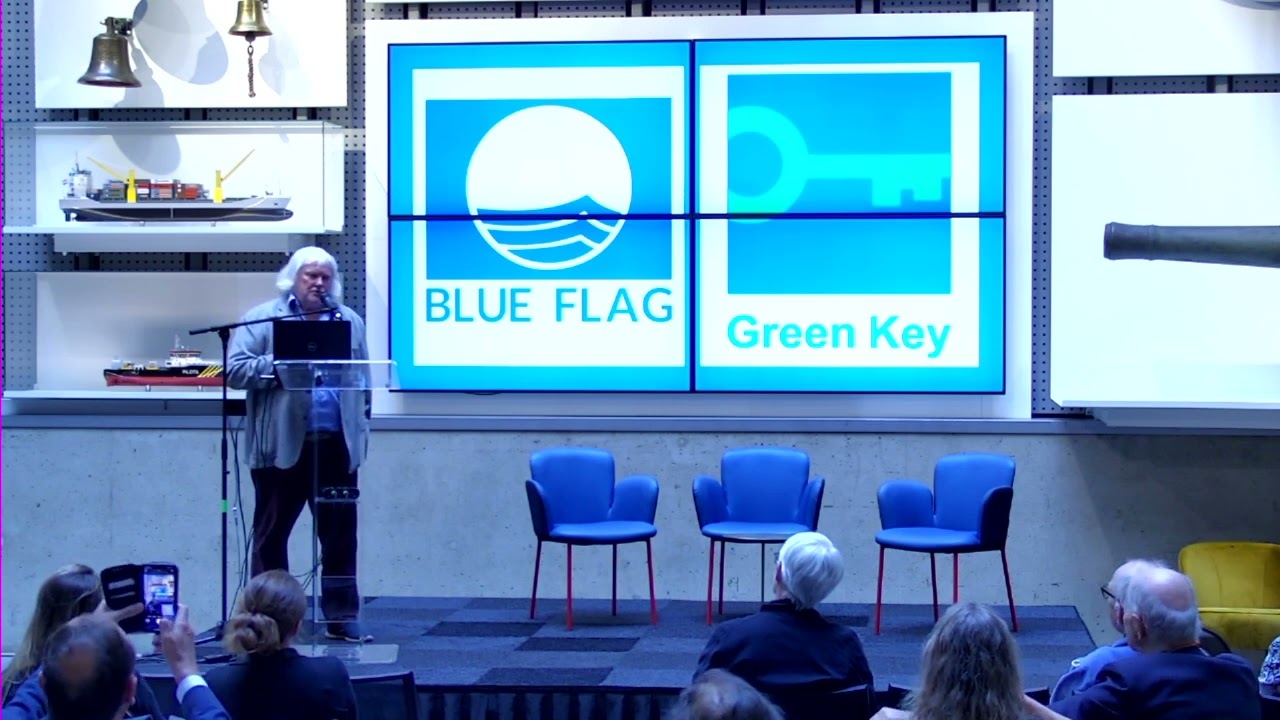
ICMM Congress 2024: The Future of Maritime Museums: Driving New Directions
Keywords
Summary
147 words
Critical Evaluation
Value of the Information & Strength of the Argument
The session offers practical insights into museum management and strategic adaptation. Urmas Dresen provides concrete examples of operational improvements, such as the use of AI (Jenny) for climate control and energy management, and the implementation of the Common Assessment Framework. Howard Hoege presents a detailed turnaround narrative with measurable outcomes: endowment growth from $0 to $19.5 million, increased student engagements from 9,000 to 26,000 annually, and improved employee engagement scores. He argues for a shift from transactional to philanthropic models and emphasizes conservation as a core program. Daryl Karp’s contribution, though truncated, draws on her extensive media and technology background to discuss digital transformation. The arguments are persuasive but rely heavily on personal experience and institutional data without external validation. The value lies in the transferable strategies and the candid sharing of challenges and successes, making it useful for museum professionals.
Scientific Rigor, Source Quality, Title Accuracy
The session does not cite specific studies or sources; references to ‘a growing body of literature’ on social capital are generic. The speakers’ claims are based on their own institutional experiences, which are credible but not independently verifiable. The title accurately reflects the content, as the panel explores future directions for maritime museums through innovation, community engagement, and technology. No advertising sequence was present in the transcript. Comments are not provided, so no analysis of public trends is included.
235 words
Title / Content Match
The title accurately reflects the panel discussion on future directions for maritime museums, with speakers addressing innovation, community engagement, and technological adaptation. The content aligns well with the announced theme.
Quality & Reliability
7/10
The session features three experienced museum directors presenting their institutional strategies and outcomes. Claims are largely anecdotal and self-reported, with some quantitative figures (endowment growth, student engagement numbers, turnover rates) that are plausible but not independently verified. The discussion is grounded in professional practice and references broader concepts like social capital, but lacks formal citations or peer-reviewed evidence. Overall, the information is credible for a professional audience but not rigorously sourced.
Key Moments
Markers derived by PSI from the transcript: the creator did not define chapters.
- Kevin Fewster introduces the session and speakers.
- Urmas Dresen begins his talk on managing the Estonian Maritime Museum.
- Dresen discusses the use of AI (Jenny) for museum operations.
- Howard Hoege starts his presentation on innovation at The Mariners' Museum.
- Hoege outlines the museum's turnaround and new mission.
- Hoege details operational tenets: conservation, research, access, value.
- Daryl Karp begins her talk on technology and future directions.
- Karp shares her background in media and digital transition.
- Karp discusses the impact of technology on museums.
- Group discussion begins (transcript truncated).
Contribution & Novelties
The session provides a platform for three museum leaders to share distinct strategies for navigating change, emphasizing practical solutions such as AI integration, community-focused business models, and digital transformation. It contributes to the ongoing discourse on the future of maritime museums by highlighting common challenges and diverse responses.
Pour aller plus loin :
- Social capital — Concept referenced by Howard Hoege to justify community engagement.
- Common Assessment Framework — Quality management tool mentioned by Urmas Dresen.
- Digital transformation in museums — Broad context for Daryl Karp’s discussion on technology.
89 words
Radar Profile
The radar shows a balanced profile with moderate to high scores in information quantity and reliability, reflecting the practical and experience-based nature of the talks. The technical level is moderate, as the discussion focuses on management and strategy rather than deep technical details. Overall, the session is informative for professionals but lacks rigorous sourcing.