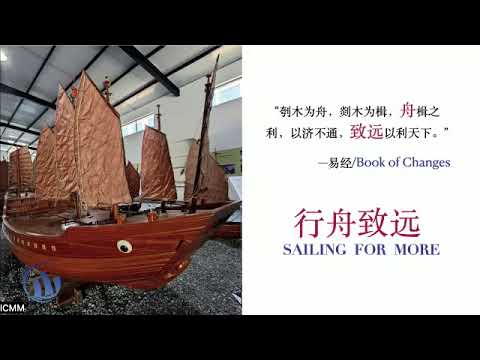
GLOBOAT - A Public Database & Platform for the Study of World Wooden Sailing Crafts - Zefeng You
Keywords
Summary
162 words
Critical Evaluation
Value of the Information & Strength of the Argument
The value of this presentation lies in the introduction of a pioneering open database dedicated to small wooden sailing crafts, which is not only a resource for researchers but also for public engagement. The argumentation is solid, based on the presenter’s direct experience and clear identification of gaps in current databases. He effectively argues for the need for a comprehensive, interoperable platform by pointing out limitations of existing collections-focused databases and the potential for collaborative knowledge sharing.
Scientific Rigor, Source Quality, Title Accuracy
The presentation is rigorous in its factual claims about the museum’s collection and activities, presented in a clear and organized manner. However, no direct scholarly sources are cited, and the content relies on the presenter’s authority. The title accurately describes the content, and the structure follows a logical flow from background to project details. There is no mention of external documentation, but the proposal is rooted in professional practice.
161 words
Title / Content Match
The title accurately reflects the content, which focuses on introducing the GLOBOAT database project.
Quality & Reliability
7/10
Presentation by the museum director about his own project, based on first-hand experience and institutional knowledge. No external sources cited, but the information is reliable within its scope.
Key Moments
Markers derived by PSI from the transcript: the creator did not define chapters.
- Introduction to the museum and its history.
- Presentation of boat collection photos and examples.
- Explanation of challenges faced in studying the boats.
- Announcement of the GLOBOAT project and its aims.
- Description of the three core areas: research, interaction, sharing.
- Example of the Junking 2 database entry.
- Invitation for collaboration and concluding remarks.
Contribution & Novelties
The main contribution is the proposal for an open, collaborative database specifically for small wooden sailing crafts, which fills a gap in existing maritime heritage databases. The project incorporates 3D scans and multi-language input, addressing common research limitations. This initiative could serve as a model for similar cultural heritage projects.
Pour aller plus loin :
- Wooden boat — Background on traditional wooden boat construction.
- Maritime museum — Overview of maritime museums and their missions.
- Open access — Principles of open access that underpin the GLOBOAT database concept.
87 words
Radar Profile
The radar profile shows moderate scores with relatively high quantity and reliability, and lower quality and technical levels. This reflects a presentation that is informative and trustworthy but not deeply technical or rigorously documented, aligning with an expert opinion at a professional congress.