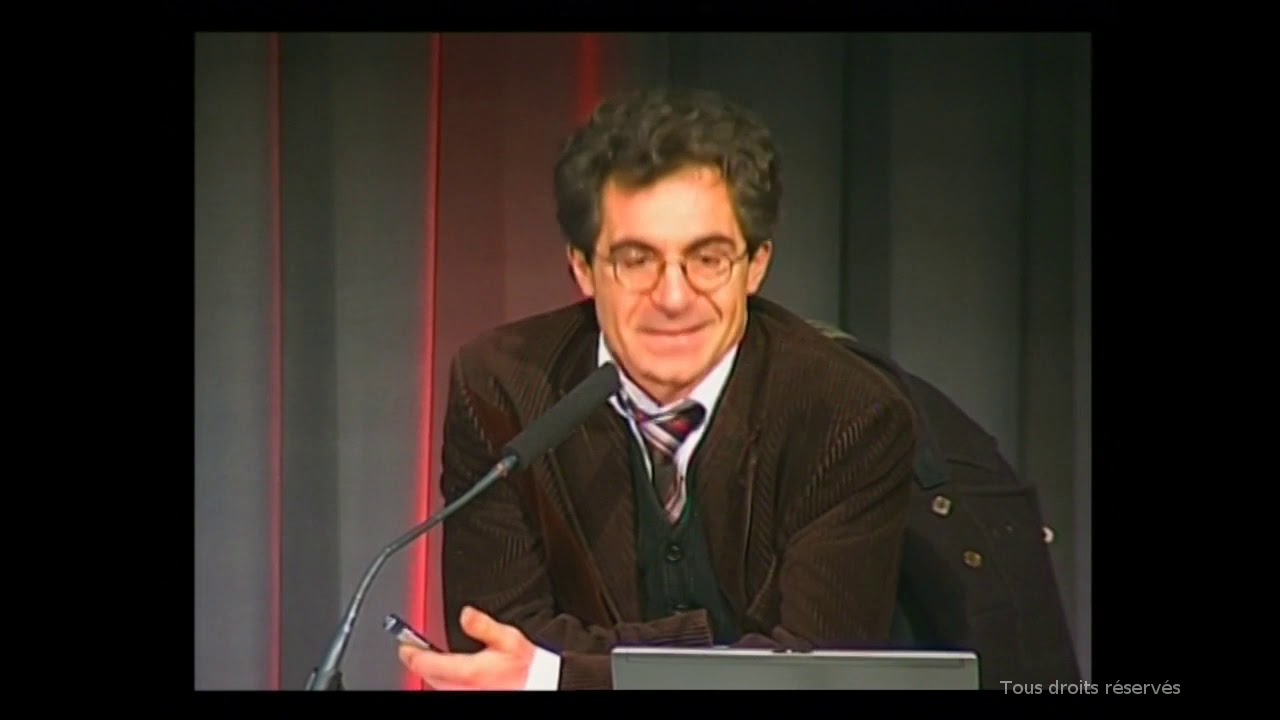
La Physique Quantique 3/3 - Etienne Klein
Quantum Physics 3/3 - Etienne Klein
Keywords
Summary
170 words
Critical Evaluation
Value of the Information & Strength of the Argument
The video’s value lies in its clear and structured presentation of deep conceptual issues in quantum mechanics. Klein’s argumentation is solid: he uses a simple thought experiment to demonstrate why a superposition cannot be understood as a mixture, and he carefully distinguishes between the formalism and its interpretations. He presents both the orthodox (Copenhagen) view and the critical positions of Einstein and others, explaining the stakes of the debate without taking a dogmatic stance. The logical flow is excellent, building from the superposition principle to the measurement problem, then to entanglement and Bell’s theorem. The lecture is not merely descriptive; it engages critically with the concepts, showing why the interpretation question matters and how it could be resolved experimentally. The main strength is the clarity with which Klein articulates the philosophical dimensions of physics, making complex ideas understandable without oversimplifying.
Scientific Rigor, Source Quality, Title Accuracy
The scientific rigor is high: Klein is a recognized expert in the field, and the lecture was recorded at the Cité des sciences, a reputable institution. The content aligns with established physics and history of science. The description provides a link to the Cité des sciences website as a source, which is legitimate. The title accurately reflects the content. The lecture respects the historical chronology of the debate (from the 1920s to Bell’s theorem) and correctly cites key figures and experiments. The absence of visual sources in the video is compensated by clear verbal explanations. The adequacy between title and content is perfect: this is indeed the third part dedicated to interpretations, consistent with the series’ structure.
272 words
Title / Content Match
The title accurately reflects the third and final lecture in a series on quantum physics, dedicated to the interpretation of the formalism, which is exactly what the content covers.
Quality & Reliability
9/10
Etienne Klein, a renowned physicist and philosopher of science, delivers a rigorous and clear lecture on quantum mechanics interpretations. His credentials (CEA research director, professor) and the institutional context (Cité des sciences) ensure high epistemic reliability. The content is historically accurate, technically precise, and philosophically balanced.
Key Moments
Markers derived by PSI from the transcript: the creator did not define chapters.
- Introduction: Why interpretation is needed in quantum physics, unlike classical physics, and the problem of measurement.
- The superposition principle and its role as the foundation of quantum physics, leading to interpretation issues.
- Thought experiment with electron spin and Stern-Gerlach apparatus, demonstrating that superposition is not a mixture.
- Discussion of the measurement problem, wave packet collapse, and the Einstein-Bohr debate on hidden variables.
- Schrödinger's cat paradox and its significance for macroscopic superpositions.
- EPR argument, quantum entanglement, and non-separability.
- Conclusion: The possibility of resolving the debate experimentally (Bell's inequalities) and current perspectives.
Cited Sources
- Cité des sciences et de l'industrie — Link provided in the video description as the institutional source of the lecture.
Concurring Sources
- Stern-Gerlach experiment — The experiment referenced in the lecture to illustrate spin measurement and superposition.
- Hidden-variable theory — Einstein's proposed alternative to the completeness of quantum mechanics, discussed as the 'hidden variables' argument.
- Many-worlds interpretation — One alternative interpretation of quantum mechanics that addresses the superposition problem differently.
Dissenting Sources
- Bohmian mechanics — A deterministic hidden-variable interpretation that challenges the standard Copenhagen view presented as the 'orthodox' interpretation in the lecture.
Contribution & Novelties
The lecture’s original contribution lies in its pedagogical clarity in presenting the conceptual problems of quantum mechanics and the historical debate on interpretation. It does not present new research but synthesizes well-established knowledge with insight into the philosophical stakes. The thought experiment used to distinguish superposition from mixture is particularly effective for teaching.
Pour aller plus loin :
- Quantum mechanics — A comprehensive overview of the theory, contextualizing the formalism and its interpretations.
- Measurement problem — Directly addresses the core issue discussed in the lecture.
- EPR paradox — Essential background for the entanglement discussion.
- Bell’s theorem — On the experimental resolution of the hidden-variables debate.
- Schrödinger’s cat — The famous thought experiment presented in the lecture.
116 words
Radar Profile
The radar profile shows high scores across all dimensions, with particularly strong marks for information quality and reliability, reflecting the expert presentation and rigorous content. The slightly lower but still substantial technical level indicates that while the material is advanced, it is presented for a general audience. Overall, a well-balanced and authoritative lecture.