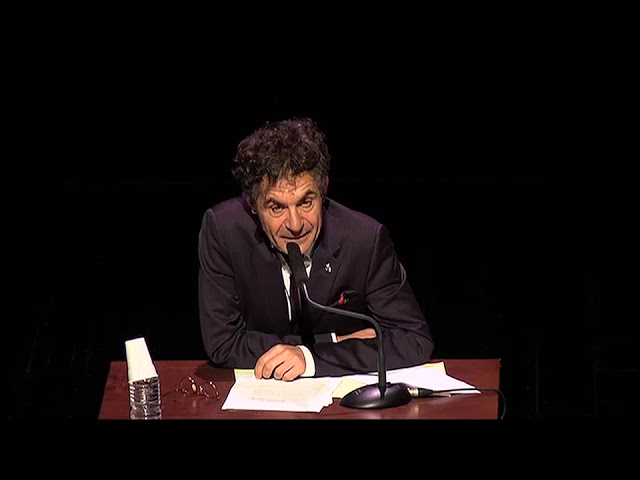
De quoi le vide est il plein
What is the void full of?
Keywords
Summary
174 words
Critical Evaluation
Value of the Information & Strength of the Argument
The value of the information is exceptional. Klein provides a masterful synthesis of the history of ideas, linking ancient Greek metaphysics to the most advanced concepts of modern physics (quantum fields, Higgs mechanism, virtual particles). The argumentation is remarkably solid: he systematically presents opposing viewpoints (e.g., Aristotle vs. atomists) and demonstrates how each underlying physical theory dictates a specific definition of ‘vacuum’. The logical progression from the philosophical impossibility of thinking the void to the mathematical/physical necessity of a ‘full’ vacuum is highly convincing and intellectually stimulating.
Scientific Rigor, Source Quality, Title Accuracy
The scientific rigor is high. Klein correctly attributes ideas to their historical authors (Parmenides, Leucippus, Epicurus, Aristotle, Roger Bacon) and accurately describes their arguments. The modern physics explanations (virtual particles, energy-time uncertainty, Higgs field) are standard and correctly presented. The sources cited are mostly historical texts, and the only external link in the description is to the BNF, which is where the original event took place. The title ‘De quoi le vide est il plein?’ is perfectly suited to the content, framing the entire lecture as a direct answer to this intuitive question. The audience appreciation (based on the 30 comments) is overwhelmingly positive, praising Klein’s pedagogical clarity and intellectual depth, with many viewers noting a profound shift in their understanding of the concept of emptiness.
228 words
Title / Content Match
The title perfectly captures the central thesis of the lecture, which explores the conceptual evolution of the vacuum from ancient philosophy to modern quantum physics, concluding it is filled with physical fields.
Quality & Reliability
9/10
Lecture by a leading French physicist and philosopher of science, offering a well-structured historical and conceptual analysis of the vacuum. The argumentation is rigorous, references are solid, and the content is presented with high pedagogical clarity.
Key Moments
Markers derived by PSI from the transcript: the creator did not define chapters.
- Introduction: Klein outlines the central paradox between 'nothingness' and a physical 'vacuum'.
- Parmenides' philosophy: the impossibility of thinking the void and the transformation of 'nothing' into 'something'.
- The atomists (Democritus, Epicurus): vacuum as a necessary condition for movement.
- Aristotle's arguments against the vacuum and his concept of the aether.
- The 'horror vacui' in the Middle Ages and the practical problem of 'making a vacuum'.
- The idea that the definition of vacuum depends on the physical theory of reference.
- The quantum vacuum: virtual particles and the role of energy in making them real.
- The Higgs field, materialization of mass, and conclusion on the vacuum's fullness.
Cited Sources
- Bibliothèque nationale de France (BNF) — Site of the institution which hosted the event and is referenced in the video description as the source.
Contribution & Novelties
The original contribution lies in Klein’s dynamic historical approach, demonstrating that the concept of ‘vacuum’ is not a stable, empty concept but rather a container that is constantly refilled with the theoretical machinery of each era. By sequentially exposing how Parmenides, Aristotle, and modern quantum physicists have dealt with the void, he provides a coherent narrative showing that ‘vacuum’ always refers to a dense physical reality, not a simple absence. This illuminates the deep continuity between ancient aether and modern quantum fields.
Pour aller plus loin :
- Quantum vacuum state — Relevant to the modern physical concept of vacuum filled with fluctuating fields.
- Virtual particle — Directly explains the ‘matter fatigue’ metaphor used by Klein for particles that cannot materialize without energy.
- Vacuum expectation value — Demonstrates how the vacuum, like the Higgs field, holds a non-zero value, giving mass to particles.
- Atomism — Historical anchor for the debate about atoms and void in ancient philosophy.
156 words
Radar Profile
The radar shows a high score across all dimensions (quantity, quality, reliability) with a slightly lower score for technical level, reflecting a lecture that is dense but accessible. This profile indicates a very well-rounded and rigorously constructed presentation, ideal for both the curious amateur and the informed viewer seeking a robust synthesis of physics and philosophy.
💬 Very positive. Across the 30 analyzed comments, the atmosphere is marked by strong enthusiasm and admiration for Étienne Klein's clarity and erudition, praised as an exceptional science communicator, while a few comments engage in personal metaphysical reflections inspired by the topic.