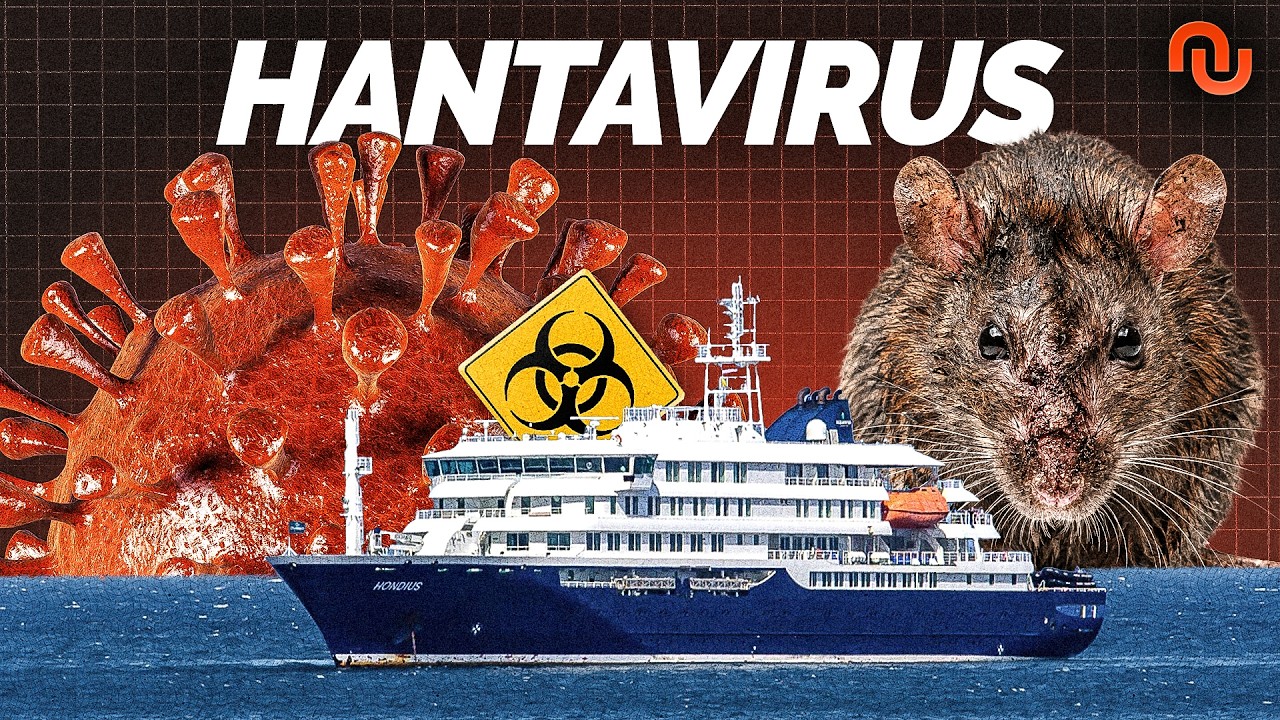
Pourquoi le Hantavirus ne sera jamais le « prochain Covid » (et tant mieux)
Why Hantavirus will never be the "next Covid" (and that's a good thing)
Title history
- Pourquoi le Hantavirus ne sera jamais le « prochain Covid » (et tant mieux) — observed on 20261101-0121 UTC (YouTube)
Keywords
Summary
127 words
Critical Evaluation
Value of the Information & Strength of the Argument
The video provides valuable, up-to-date information about hantavirus biology and epidemiology, and effectively clarifies misconceptions by comparing it to Covid-19. The argumentation is logically sound, using the MV Hondius case to illustrate key points, and relies on official data from the WHO and scientific references. The explanation of why hantavirus is unlikely to cause a pandemic is convincing, citing transmission constraints and existing countermeasures. The presentation is balanced, acknowledging the severity of the virus while reassuring without trivializing the risk.
Scientific Rigor, Source Quality, Title Accuracy
The video demonstrates scientific rigor by referencing WHO statements, known epidemiological data, and a linked article on hantavirus treatments. The sources are credible, though it does not directly name all scientific papers. The title accurately reflects the content’s focus on why hantavirus will not become the next Covid, and the video consistently returns to this point. The production quality is high, with clear visuals and accurate explanations, supporting the credibility of the information presented.
169 words
Title / Content Match
The title accurately captures the video's central thesis: that hantavirus will not trigger a pandemic like Covid-19, supported by detailed arguments throughout.
Quality & Reliability
8/10
The video relies on official sources such as the WHO and references scientific studies, and clearly distinguishes facts from hypotheses. It is produced by a reputable tech/science channel and includes an article for further reading. However, it does not provide direct primary-source citations beyond the mentioned OMS alerts and a linked press article.
Chapters
- Le hantavirus, le nouveau Covid ?
- À bord du MV Hondius, que s'est-il passé exactement ?
- Une opération logistique colossale
- C'est quoi exactement le hantavirus
- La transmission de l'hantavirus
- Pourquoi le hantavirus ne sera pas le prochain covid
- Pourquoi le hantavirus est si létal ?
- Les microbes adorent les bateaux de croisière
- On a de l'avance scientifique
- Le risque épidémique reste faible
Cited Sources
- Numerama article: 'Remèdes, vaccins : où en est-on pour soigner les personnes contaminées par l’hantavirus ?' — Linked in the description as the article on hantavirus treatments and vaccines, providing additional detail.
External References
Contribution & Novelties
The video’s original contribution is its accessible synthesis of hantavirus characteristics and the specific analysis of the MV Hondius event, while explicitly addressing why this virus cannot spark a pandemic. It debunks fear by contrasting the virus’s high lethality with its limited transmissibility, and highlights advancements in detection and response. The video adds value by offering a reassuring yet evidence-based perspective on a newsworthy outbreak.
Pour aller plus loin :
- Hantavirus (Wikipedia) — Overview of the virus family and its biology.
- Andes virus (Wikipedia) — Specific details on the strain involved in the outbreak.
- WHO fact sheet on Hantavirus — Official global health information and risk assessment.
107 words
Radar Profile
The radar profile shows high scores in information quantity and quality, with slightly lower technical level, indicating a well-explained but accessible presentation. The fiabilité is also high, reflecting the use of credible sources. The overall shape suggests a reliable and informative science communication video.