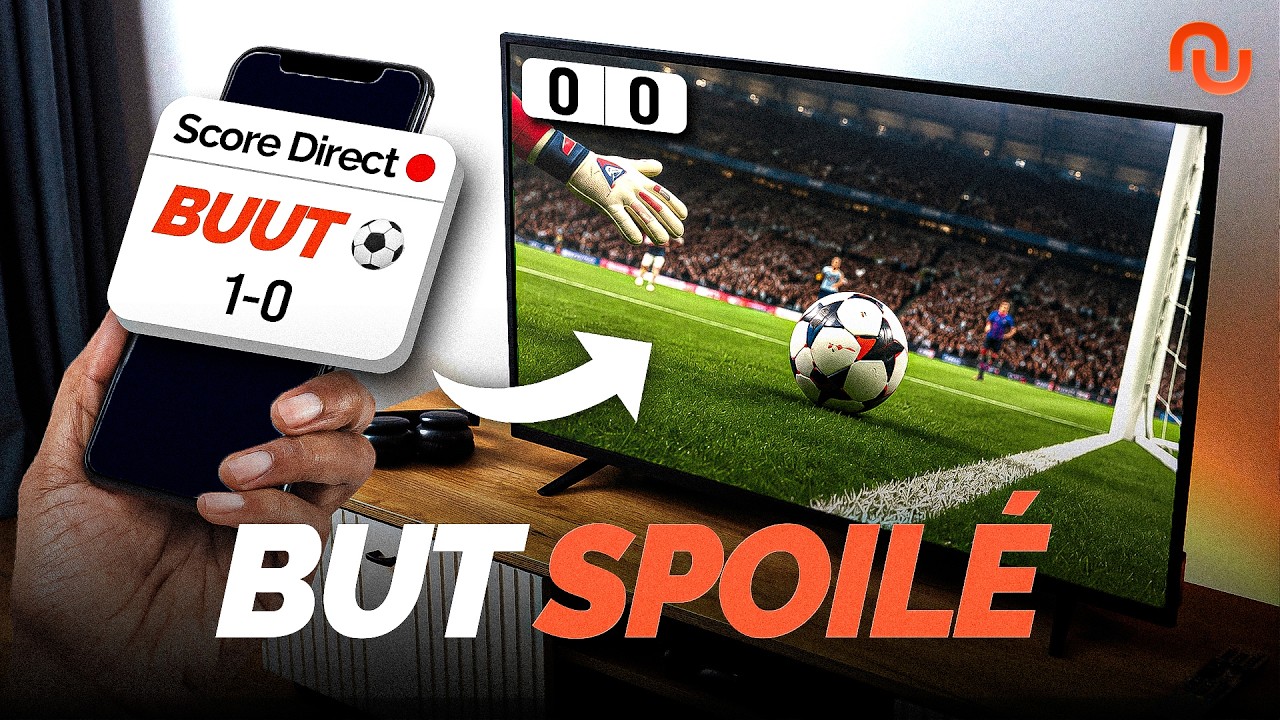
Voici pourquoi ta télé est en retard quand il y a un but
Here is why your TV is late when there is a goal
Title history
- Voici pourquoi ta télé est en retard quand il y a un but — observed on 20261101-0112 UTC (YouTube)
Keywords
Summary
149 words
Critical Evaluation
Value of the Information & Strength of the Argument
The video provides valuable insights into broadcasting latency, making complex technical concepts accessible to a general audience. The argumentation is well-structured, progressing from the problem (spoilers) to the technical reasons and potential solutions. The presenter uses concrete examples, such as segment lengths and delay ranges, to illustrate points. However, the video does not cite primary scientific sources or industry reports, relying instead on common knowledge and personal experience. This limits the depth of the argumentation, but it remains convincing for the intended audience of football fans and tech-curious viewers.
Scientific Rigor, Source Quality, Title Accuracy
The video demonstrates a good understanding of broadcasting technologies, accurately describing HLS, DASH, and TNT principles. It does not, however, provide direct citations to external studies or official documentation, referencing only a companion article on Numerama. The title accurately reflects the content, which is entirely focused on explaining why TV broadcasts are delayed during live events. There is no mismatch between the title and the actual material, and the video stays on-topic throughout.
177 words
Title / Content Match
The title accurately reflects the content, which directly explains why live TV broadcasts are delayed, focusing on football matches.
Quality & Reliability
7/10
The video offers clear and accurate explanations of broadcasting latency, drawing on well-known technical concepts. However, it relies primarily on anecdotal evidence and popular sources rather than peer-reviewed studies, limiting its scientific rigor.
Chapters
Cited Sources
- Comment éviter de se faire spoiler la finale PSG-Inter par ses voisins — Companion article published on the Numerama website, providing additional details on the topic.
External References
Contribution & Novelties
The video synthesizes existing technical knowledge about broadcasting and streaming to address a common real-world annoyance (goal spoilers). Its originality lies in the accessible explanation tailored to football fans, without diving into overly technical jargon. It also offers practical advice (e.g., using TNT antennas) that viewers can implement immediately. To explore further:
Pour aller plus loin :
- HTTP Live Streaming (HLS) — The adaptive streaming protocol that fragments video into segments, contributing to latency.
- Dynamic Adaptive Streaming over HTTP (DASH) — Another key standard for adaptive streaming, often used alongside HLS.
- Multicast — A network technology enabling efficient distribution of the same signal to many users, underlying TNT and operator set-top boxes.
112 words
Radar Profile
The radar chart would show a balanced profile with moderately high scores for information quantity and quality, a slightly lower technical depth, and good reliability. This indicates a well-rounded explainer video that is suitable for popular audiences but lacks specialized depth for experts.