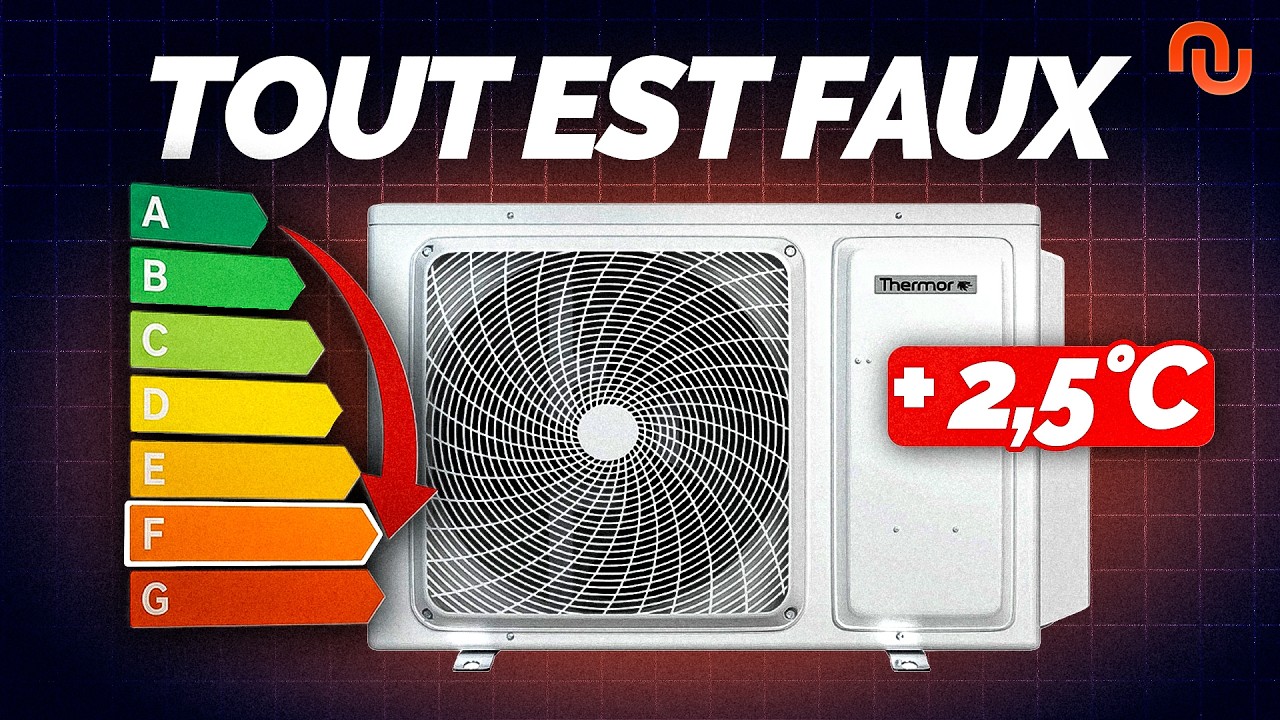
Tout le monde se trompe sur la climatisation
Everyone is wrong about air conditioning
Title history
- Tout le monde se trompe sur la climatisation — observed on 20261101-0108 UTC (YouTube)
Keywords
Summary
183 words
Critical Evaluation
Value of the Information & Strength of the Argument
The video provides substantial value by demystifying technical aspects of air conditioning, offering a clear explanation of how heat pumps work and addressing common misconceptions with specific data and studies. The argumentation is well-structured, systematically addressing technical, regulatory, and ideological dimensions. The author uses credible sources, such as a Météo France/CNRS study and a University of Manchester study, while also referencing the IPCC. The reasoning is logical and persuasive, though it explicitly states personal opinions on the moral aspects, making the argument compelling but not purely objective.
Scientific Rigor, Source Quality, Title Accuracy
The scientific rigor is high: the video cites reputable studies and regulatory texts, and distinguishes between factual claims and personal viewpoints. The main source is the accompanying Numerama article, which provides further detail. The title accurately sets expectations, and the content remains consistent with it. The video’s use of specific figures (e.g., 0.5°C vs 2°C scenarios) demonstrates careful nuance. However, it also engages in critique of French policies, which is presented as informed opinion rather than pure science. The adéquation between title and content is excellent, with the video indeed challenging common misperceptions.
195 words
Title / Content Match
The title accurately reflects the content: the video systematically challenges widely held misconceptions about air conditioning, from its technical functioning to its environmental impact and French regulations.
Quality & Reliability
8/10
The video is well-researched, citing academic studies and expert opinions, and presents a clear technical explanation of heat pumps and regulations. While subjective in its ideological critique, it grounds its claims in specific scientific references and official texts.
Chapters
Cited Sources
- Numerama article: Ideas received on air conditioning: cost, efficiency, environment - we separate the true from the false — Companion article referenced in the video description, providing in-depth analysis and sources.
- Numerama website — General website of the media outlet producing the video.
External References
Contribution & Novelties
The video contributes a fresh perspective by systematically dismantling common arguments against air conditioning, framing it within the broader context of heat pump technology and French energy policy. It highlights the irony of subsidizing heat pumps in winter while penalizing the same technology in summer, and exposes the regulatory and ideological biases that hinder efficient cooling solutions. This reframing is valuable for public understanding and could influence policy discussions.
Pour aller plus loin :
- Heat pump — Explains the principle and efficiency of heat pumps, directly relevant to the video’s core argument.
- Urban heat island — Provides scientific background on the phenomenon the video discusses in the context of climate’s effect on cities.
- Montreal Protocol — Historical treaty mentioned in the video, crucial for understanding refrigerant regulation.
- Kigali Amendment — Updated agreement addressing HFCs, cited as key progress in refrigerant technology.
141 words
Radar Profile
The radar chart shows a high quantity of information and strong overall quality, with moderate technical depth. The fiabilité score is slightly lower than the other metrics, reflecting the video's blend of scientific facts and ideological critique. Overall, the video excels in providing comprehensive, well-researched content, though technical level is accessible to a broad audience.
💬 Very positive: The 30 comments analyzed are overwhelmingly supportive, with many professionals in heating/cooling confirming the technical points and several viewers criticizing mainstream media's portrayal of air conditioning, while others praise the video's clarity and objectivity.