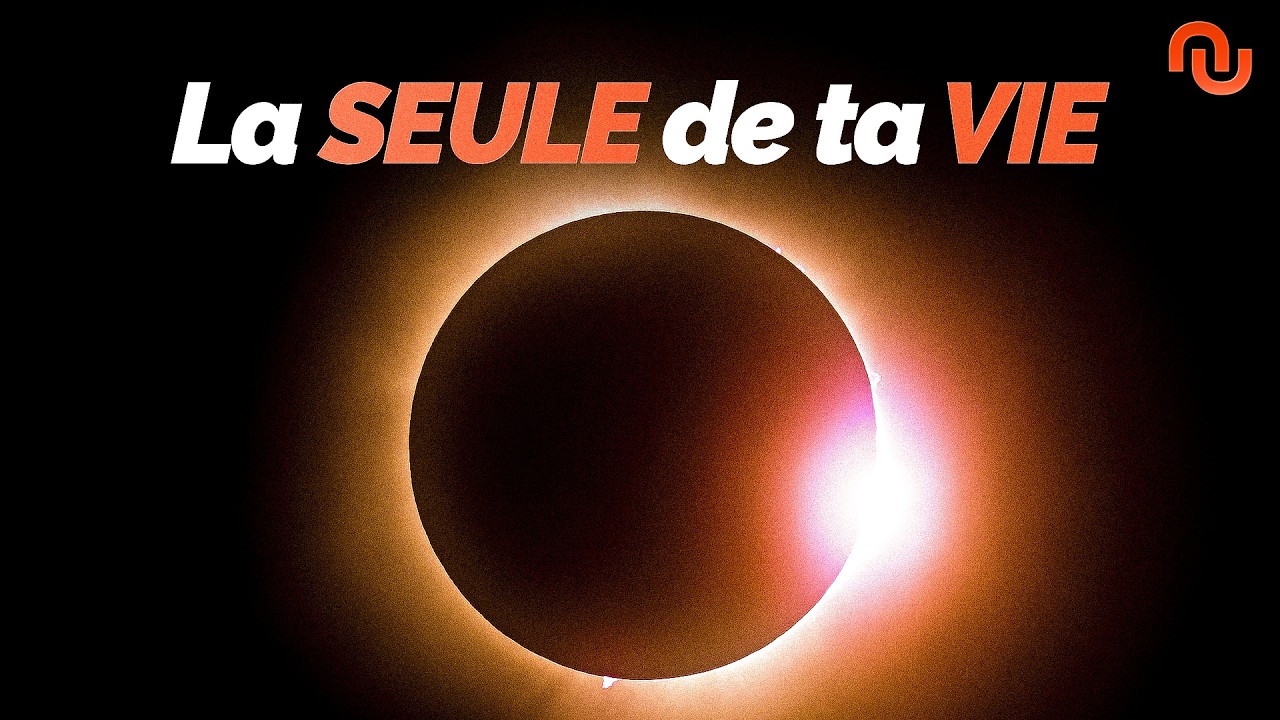
Pourquoi l'éclipse du 12 août est si particulière
Why the August 12 eclipse is so special
Title history
- Pourquoi l'éclipse du 12 août est si particulière — observed on 20261101-0113 UTC (YouTube)
Keywords
Summary
177 words
Critical Evaluation
Value of the Information & Strength of the Argument
The video delivers high-value information by combining clear scientific explanations with practical guidance. It effectively argues for the uniqueness of the 2026 eclipse by comparing it with other forthcoming events and emphasizing the narrow path of totality. The argumentation is compelling because it appeals to both scientific curiosity and personal experience, using vivid descriptions of the sensory impact. The explanation of the solar corona and its importance for predicting solar storms adds depth, though it could have been expanded. The safety advice is rigorously presented, with repeated warnings and clarification of the international standard for glasses. The structure—from science to planning—builds a logical case that the trip is worth it, and the presenter’s enthusiasm is contagious.
Scientific Rigor, Source Quality, Title Accuracy
The scientific content is accurate and well-presented, relying on established astronomical knowledge. The video explicitly cites the Observatoire de Paris interactive tool (EcliSEOP) as a reliable source for local eclipse circumstances, and mentions a companion article on Numerama about certified glasses. However, it does not cite any peer-reviewed studies or official reports, which is acceptable for a popular science context. The title is faithful to the content, and the video covers all promised aspects. The address of the Observatoire de Paris map is provided, and the advice aligns with international eye-safety guidelines. Comments indicate that a few viewers noted the eclipse occurs near sunset, which the video does not explicitly mention, but this is a minor omission that does not undermine the overall reliability.
255 words
Title / Content Match
The title accurately reflects the content, which focuses on why the August 12, 2026 eclipse is exceptional and how to observe it safely.
Quality & Reliability
8/10
The video provides accurate scientific explanations, references an official tool from the Observatoire de Paris, and offers clear safety guidelines. Minor omissions (e.g., the solar altitude) are noted but do not affect overall reliability.
Chapters
Cited Sources
- Numerama official website — General reference for the author and related articles.
- EcliSEOP - Observatoire de Paris eclipse map — Tool recommended in the video for precise local eclipse data.
- Numerama guide to finding certified eclipse glasses — Article referenced for safe glasses purchase.
- Numerama+ premium service — Mentioned as additional content access, not directly related to the subject.
External References
Contribution & Novelties
The video adds value by synthesizing scientific facts, practical logistics, and safety measures in a single engaging package. It highlights the rarity of the total eclipse near France and provides a concrete tool (the Observatoire de Paris map) that viewers can use immediately. The emphasis on the sensory experience—darkness, animal behavior—makes the event tangible.
Pour aller plus loin :
- Solar eclipse — Background on the types and mechanics of eclipses.
- Corona — Explanation of the Sun’s atmosphere, directly relevant to the science discussed.
- Solar storm — Context on space weather and why studying the corona matters.
- Observatoire de Paris map — Interactive map to precisely plan observations.
107 words
Radar Profile
The radar profile shows strong scores across all dimensions, with a slight dip in technical level relative to quantity and quality. This reflects a well-balanced popular science video that is informative, reliable, and accessible.
💬 très positif — Les commentaires expriment un enthousiasme marqué, beaucoup de spectateurs partagent leurs souvenirs d'éclipses passées (notamment 1999) et remercient la chaîne pour les conseils pratiques. Quelques remarques constructives sur l'heure de l'éclipse en Espagne et la rapidité de l'affichage de la norme, mais l'ensemble est très positif.