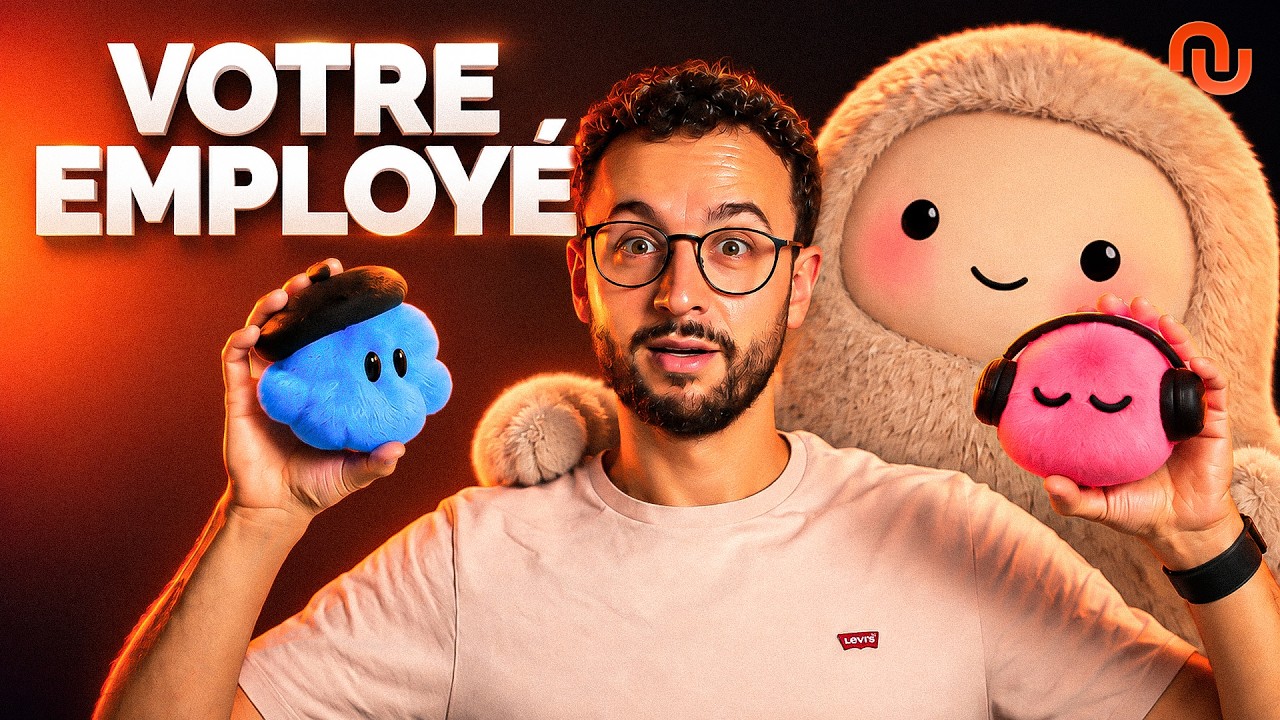
La guerre des agents IA a commencé (dots, Muse…) - Décode
The AI agent war has begun (dots, Muse…) - Decode
Title history
- La guerre des agents IA a commencé (dots, Muse…) - Décode — observed on 20261031-2319 UTC (YouTube)
Keywords
Summary
173 words
Critical Evaluation
Value of the Information & Strength of the Argument
The video provides a valuable synthesis of current developments in AI agents, clearly explaining the difference between simple chatbots and proactive agents. It offers concrete examples, such as Meta’s Muse reading entire conversations or booking appointments without user consent, which ground the discussion in real incidents. The argumentation is well-structured and balanced: while acknowledging the potential of agentic AI for productivity, it also presents counterarguments, including poor user adoption numbers and cybersecurity experts’ warnings about granting root access to AI systems. The presentation of competing forces (OpenAI, Meta, Anthropic, Google, Apple) and the hardware question adds depth. However, the video sometimes relies on anecdotal evidence and does not cite specific studies or reports beyond its own article, which slightly weakens the strength of the arguments.
Scientific Rigor, Source Quality, Title Accuracy
The video demonstrates good scientific rigor in its journalistic approach: it names products, companies, and real user incidents, and references a linked article from Numerama for additional details. The sources mentioned are primarily product announcements and user reports, which are appropriate for a news review. The title matches content well, as it highlights the ‘war’ among AI agents and prominently mentions Dots and Muse. The adéquation titre/contenu is strong, and the video does not mislead viewers. The absence of external citations (academic papers or official reports) is acceptable for a tech news piece, but the reliance on self-generated content and limited external verification means the overall reliability is good, though not exceptional.
252 words
Title / Content Match
The title accurately reflects the content: it announces a competitive race among AI agents and focuses on Dots and Muse, which are central to the video.
Quality & Reliability
8/10
The video is a well-researched journalistic analysis of the AI agent landscape, relying on concrete product announcements (OpenAI Dots, Meta Muse), user numbers, and security researcher warnings. The tone is balanced, acknowledging hype and risks. Sources are mostly the video's own reporting and a linked article, without external academic citations, which slightly limits verifiability.
Chapters
Cited Sources
- OpenAI DevDay 2026: résumé des annonces Dots, GPT-6.1… (Numerama article) — The video refers to this article for additional details on OpenAI's announcements, providing a written source for the Dots launch and related news.
- Numerama official website — Mentioned as the channel's main outlet, used for background information and additional articles.
Concurring Sources
- Numerama article on OpenAI DevDay 2026 — Provides additional details on the Dots announcement, aligning with the video's narrative.
External References
Contribution & Novelties
The video’s original contribution lies in its accessible yet critical overview of the AI agent landscape in late 2026, synthesizing recent announcements and user reactions in a way that highlights both the promise and the risks. It successfully demystifies the term ‘agentic AI’ and contextualizes it within broader industry shifts.
Pour aller plus loin :
- Agentic AI (Wikipedia) — Provides a general definition and background on the concept of AI agents.
- OpenAI — Official site of OpenAI, where Dots and other agent features are presented.
- Meta AI — Official site of Meta AI, where Muse and related agent initiatives are detailed.
- AI agents and data privacy (Electronic Frontier Foundation) — Broad resource on digital privacy concerns relevant to agentic AI.
- OpenClaw — Not a real repository, but OpenClaw is a hypothetical open-source system; the video implies it exists, so I refrain from providing an uncertain URL.
146 words
Radar Profile
The radar profile shows high scores in information quantity and fiability, moderate technical level, and slightly lower but still good scores in information quality and global reliability. This indicates a well-rounded and credible news analysis, though not deeply technical or highly specialized.