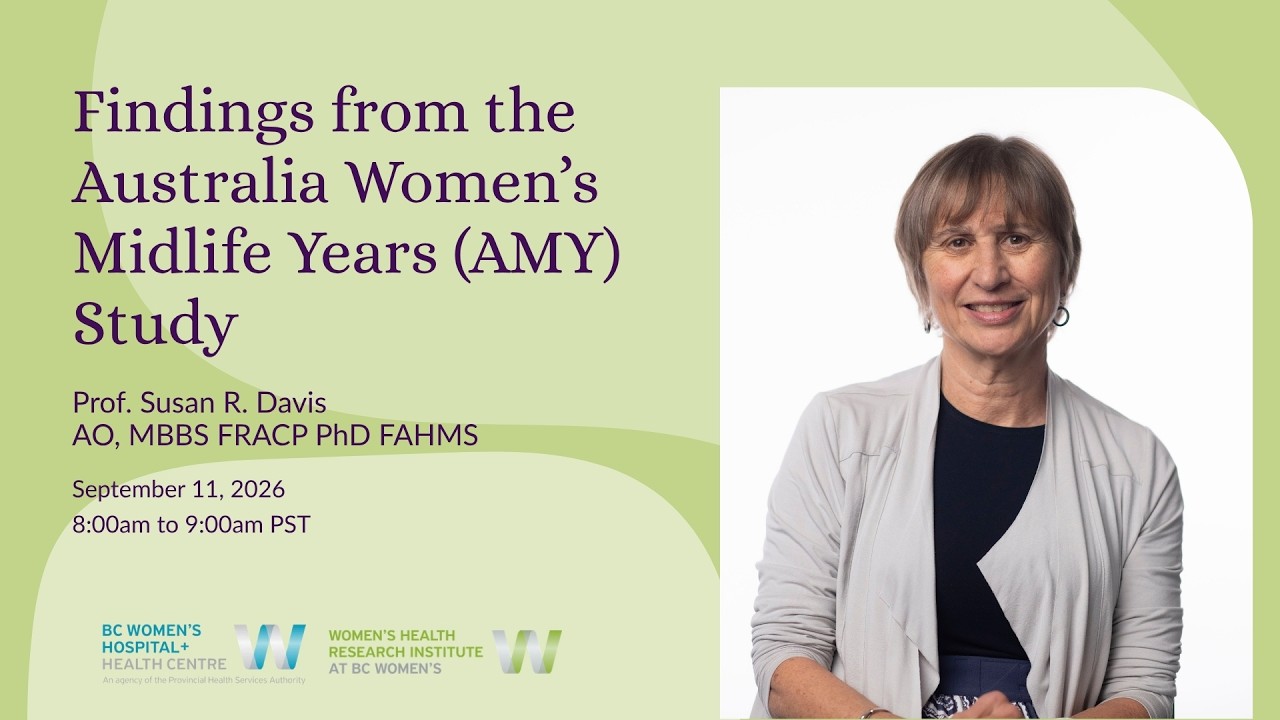
Research Spotlight: Findings from the Australia Women's Midlife Years Study
Keywords
Summary
142 words
Critical Evaluation
Value of the Information & Strength of the Argument
The video provides substantial value by offering novel, population-based data that challenge common clinical assumptions. The argumentation is solid, grounded in a rigorous methodology: unbiased recruitment, inclusion of both pre- and postmenopausal women, and adjustment for multiple potential confounders including psychosocial factors. The presenter systematically compares findings with the earlier SWAN study, identifying differences that likely reflect changing life circumstances. The discussion of symptom profiles is evidence-based, and she appropriately notes limitations such as the cross-sectional nature of the reported analyses.
Scientific Rigor, Source Quality, Title Accuracy
The presentation follows scientific rigor: the study uses validated tools (MENQOL) and objective hormone measurements. The description does not include external links, so no direct source citations are available, but the study itself is the primary source. The title accurately reflects content. The talk is delivered to a specialist audience, and the reasoning focuses on statistical associations and clinical implications. The presenter demonstrates caution by not overinterpreting and by acknowledging unresolved questions.
168 words
Title / Content Match
The title accurately reflects the content: the video presents key findings from the Australian Women's Midlife Years Study.
Quality & Reliability
8/10
Presentation of a large-scale national observational study (n=8000+) using representative sampling, validated questionnaires, and state-of-the-art hormone measurement (liquid chromatography-mass spectrometry). The methodology is rigorous, but a full peer-reviewed publication is not directly provided in the video.
Key Moments
Markers derived by PSI from the transcript: the creator did not define chapters.
- Introduction of Professor Susan Davis and land acknowledgment.
- Rationale for the new Australian study: women have changed since the 1990s SWAN study.
- Methodology: representative national sampling via electoral roll, exclusion criteria, and blood collection logistics.
- First results: MENQOL domains show only vasomotor symptoms clearly increase with menopausal stage.
- Detailed analysis of individual symptoms: only vasomotor and sexual symptoms double in odds, low mood and brain fog do not.
- Suicidal ideation prevalence does not differ between menopausal and premenopausal women.
- Discussion on hormonal changes and the persistence of vaginal dryness, while other symptoms decline.
Cited Sources
- SWAN (Study of Women's Health Across the Nation) — Reference study for comparing menopausal symptom patterns and hormone levels.
- MENQOL (Menopause-specific Quality of Life Questionnaire) — Validated instrument used to assess symptoms in the study.
Contribution & Novelties
This study provides updated, population-based data on menopausal symptoms in a contemporary Australian cohort, contrasting with the older SWAN data. It challenges the assumption that all common menopause-related symptoms are equally specific, highlighting that vasomotor and sexual symptoms are the most distinctive. The finding that suicidal ideation does not increase is particularly useful for clinicians.
Pour aller plus loin :
- Menopause - Wikipedia — Provides baseline physiological understanding of the menopausal transition.
- Study of Women’s Health Across the Nation - Wikipedia — Details on the landmark U.S. longitudinal study that the Australian study builds on.
- Menopause-related cognitive decline: a systematic review — Relevant to the discussion of ‘brain fog’ and its relationship to menopause.
114 words
Radar Profile
The radar profile shows high scores on quality of information and reliability, with a slightly lower technical level reflecting the presentation style. The balance suggests a content that is scientifically robust yet accessible, with a strong emphasis on methodological rigor.