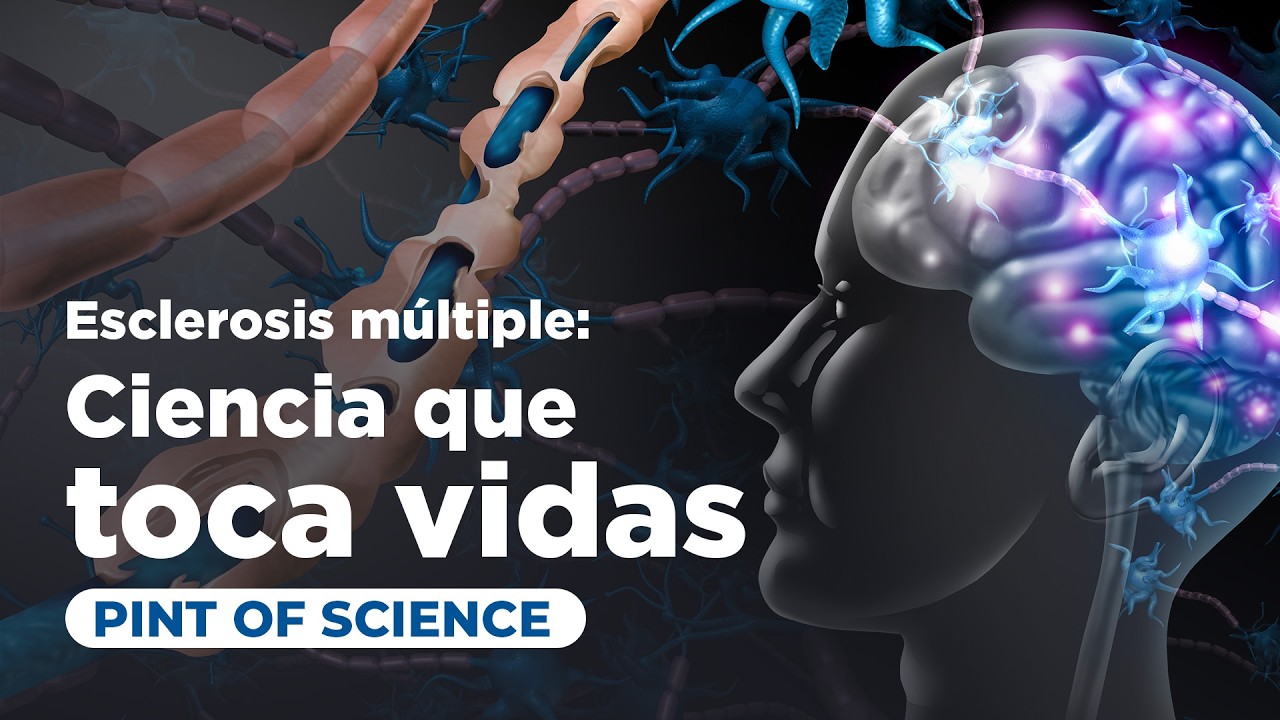
Ciencia que toca vidas | Verónica Sarabia Montaño
Science that touches lives | Verónica Sarabia Montaño
Keywords
Summary
190 words
Critical Evaluation
Value of the Information & Strength of the Argument
The presentation offers valuable insights into an under-researched area (psychosocial aspects of MS) and clearly explains the scientific logic: from literature review, meta-analyses, and a longitudinal study to practical application. The argumentation is coherent, linking the choice of constructs (quality of life, coping, anxiety) to the disease’s characteristics and to prior research. The speaker uses accessible analogies (cable/insulation, the theory of assumptive worlds) and shares personal experience, which strengthens engagement. However, the talk remains at an intermediate technical level, lacking specific effect sizes or confidence intervals, and some concepts (e.g., benefit finding) are not deeply explored.
Scientific Rigor, Source Quality, Title Accuracy
The scientific rigour is reasonable: the research design includes meta-analyses and a longitudinal study, which increases confidence. However, no specific sources or citations are provided in the talk itself, and only a general blog link is given in the description. The speaker states that no official MS registry exists in Spain, and notes that diagnosis takes an average of 3 years. The title ‘Science that touches lives’ is highly appropriate, as it emphasizes the societal impact of the research. The absence of external references limits verification, although the presentation of pending work indicates an evolving field.
207 words
Title / Content Match
The title accurately reflects the content, emphasizing the applied and human impact of the research.
Quality & Reliability
7/10
The talk presents original research including meta-analyses and a longitudinal study, but lacks detailed methodological data and explicit references to the literature cited. The speaker is transparent about her own involvement and the institutional support.
Key Moments
Markers derived by PSI from the transcript: the creator did not define chapters.
- Introduction and thanks to the audience and festival organizers
- Definition of multiple sclerosis and analogy with a damaged cable
- Statistics: prevalence worldwide (3 million), in Spain (58,000), and in Burgos (700); age of onset 20-30
- Introduction of research constructs: quality of life and perceived benefits (assumptive worlds theory)
- Explanation of coping strategies (emotion-focused) and their link to anxiety and quality of life
- Description of methodology: meta-analyses, cross-sectional and longitudinal study (sample sizes 250 and 72)
- Key findings: physical activity, social support, acceptance and emotional support improve quality of life; denial worsens it
- Implications: creation of an intervention program in Burgos, supported by FA and M España, to be replicated nationally
- Calls for equity in treatments and rehabilitation, unified protocols, and earlier diagnosis across hospitals
Cited Sources
- UBUInvestiga blog — Official blog of the research unit, linked in the video description for additional scientific content.
Contribution & Novelties
The talk presents original findings from a longitudinal study in a Spanish region, showing that emotional coping strategies (acceptance, emotional support) directly improve quality of life in people with MS, while maladaptive strategies (denial, self-distraction) predict worse health-related quality of life. A novel contribution is the translation of these results into a practical intervention program, developed with patient associations, which aims to be scientifically evaluated and disseminated nationally.
Pour aller plus loin :
- Multiple sclerosis — General overview of the disease, complements the clinical background.
- Coping (psychology) — Explains the various coping strategies discussed in the talk.
- Posttraumatic growth — Related to the concept of benefit finding after adversity, central to the talk’s second research construct.
116 words
Radar Profile
The radar profile shows a balanced research presentation with strong information quantity (8) and moderate technical depth (6). The reliability score (7) reflects the lack of explicit citations but the use of robust study designs. The overall quality is solid, indicating a trustworthy source for public understanding of MS psychosocial aspects.