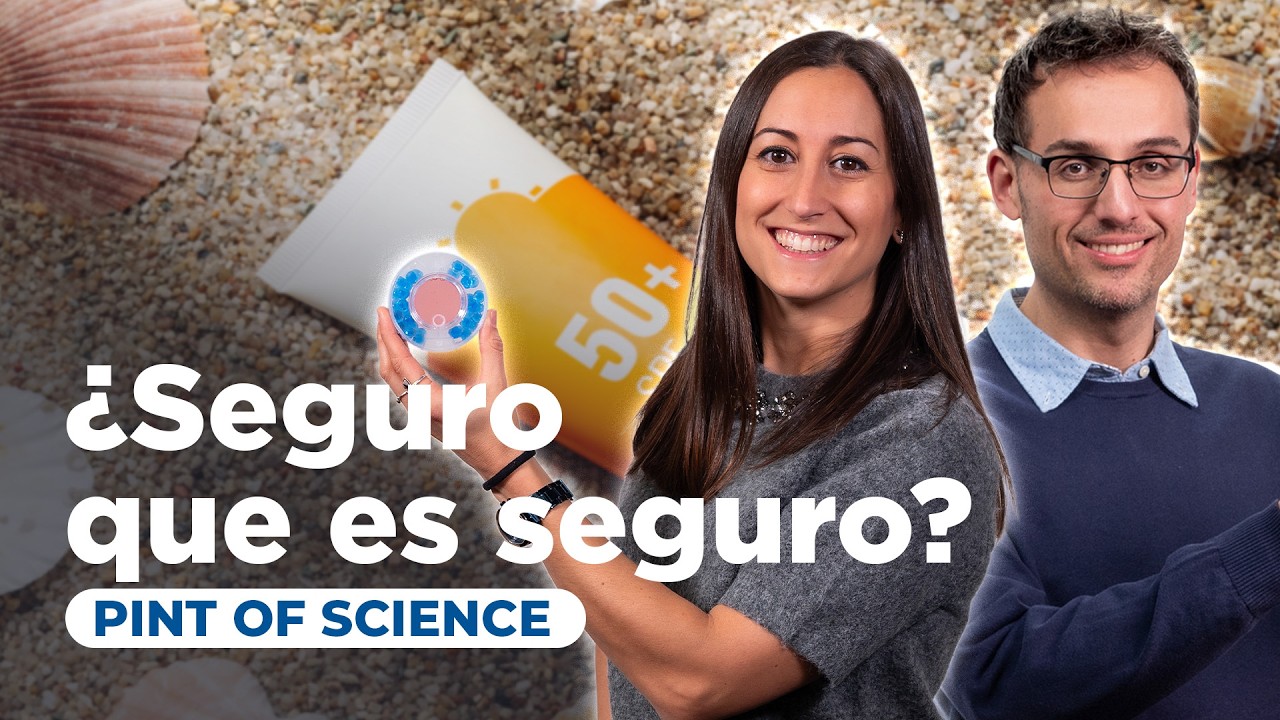
¿Seguro que es seguro? | Laura Gómez Cuadrado y Carlos Rumbo Lorenzo
Are you sure it's safe? | Laura Gómez Cuadrado y Carlos Rumbo Lorenzo
Keywords
Summary
231 words
Critical Evaluation
Value of the Information & Strength of the Argument
The talk provides valuable insights into real-world toxicological testing, bridging the gap between laboratory research and public understanding. The speakers effectively argue for the adoption of in vitro methods by highlighting their practical advantages and ethical benefits. They use concrete examples and analogies that make the concepts accessible without oversimplification. The argumentation is solid, based on their direct experience and the regulatory context of the European Union. However, quantitative data and specific study references are lacking, which limits the depth of the scientific evidence presented. Overall, the information is relevant and trustworthy, though more detailed data would strengthen the claims.
Scientific Rigor, Source Quality, Title Accuracy
The scientific rigor is generally high; the speakers correctly describe established principles like the 3Rs and the rationale behind in vitro testing. They mention that the fish gill cell assay is validated by the OECD, which adds credibility. The title ‘Is it really safe?’ is appropriately addressed by the content, which explains how safety is assessed. The talk does not provide explicit citations to studies, but that is typical of a public outreach talk; the descriptions align with current knowledge in toxicology. Adequation between title and content is good, as it directly answers the question posed. No mention of public level, as per instructions.
219 words
Title / Content Match
The title is a question about safety, and the talk directly answers it by explaining how researchers assess the safety of materials through in vitro toxicology methods.
Quality & Reliability
7/10
The talk is clear, well-structured, and grounded in the speakers' research experience. It provides concrete examples and explains standard scientific principles (3Rs, in vitro methods) without over-simplification. However, it lacks direct citations to specific studies or detailed data, and some claims about regulation are presented without explicit references.
Key Moments
Markers derived by PSI from the transcript: the creator did not define chapters.
- Introduction and presentation of the speakers and the topic of safety assessment of materials.
- Examples of everyday materials tested, including sunscreen, car coatings, and firefighter suits containing PFAS.
- Historical cases of toxic substances: aluminum powder in the Wizard of Oz, asbestos, and Teflon.
- European priorities: Safe and Sustainable by Design framework and sustainable development goals.
- Explanation of the 3Rs principle (Replacement, Reduction, Refinement) and its origins.
- Advantages of in vitro methods over animal testing: cost, speed, ethics, and control.
- Description of cellular models used: liver, neurons, lung, skin, and 3D spheroids.
- Ecotoxicology: using rainbow trout gill cell lines and microorganisms to assess environmental impact.
- Testing antimicrobial activity of compounds and effects on biofilms.
- Conclusion: promoting safe materials and in vitro alternatives to animal testing.
Cited Sources
- UBU Investiga Blog — The blog of the University of Burgos research dissemination channel, mentioned as a source for further information.
Contribution & Novelties
The talk offers an accessible yet scientifically grounded overview of the shift toward non-animal testing methods in toxicology. It highlights the specific approaches used at the IKRAN institute, including innovative 3D cell culture technologies and the use of alternative organisms like fish cell lines. The emphasis on Safe and Sustainable by Design as a regulatory driver provides valuable context for understanding current research priorities.
Pour aller plus loin :
- 3Rs principles (Replacement, Reduction, Refinement) — Foundational ethical framework for animal research, introduced by Russell and Burch in 1959.
- In vitro toxicology — Overview of laboratory methods using cells and tissues to assess toxicity, integral to the talk’s content.
- OECD Guidelines for the Testing of Chemicals — International standards that validate alternative methods like the fish gill cell assay mentioned in the presentation.
- Safe and Sustainable by Design — European Union framework for ensuring new chemicals and materials are safe and sustainable from the design phase onward.
156 words
Radar Profile
The profile shows moderate to high scores across all dimensions, with a slight emphasis on information quantity and reliability over technical depth. This aligns with a science communication talk that covers breadth of topic but does not dive into specialized technical details.