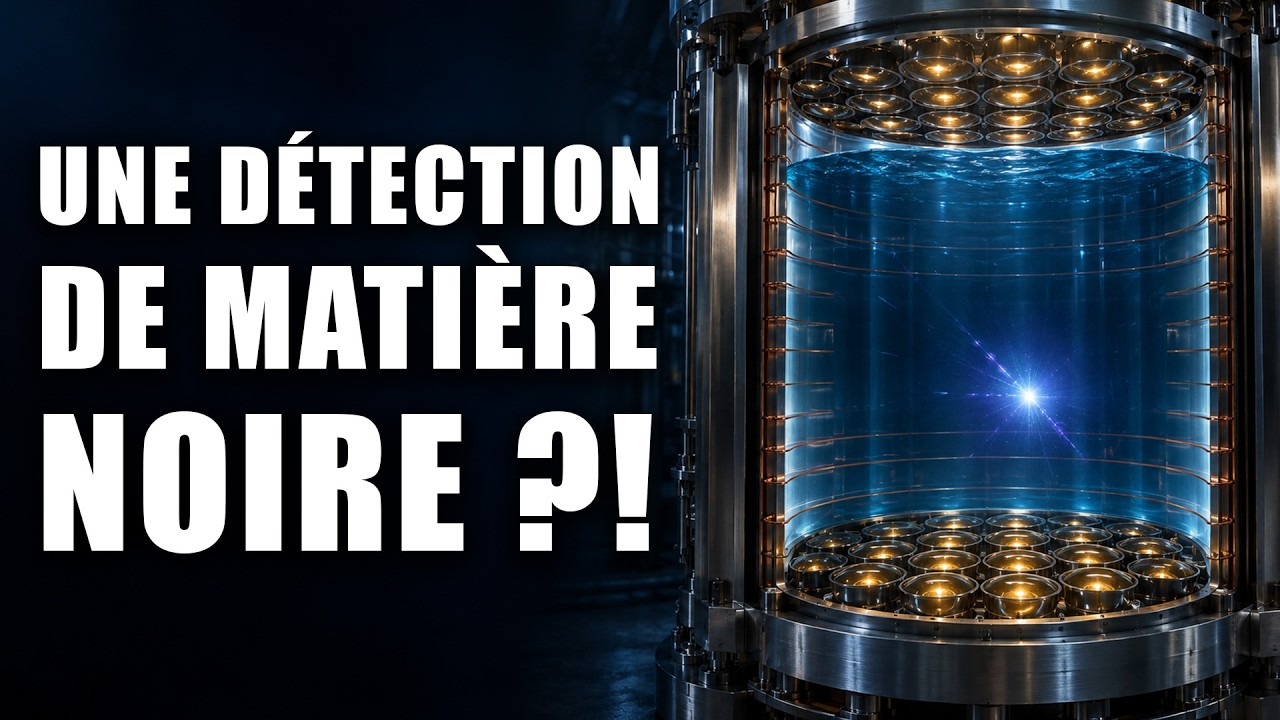
La matière noire a peut-être laissé une trace, ENFIN !
Dark matter may have finally left a trace!
Keywords
Summary
146 words
Critical Evaluation
Value of the Information & Strength of the Argument
The video provides substantial value by synthesizing recent developments in dark matter research, European spaceflight, and planetary exploration. The argumentation is solid: the presenter explains the significance of the LZ event, the detector’s methodology, and the reasons for caution, clearly distinguishing between a candidate signal and a confirmed discovery. The coverage of Isar Aerospace and BepiColombo is factual and well-contextualized, highlighting their importance for European space capabilities and our understanding of Mercury. The reasoning is logical and avoids unwarranted speculation, though it could benefit from more critical discussion of alternative explanations for the LZ event.
Scientific Rigor, Source Quality, Title Accuracy
The scientific rigor is high: the video cites the arXiv preprint for LZ, official press releases from Isar Aerospace and ESA, and uses images from the collaborations. The title is slightly sensationalist but not misleading, as the content does discuss a potential dark matter trace. The presentation is balanced, acknowledging uncertainties and the need for further data. The sponsorship segment is clearly separated and does not affect the scientific content. Overall, the sources are appropriate and well-integrated.
187 words
Title / Content Match
The title is catchy and slightly sensationalist, but the content does address a potential dark matter signal, so it is broadly accurate.
Quality & Reliability
8/10
The video is a well-structured science news review, clearly distinguishing between established facts, preliminary results, and hypotheses. It cites primary sources (arXiv preprint, official press releases) and provides context. The presenter avoids overclaiming, emphasizing the need for confirmation. Minor limitations include a lack of independent verification and a brief sponsorship segment.
Key Moments
Markers derived by PSI from the transcript: the creator did not define chapters.
- Introduction and sponsorship segment (Certideal).
- Start of the main topic: LUX-ZEPLIN dark matter candidate event.
- Explanation of the LZ detector and the detected event's characteristics.
- Discussion of the implications and the need for confirmation.
- Isar Aerospace's Spectrum rocket reaches orbit – European New Space milestone.
- BepiColombo jettisons propulsion module and prepares for Mercury orbit insertion.
- Conclusion and recap of the sponsorship offers.
Cited Sources
- LUX-ZEPLIN preprint on arXiv — Primary source for the dark matter candidate event.
- Isar Aerospace press release — Official announcement of the successful Spectrum orbital flight.
- ESA video: BepiColombo's Mercury arrival begins — ESA's coverage of the BepiColombo propulsion module separation.
Concurring Sources
- LUX-ZEPLIN preprint on arXiv — The preprint is the primary source for the dark matter candidate event, and the video's description aligns with its content.
- Isar Aerospace press release — The press release confirms the successful orbital flight, matching the video's report.
- ESA video: BepiColombo's Mercury arrival begins — ESA's video confirms the propulsion module separation, as described in the video.
External References
Contribution & Novelties
The video’s original contribution lies in synthesizing three recent space news items into a coherent narrative, providing context and analysis that goes beyond simple reporting. It explains the significance of the LZ event for dark matter research, the implications of Isar Aerospace’s success for European space autonomy, and the scientific goals of BepiColombo at Mercury. The presenter’s balanced approach, emphasizing the need for confirmation, adds value for a general audience.
Pour aller plus loin :
- Dark matter — Overview of dark matter and its evidence.
- WIMP — Theoretical candidate for dark matter.
- LUX-ZEPLIN experiment — Details on the detector and its goals.
- BepiColombo — Mission overview and objectives.
- Isar Aerospace — Company background and Spectrum rocket.
116 words
Radar Profile
The radar profile shows high scores in information quantity, quality, and reliability, with a slightly lower technical level. This indicates a well-researched and informative video that is accessible to a general audience while maintaining scientific accuracy.