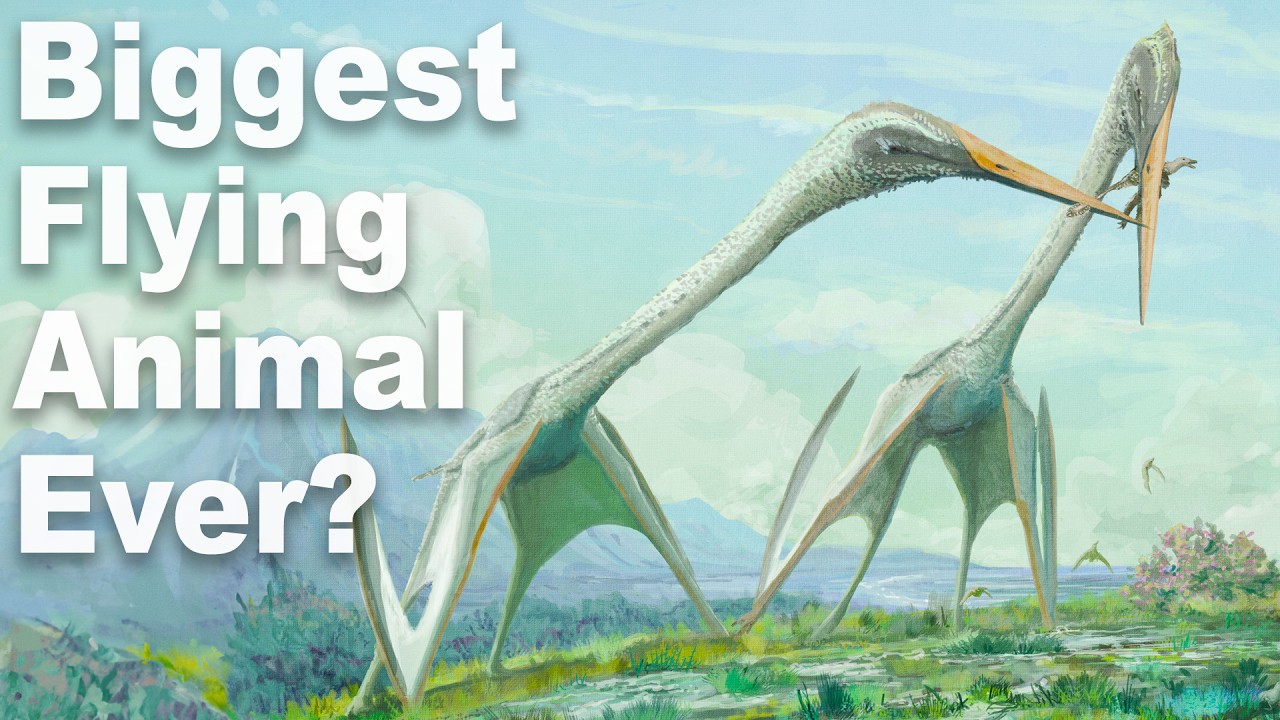
What Was The Biggest Flying Animal Ever?
Keywords
Summary
152 words
Critical Evaluation
Value of the Information & Strength of the Argument
The value of the information is high, providing a comprehensive synthesis of recent research on azhdarchid pterosaurs, including newly described species and updated size estimates. The argumentation is solid: the presenter supports claims with specific fossil evidence, explains estimation methods, and acknowledges the limitations and debates within the field. For instance, he discusses the problematic comparison of cervical vertebrae and the deformation of fossils that can affect measurements. He also avoids overstating certainty, appropriately presenting speculative aspects such as the ‘Dracula’ specimen. The inclusion of an interview with Dr. Nizar Ibrahim adds depth and credibility. Overall, the video is informative and scientifically sound, striking a balance between accessibility and rigor.
Scientific Rigor, Source Quality, Title Accuracy
The scientific rigor is commendable; the video cites over 30 primary sources from peer-reviewed journals and expert blogs, and the presenter regularly attributes specific findings to their respective papers. The quality of sources is high, including papers from journals like PLOS ONE, PeerJ, and the Journal of Experimental Biology. The title is perfectly aligned with the content, which directly addresses the question of the largest flying animal. Audience comments are overwhelmingly positive, with viewers praising the depth of information and the presenter’s clarity. Many comments express fascination with the pterosaurs and appreciation for the educational value, and some humorously speculate about encounters with these giant reptiles. There are no critical comments challenging the content, indicating strong acceptance by the public.
245 words
Title / Content Match
The title accurately reflects the content, which explores the largest flying animals in Earth's history, primarily focusing on azhdarchid pterosaurs.
Quality & Reliability
8/10
The video is well-researched, citing numerous peer-reviewed sources and presenting multiple perspectives on size estimates, with appropriate caveats about uncertainty.
Chapters
Cited Sources
- Brill journal article — Source listed in the video description, likely related to pterosaur or insect research.
- Rero.ch document — Source listed in the video description, likely a scientific paper.
- Earth Archives article — Source listed in the video description, related to giant insects.
- Journal of Experimental Biology — Source listed in the video description, likely about flight mechanics.
- PLOS Biology — Source listed in the video description, likely a study on pterosaur biology.
- PLOS ONE article (e0002271) — Source listed in the video description, likely on pterosaur anatomy or evolution.
- PLOS ONE article (e0004497) — Source listed in the video description, likely a study on pterosaur size.
- PLOS ONE article (e0013982) — Source listed in the video description, likely on flight or paleoecology.
- SpringerLink article — Source listed in the video description, likely a paleontological paper.
- Mark Witton's blog post (2013) — Source listed in the video description, providing expert commentary on giant pterosaurs.
- Mark Witton's blog post (2016) — Source listed in the video description, discussing Arambourgiania.
- Mark Witton's blog post (2018) — Source listed in the video description, explaining flight of giant pterosaurs.
- Smithsonian Institution PDF — Source listed in the video description, likely an original publication.
- PeerJ article — Source listed in the video description, likely a study on pterosaur anatomy.
- GeoScienceWorld article — Source listed in the video description, describing a pterosaur from France.
- Siri Scientific Press publication — Source listed in the video description, on fossil insects.
- Wonder Artistic Models website — Source listed in the video description, sponsor and model provider.
- Cell (iScience) article — Source listed in the video description, likely a recent scientific study.
- Google Books: Island Bats — Source listed in the video description, on bat biology.
- JSTOR article — Source listed in the video description, likely a paleontological paper.
External References
Contribution & Novelties
The video provides an original synthesis of current knowledge on the largest flying animals, with a focus on azhdarchid pterosaurs. It presents updated size estimates, discusses recent discoveries like Cryodrakon and the unpublished ‘Dracula’ specimen, and clarifies common misconceptions about pterosaur anatomy. The inclusion of a physical model helps visualize the skeleton. The video also places pterosaurs in comparison with other flying animals, offering a comprehensive perspective.
Pour aller plus loin :
- Azhdarchidae — Comprehensive overview of the pterosaur family.
- Quetzalcoatlus — Detailed page on one of the largest pterosaurs.
- Pterosaur flight — Explanation of the flight mechanics of pterosaurs.
100 words
Radar Profile
The radar profile shows very high quantity and quality of information, moderate technicality, and high overall reliability, indicating a well-researched science communication video that balances depth with accessibility.
💬 Based on the 30 comments analyzed, the sentiment is very positive, with viewers expressing enthusiasm and fascination for the pterosaurs, and praising the video's educational quality.