New Species of Prehistoric Amphibian Named After Kermit | 7 Days of Science
Keywords
Summary
158 words
Critical Evaluation
Value of the Information & Strength of the Argument
The video excels in presenting complex scientific topics in an accessible manner while maintaining scientific integrity. The host explains the significance of each study, often clarifying what the findings do and do not imply. For example, the Venus study is framed as demonstrating amino acid stability, not proof of life. The dark matter discussion is presented as a contested hypothesis, acknowledging that the model is not fully tested. The dog cognition study is explained through the concept of ‘semantic expectation violation’, and the host notes this is the first confirmation in a non-human organism. The sperm whale anecdote is presented with descriptive detail, highlighting the rosette formation and the likely use of faeces as a deterrent. Throughout, the argumentation is clear, balanced, and supports claims with references.
Scientific Rigor, Source Quality, Title Accuracy
The video demonstrates strong scientific rigor by citing peer-reviewed papers and reputable science news outlets in the description. Each news item is traced to its original publication or a high-quality summary. The host accurately represents the findings and notes uncertainties, such as the controversial nature of the no-dark-matter model. The title focuses on the Kermitops story, but the content is a broader roundup; however, this does not detract from the video’s overall quality and accuracy. The inclusion of original paper links allows viewers to verify claims directly.
229 words
Title / Content Match
The title highlights one specific story (Kermitops gratus), but the video is a broader weekly science news roundup. While not misleading, it undersells the variety of topics covered.
Quality & Reliability
8/10
The video provides a clear and well-structured summary of recent scientific papers, with references to peer-reviewed sources and additional news articles. The host distinguishes between established findings and hypotheses, and notes limitations when relevant.
Key Moments
Markers derived by PSI from the transcript: the creator did not define chapters.
- Discussion on Venus atmosphere habitability and amino acid survival.
- Presentation of the university model eliminating dark matter and its implications.
- Study on dogs forming mental representations of object words.
- Sperm whale rosette defense mechanism against orca attack.
- Update on final rejection of Anthropocene epoch proposal.
- Homo naledi juvenile specimens analysis.
- Discovery and description of Pebanista yacuruna, largest freshwater dolphin.
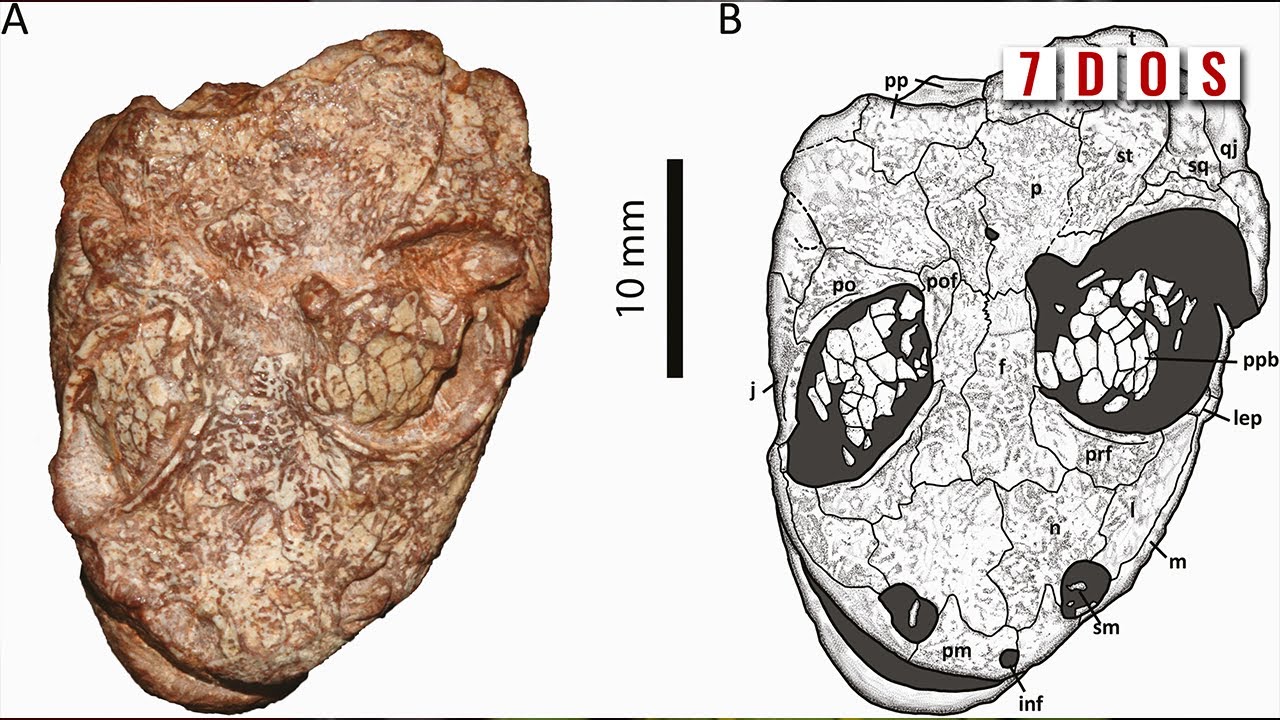
- Naming of Kermitops gratus, a prehistoric amphibian named after Kermit the Frog.
- New titanosaur species Udelartitan celeste from Uruguay.
Cited Sources
- Study on the habitability of Venus's atmosphere — Original paper on amino acid stability in Venus's atmosphere.
- News article on Venus clouds habitability — Science news coverage of Venus study.
- Astrophysical Journal paper on universe without dark matter — Rajendra Gupta's paper proposing a universe without dark matter.
- News article on universe without dark matter — Sci.News article on the no-dark-matter model.
- ScienceDaily article on universe without dark matter — ScienceDaily coverage of the dark matter study.
- ScienceAlert article on universe without dark matter — ScienceAlert article about the universe's age and dark matter absence.
- Current Biology paper on dogs' object word representations — Original Current Biology study on dogs' mental representations of object words.
- Science News article on dogs knowing words — Science News coverage of the dog cognition study.
- ABC News article on sperm whales surviving orca attack — ABC News report on the sperm whale defense observation.
- Nature news article on Anthropocene rejection — Nature News update on the rejection of the Anthropocene epoch.
- Annals of Human Biology paper on Homo naledi juveniles — Study on juvenile Homo naledi specimens.
- Science Advances paper on Pebanista yacuruna — Original paper describing the new freshwater dolphin species.
- Zoological Journal of the Linnean Society paper on Kermitops gratus — Original paper describing Kermitops gratus.
- Phys.org news article on Kermitops — Phys.org coverage of the Kermitops discovery.
- Cretaceous Research paper on Udelartitan celeste — Original paper on the titanosaur Udelartitan celeste.
External References
Contribution & Novelties
This video provides a valuable service by aggregating recent scientific discoveries into a single, accessible weekly format. It offers context and explanations that help non-experts appreciate the significance of each finding. The host’s critical approach, such as noting that the dark matter model is not yet fully validated, adds depth. The video also bridges different fields, from planetary science to paleontology, illustrating the interconnectedness of scientific research. Its timeliness (March 2024) makes it a useful snapshot of ongoing scientific discourse.
Pour aller plus loin :
- Temnospondyli — The group of amphibians to which Kermitops belongs; understanding this group is key to amphibian evolution.
- Titanosaur — Broad context for the sauropod dinosaur family that includes Udelartitan.
- Dark matter — Overview of the prevailing cosmological model and the debates around it.
129 words
Radar Profile
The radar profile shows very high scores in quantity and quality of information, supported by a solid but slightly lower technical level, reflecting the accessible yet scientifically accurate presentation. The overall reliability is high, consistent with the citing of peer-reviewed sources.
💬 Out of the 30 comments analyzed, the climate is very positive, with viewers joking about the hosts' antics (especially Doug's missing suit) and expressing appreciation for the scientific content, many engaging enthusiastically with the topics.