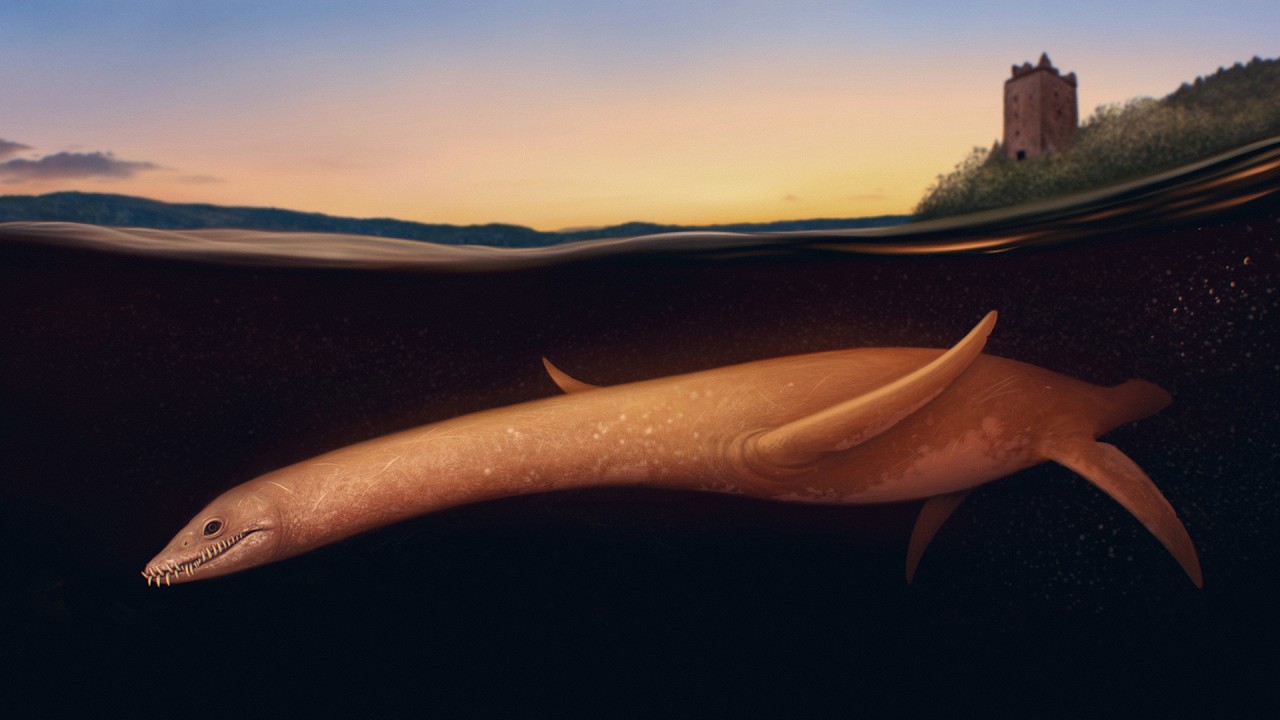
The Speculative Evolution of the Loch Ness Monster
Keywords
Summary
163 words
Critical Evaluation
Value of the Information & Strength of the Argument
The video provides substantial educational value by accurately explaining plesiosaur diversity, anatomy, and evolutionary history, supported by peer-reviewed sources. The argumentation is logically structured: it first establishes the reality of plesiosaurs, then builds a speculative case for a freshwater survivor, while consistently acknowledging the lack of evidence for Nessie’s existence. The creator transparently separates fact from fiction, using speculative elements as a pedagogical tool. The reasoning is disciplined, considering biomechanical constraints and geological timelines, and avoids unsupported claims, making the speculative parts clearly hypothetical.
Scientific Rigor, Source Quality, Title Accuracy
The scientific rigor is high: the video cites multiple reputable academic papers and books, and the content aligns with current paleontological understanding. The use of eDNA study results and freshwater plesiosaur discoveries is accurate and well-presented. The title accurately reflects the content, which qualifies as speculative evolution grounded in real science. The creator also debunks common myths (e.g., the land-walking account) with logical arguments based on anatomy. Public comment analysis shows strong positive engagement, with viewers appreciating the humor (‘it’s probably just eels’) and the scientific depth.
186 words
Title / Content Match
The title exactly matches the content: a speculative evolution scenario for the Loch Ness Monster built on real plesiosaur biology and fossil evidence.
Quality & Reliability
8/10
Video is well-researched, uses numerous scientific sources, clearly separates factual paleontology from speculative scenarios, and provides accurate anatomical and evolutionary context for plesiosaurs.
Chapters
Cited Sources
- Reference — Source listed in video description
- Reference — Source listed in video description
- Reference — Source listed in video description
- Reference — Source listed in video description
- Reference — Source listed in video description
- Reference — Source listed in video description
- Reference — Source listed in video description
- Reference — Source listed in video description
- Reference — Source listed in video description
- Reference — Source listed in video description
- Reference — Source listed in video description
- Reference — Source listed in video description
- Reference — Source listed in video description
- Reference — Source listed in video description
- Reference — Source listed in video description
- Reference — Source listed in video description
- Reference — Source listed in video description
- Reference — Source listed in video description
- Reference — Source listed in video description
- Reference — Source listed in video description
Concurring Sources
- PeerJ article on freshwater plesiosaurs — Supports the idea that plesiosaurs could inhabit freshwater environments.
- Paleobiology paper on thermoregulation — Relevant to plesiosaurs' ability to live in cold waters, supporting the video's argument.
External References
Contribution & Novelties
The video’s original contribution lies in applying rigorous paleontological knowledge to a speculative scenario, offering a plausible evolutionary pathway for a freshwater elasmosaurid based on real fossils like Fluvionectes and the Kem Kem leptocleidids. It also systematically debunks common Nessie myths using biomechanical and geological evidence, while maintaining a clear boundary between fact and speculation. This approach is both educational and engaging for a general audience.
Pour aller plus loin :
- Plesiosauria — Wikipedia overview of the group.
- Speculative evolution — Introduction to the genre.
- Environmental DNA — Technique used in the eDNA study of Loch Ness.
97 words
Radar Profile
The radar profile shows high scores for information quantity and quality, with a moderate technical level and high reliability. This indicates a content-rich, well-sourced video that is accessible to a broad audience while maintaining scientific accuracy.
💬 positive — The comment section is enthusiastic and playful, with many viewers joking about the 'probably just eels' conclusion and praising the speculative evolution approach.