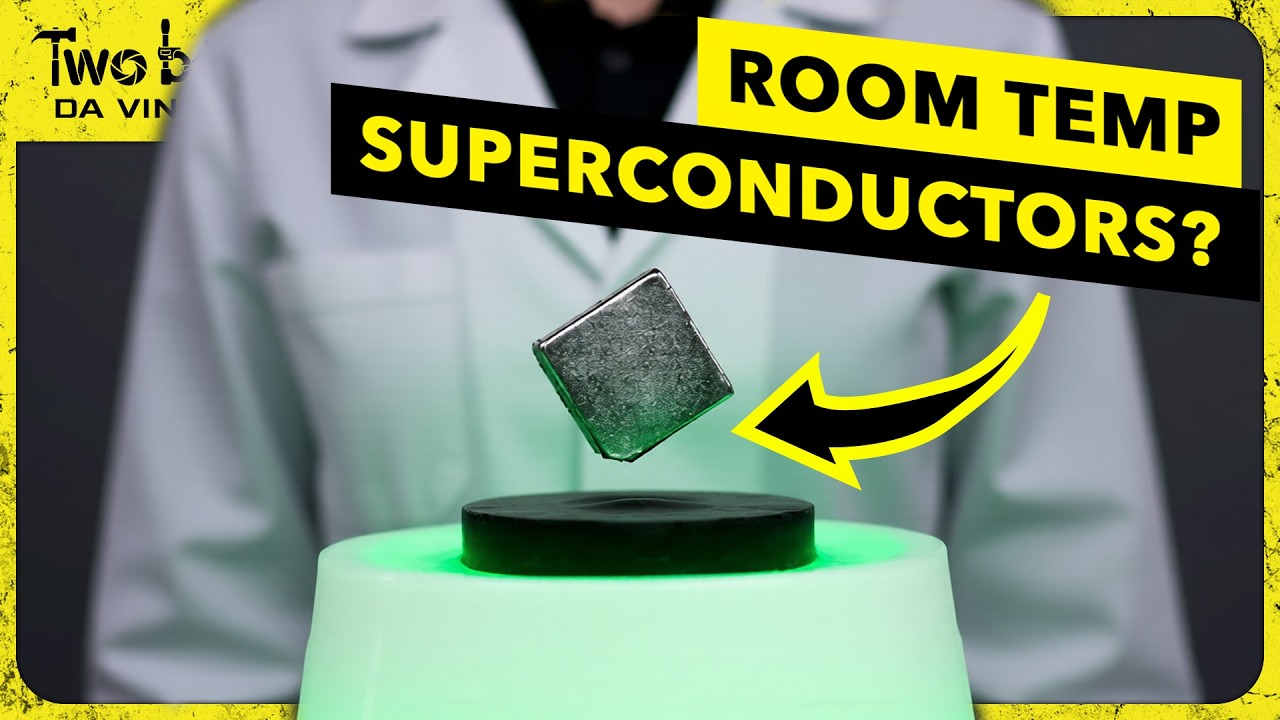
Room Temperature Superconductors - What Happened?
Title history
- Room Temperature Superconductors - What Happened? — observed on 20261101-0158 UTC (YouTube)
Keywords
Summary
151 words
Critical Evaluation
Value of the Information & Strength of the Argument
The video provides a balanced and well-structured account of the LK-99 story, clearly distinguishing between hype and measured scientific outcomes. It argues effectively that the replication failures and impurity mechanisms (copper sulfide resistivity drop, ferromagnetism from iron) explain the observed data, and cites key replication efforts like those at Max Planck. The discussion on high-pressure hydrides is technically sound, and the emphasis on engineering challenges of pressure is valid. The optimistic section on AI and quantum computing is plausible but somewhat speculative, as it lacks concrete references to specific studies or results. Overall, the argumentation is coherent, though it simplifies some complex physics.
Scientific Rigor, Source Quality, Title Accuracy
The video does not cite specific scientific papers or sources directly; it references general replication efforts and mentions Max Planck and South China University without links. The description includes no sources beyond sponsor links and channel links. The title accurately reflects the content. The video’s rigor is moderate: it correctly explains the scientific process and consensus but lacks citations to primary literature. It also contains a lengthy sponsored segment for Jackery, which is transparent but takes time. Overall, the content is scientifically accurate in broad strokes, but a science-communication video would benefit from explicit references.
213 words
Title / Content Match
Title accurately reflects the content, which revisits the LK-99 controversy and current state of RTS research.
Quality & Reliability
7/10
Video provides a clear, narrative-driven recap of the LK-99 saga, citing replication failures and consensus. However, it lacks formal citations and references, and relies on broad claims about AI and quantum computing benefits without detailed evidence.
Key Moments
Markers derived by PSI from the transcript: the creator did not define chapters.
- Introduction to LK-99 and its claimed promise.
- Explanation of why LK-99 went viral: accessible recipe and visual evidence.
- Replication efforts fail; copper sulfide impurity mimics resistivity drop.
- Levitation explained by ferromagnetism from iron impurities.
- Current record holders: high-pressure hydrides and their extreme pressure requirements.
- Diamond anvil cell and the engineering impossibility of scaling pressure.
- No fundamental law forbids RTAPS; AI and quantum computing promise accelerated discovery.
Cited Sources
- Jackery Sponsorship — Sponsored segment in video, not scientific source.
- DeleteMe — Partner link in description.
- EnergySage — Partner link in description.
Concurring Sources
- Nature retraction of Ranga Dias papers — Discusses retractions of room-temperature superconductor claims by Dias group.
- Max Planck Institute LK-99 study — Study showing LK-99 is an insulator.
Dissenting Sources
- South China University of Technology claim — The video mentions a claim of zero resistance in LK-99-like material from this group, but it was not independently verified and met skepticism.
External References
Contribution & Novelties
The video offers a clear, narrative synthesis of the LK-99 saga and its aftermath, focusing on the scientific process and the distinction between hype and reality. Its original contribution lies in framing the current research frontier—high-pressure hydrides—and the engineering challenges of pressure scalability, which is often glossed over in popular accounts. It also highlights AI and quantum computing as emerging tools for materials discovery, though this is a forward-looking perspective.
Pour aller plus loin :
- LK-99 on Wikipedia — Background and scientific assessment.
- High-temperature superconductivity — Overview of cuprates and hydrides.
- Diamond anvil cell — Explanation of pressure generation.
- Machine learning in materials science — AI approaches to material discovery.
110 words
Radar Profile
The radar profile shows balanced scores across quantity, quality, and technical level, with slightly lower rigor due to sparse citations. The video is informative and technically accessible, but lacks direct source referencing, making it a good overview for general audiences rather than a scholarly reference.
💬 Positive and nostalgic: On the 30 comments analyzed, many viewers reminisce about the LK-99 hype, some share personal experiences in materials science, and others appreciate the clear explanation. A few criticize the background music and sponsorship timing.